




Marta Peral Ribeiro
– Consultora de Comunicação –
A que soa a sua marca?
Podemos equiparar o tom de voz da marca à personalidade de uma pessoa: tal como um indivíduo é capaz de se destacar entre outros pelo seu carisma, captando a sua atenção, o tom de voz de uma marca comunica uma determinada atitude capaz de atrair determinado público.
Marta Peral Ribeiro
– Consultora de Comunicação –
A que soa a sua marca?
Podemos equiparar o tom de voz da marca à personalidade de uma pessoa: tal como um indivíduo é capaz de se destacar entre outros pelo seu carisma, captando a sua atenção, o tom de voz de uma marca comunica uma determinada atitude capaz de atrair determinado público.
Voz da marca como identidade
O que é a Voz?
Descreve a personalidade da marca, o que ela diz. É consistente e pode ser definida através de um adjetivo, por exemplo: inspiradora, assertiva, empática, irreverente, etc.
O que é o Tom?
Acrescenta uma entoação emocional à voz, expressa como fala. Pode ser, por exemplo: mais corporativo, mais informal, bem-humorado, tradicional, etc.
Porquê definir um tom de voz para a marca?
A forma como a marca se apresenta é tão importante como a maneira como nos mostramos enquanto indivíduos.
Uma pessoa transmite a sua personalidade através das roupas e acessórios que usa, do corte de cabelo, a postura, o olhar, a voz, a linguagem.
Paralelamente, a personalidade de uma marca transmite-se através da mensagem que passa, a sua visão, os seus princípios, a linguagem que escolhe, as cores, as imagens, os vídeos, os gráficos, a sua interação nas redes sociais.
Por exemplo: um produto ou serviço que possa ser consumido em família ou entre amigos, pode revelar uma personalidade divertida e sociável. Quanto mais o tom de voz enfatizar essas qualidades, mais os clientes o associam a ambientes sociais, amigos e recreação.
Quando a identidade está bem definida e é consistente nos vários canais por onde comunica, os consumidores são capazes de reconhecer facilmente que aquele conteúdo pertence a determinada marca, o que os aproxima e pode influenciar a sua decisão de compra.
Tipos de tons de voz
De acordo com a situação, o tom de voz varia. É fácil se imaginarmos o tom com que se publicita um novo produto e o tom quando se responde a uma reclamação: certamente não será o mesmo.
Aprofundando os tipos anteriormente referidos:
- Inspirador – incentiva o público a superar-se, aspirando-lhe energia e confiança, remetendo para uma ideia ou um pensamento positivo.
- Competente– orientado para os resultados, é geralmente direcionado para um segmento mais executivo e de carácter mais ambicioso como gerentes, por exemplo, ou um público mais tradicional. Este tom pode ser simultaneamente fundamentado e acessível.
- Empático– é leve, informal, breve, mas assertivo na mensagem (geralmente de carácter informativo) e cria proximidade com a audiência, a quem transmite conteúdo valioso.
- Irreverente – pouco convencional, tem uma mensagem que “sai da caixa”. Costuma chamar a atenção sobretudo pelas palavras que escolhe, por vezes trocadilhos, e pelas imagens mais ousadas.
Como encontrar o tom de voz adequado
Na teoria, é fácil compreender o conceito. Na prática, é mais complexo determinar o tom de voz de uma marca.
Existem dois momentos importantes para o fazer: numa fase inicial tem de haver uma introspeção para definir como/quem é a marca, para depois conseguir comunicar-se com o público.
1. Refletir sobre o posicionamento da marca
Definir o porquê
Simon Sinek, conhecido pelas suas palestras motivacionais sobre Organizações, defende que primeiro a marca deve definir o porquê da sua existência: qual é o propósito («lucro» não vale como resposta), qual é a causa em que acredita? Ou seja, em que é que a marca vai fazer a diferença na vida das pessoas?
Desenvolver o tom de voz
O tom de voz deve ser exclusivo para o seu negócio.
É útil sondar como é que outras empresas da mesma área se expressam, para poder absorver o que interessa ou, pelo contrário, se diferenciar totalmente.
Mas não é preciso elevar o tom de voz para se fazer notar. Basta usar o tom certo, o tom de voz próprio da marca.
Uma pergunta interessante que pode ajudar a definir a voz da marca é: se a marca fosse representada por uma celebridade, quem seria?
Adequar a expressão da marca à persona
Tendo definido o perfil da persona, é necessário ajustar o tom de voz da marca:
- Exclusivo / acessível
- Tradicional / contemporâneo
- Jovem / maduro
- Formal / informal
- Sério / divertido
- Urbano / ecológico
- Estável / dinâmico
Elementos gráficos e linguagem
Passando para a componente prática da comunicação:
- Como será o logótipo da marca?
- Que cores predominarão?
- Qual é o tipo de letra no website?
- Como é o cumprimento inicial em cada e-mail?
- E como é a despedida?
- Fala na primeira pessoa?
- E o público, será tratado por tu?
- Que termos é que definitivamente NÃO serão usados na comunicação?
2. Comunicar com consistência em todos os canais
Definir os canais de comunicação
Dependendo da persona, do público-alvo e, claro, dos recursos e dos objetivos da empresa, os canais escolhidos para comunicar podem variar.
Portanto, importa saber onde está o seu público, que canais utilizam.
Uma marca de cariz corporativo poderá dar prioridade ao e-mail e ao LinkedIn, ao passo que para uma marca cujo público-alvo seja um segmento mais jovem poderá fazer mais sentido utilizar o Instagram e o Twitter.
Consoante o propósito dos conteúdos, ajusta-se o tom de voz. Por exemplo, uma publicação de vídeo no Instagram, onde a componente visual é o ponto-forte, pretende-se que o tom de voz seja próximo e prático, ao passo que se for um artigo para um blog já pode ter um tom mais informativo e assertivo.
Porém, não esquecendo todas as campanhas que possam decorrer em ambiente não digital.
Criar um guia de comunicação da marca
A comunicação de uma empresa não é feita por uma só pessoa. Como tal, convém delinear um documento que contenha as diretrizes que norteiem toda a equipa, para que haja um padrão de organização.
Esse guia vai garantir a coerência entre os vários canais de comunicação da empresa, permitindo que um consumidor reconheça a marca quando passa do seu website para as redes sociais, quando na rua vê a publicidade de um dos produtos ou serviços, ou quando abre um e-mail.
Uma personalidade em evolução

A personalidade da marca está em constante amadurecimento. Afinal, por trás de cada marca estão pessoas, que também vão evoluindo.
Uma marca pode, assim, decidir ajustar o seu tom de voz, o que é sinal de que acompanha as mudanças do ambiente que a rodeia. Mas como fazê-lo sem perder a identidade?
Por um lado, é necessário analisar a comunicação que a empresa já tem, para obter um panorama geral. Por outro, importa permear o lado criativo com esses aspetos únicos.
Eis alguns pontos de partida:
- Que aspetos distinguem a voz da marca?
- A voz é coerente em termos de linguagem quer nas redes sociais quer no website?
- Como é que a audiência interage nos diferentes canais?
- Que publicações é que tiverem maior taxa de interação por parte dos utilizadores?
A voz dos representantes das marcas
Um ingrediente especial que se pode acrescentar à receita da marca para diferenciar a sua Voz é a voz dos seus próprios executivos.
Segundo a Forbes, em 2018, “A reputação da liderança de uma empresa é diretamente responsável por 44% do valor de mercado de uma empresa”.
Tal significa, na prática, que os líderes de uma empresa podem extrapolar a influência que têm na sua equipa para a comunidade, se utilizarem os meios de comunicação de forma sagaz. Podem levar as mensagens da marca a outro nível e, consequentemente, reposicioná-la no mercado.
Exemplos de tons de voz
1. Leite Matinal: um manifesto pela autoestima
Desde sempre associada a um público maioritariamente feminino, a marca Matinal tem-se reposicionado, inspirando cada mulher a celebrar a sua individualidade.

O próprio slogan sofreu nuances ao longo do tempo, apostando numa linguagem progressivamente afirmativa. Passou da pergunta “Se eu não gostar de mim, quem gostará?” para um tom mais positivo “Se eu gostar de mim, quem não gostará?” que, atualmente, já se tornou uma certeza: “Porque eu gosto de mim”.
Este tom é inspirador e manifesta o poder individual de cada mulher, independentemente da sua beleza, estilo, idade, papel ou estatuto.

2. BPI e Millennium BCP: adesão à App
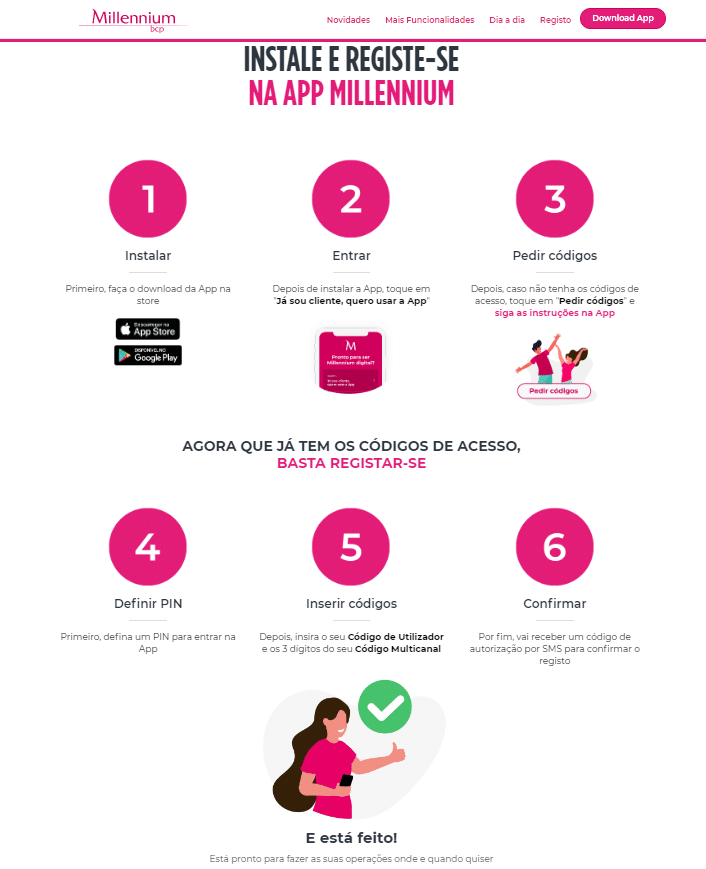
Nestas duas comunicações a finalidade é idêntica: os bancos explicam como se pode criar conta de utilizador na App. Ainda que ambos apresentem a informação de forma concisa, é notória a diferença de tom de voz num caso e no outro:
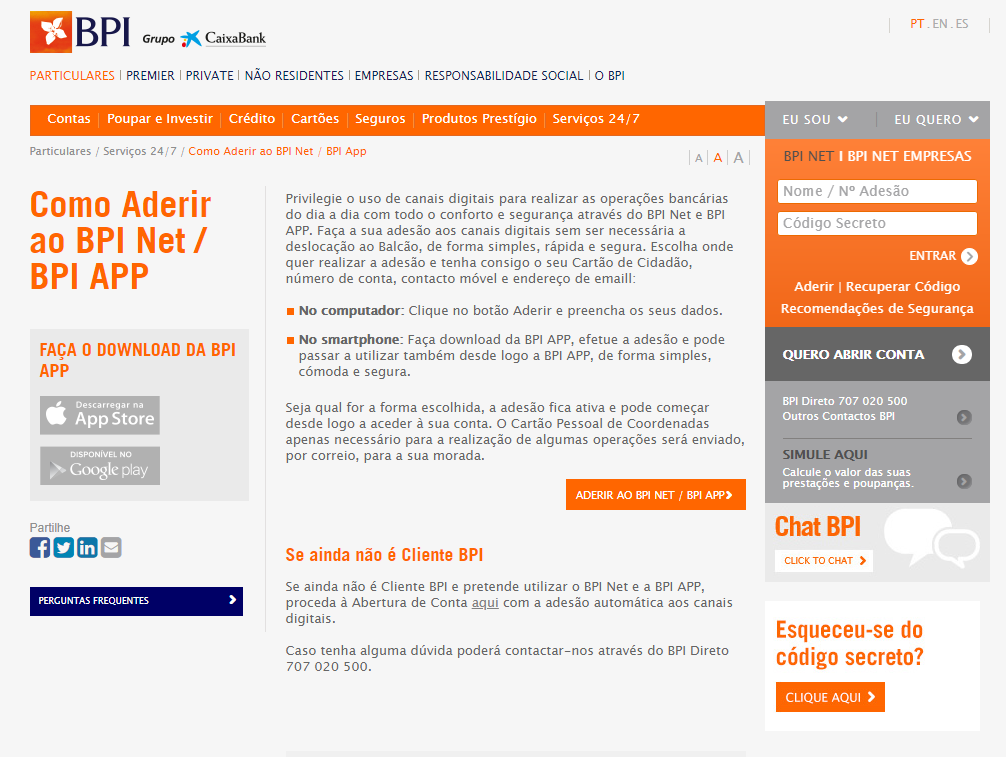
O BPI opta por um tom mais sério e a informação é apresentada em texto, num website de cores sóbrias. Corresponde a um tom mais tradicional e competente.
Por sua vez, o Millennium BCP aposta num tom mais empático, com uma apresentação resumida em passos, através de infográficos, com cores vivas, e sela com um gif no final que transmite o sentimento de tarefa cumprida (“E está feito!”). Corresponde a um tom empático, flexível.
3. Renova: elevar o papel higiénico à categoria de lifestyle
Ao longo da sua história, a Renova conseguiu transformar um dos produtos mais básicos das nossas casas, cuja finalidade nada tem de atrativo, num artigo utilitário com design. Como? Sob uma perspetiva «fora da caixa» daquilo que é o tradicional e com uma voz viva que chega a nomear o seu papel higiénico “o mais sexy do planeta”.
Há alguns anos reposicionou-se internacionalmente, lançando o papel higiénico preto, sendo desde então reconhecido além-fronteiras:
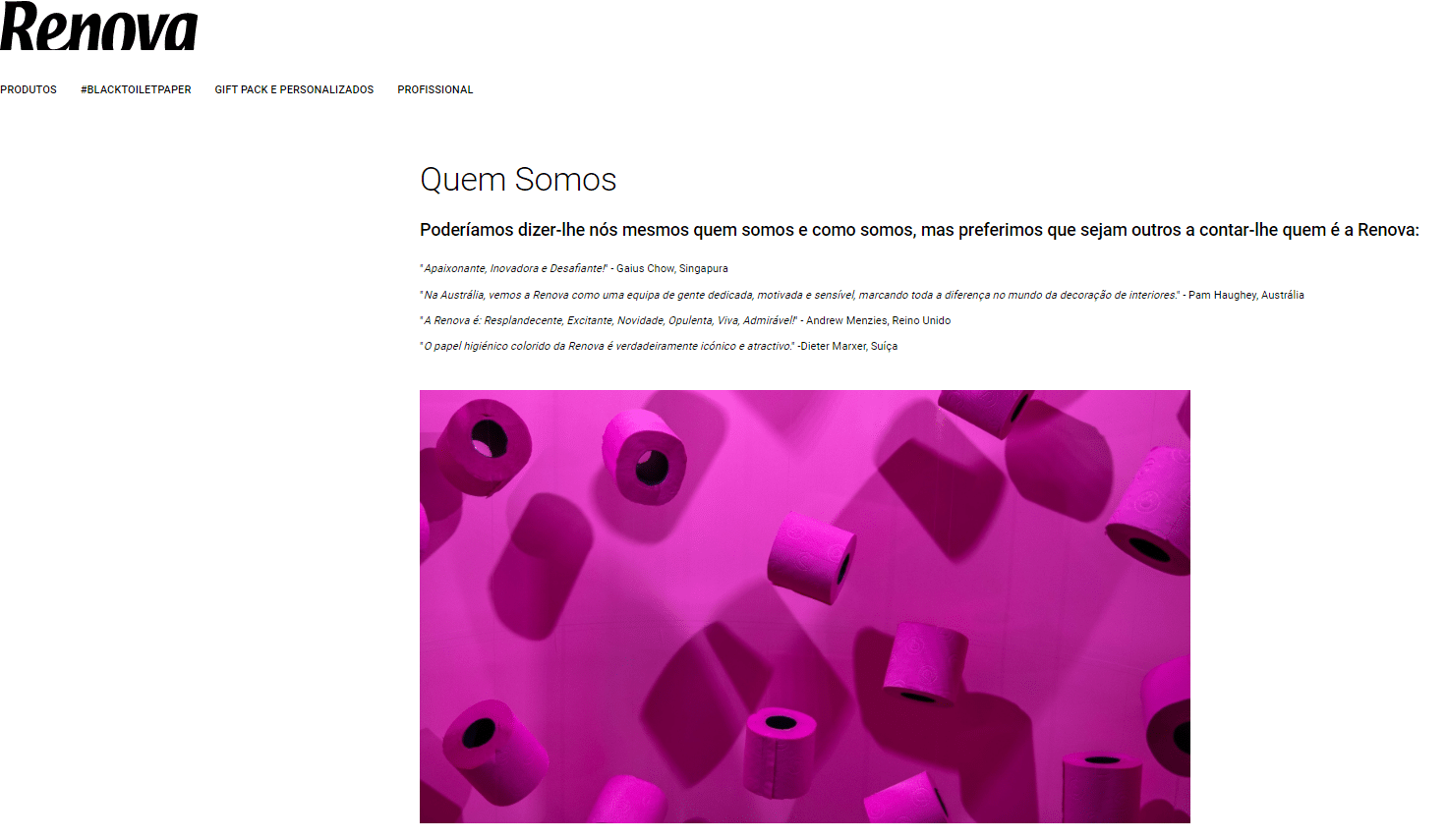
No Instagram, reconhecemos o tom de voz irreverente porque a marca mantém essas qualidades, expressas nas cores brilhantes, no elemento «internacional» e a mensagem divertida: