Digital activism

Marta Peral Ribeiro – Communications Consultant – The digital side of activism Digital activism began in the 1990s and has grown exponentially in recent years thanks to social media. Political, social and environmental causes drive activists all over the world, who use social media as a megaphone to reach the masses and spark change. And brands are not outside this conversation.
Marta Peral Ribeiro – Communications Consultant – The digital side of activism Digital activism began in the 1990s and has grown exponentially in recent years thanks to social media. Political, social and environmental causes drive activists all over the world, who use social media as a megaphone to reach the masses and spark change. And brands are not outside this conversation. What is digital activism?
Also known as cyberactivism, online activism or clicktivism, digital activism is, quite literally, any activism that takes place in the virtual world.
Through digital resources such as social media posts (including live broadcasts), online petitions, email campaigns, educational content on a website and text messages, it is possible to mobilise groups of people around a change. And it can all be done from a smartphone.
Digital activism has a few advantages over “physical” activism, namely:
- The reach of the message, which gets to far more people in far less time;
- The ease of communication in general: getting the message across, the process of mobilising people and even recruitment;
- The chance to continue discussions that started offline;
- New ways of involving the community;
- The capacity to gain more expression and acceptance than it would have in the public sphere;
- The opportunity to reach different audiences.
This article focuses in particular on social media, as it is the most common communication tool in digital activism and the one that has the greatest impact in terms of mass change. Social media as a communication channel Source: @merakist, Unsplash For many movements it was the first time in years that a group could not go out to demonstrate. The pandemic forced various actions to go digital. Take Black Lives Matter, Greta Thunberg’s Fridays for Future, or the LGBTQI+ community’s Pride March.
And, unsurprisingly, platforms such as Facebook, Instagram, WhatsApp, YouTube and Twitter have long since become a favourable space for driving an activist movement, as they offer a familiar and multifaceted environment.
These days social media serves far more than mere entertainment. We use it to look up news, culture, products and brands. On top of that, social media has enormous power to connect people globally. In other words, what happens locally in one minute can reach the entire world the next — all it takes is posting the content on social media. Users, in turn, feed the debate.
We all know about the Floyd case last year, which spread around the world in a matter of hours. Turning social networks into social impact
According to the Global Web Index, the impact of the tragic events involving George Floyd was global in scale, starting in the United States and spreading across Europe, Asia and Africa.
The videos captured live on the smartphones of passers-by travelled through social media like wildfire, lifting the Black Lives Matter movement to a level never seen before, with huge social repercussions that also brought companies into the conversation.
Many brands publicly stated their position on the case, standing up for social justice. Brand activism
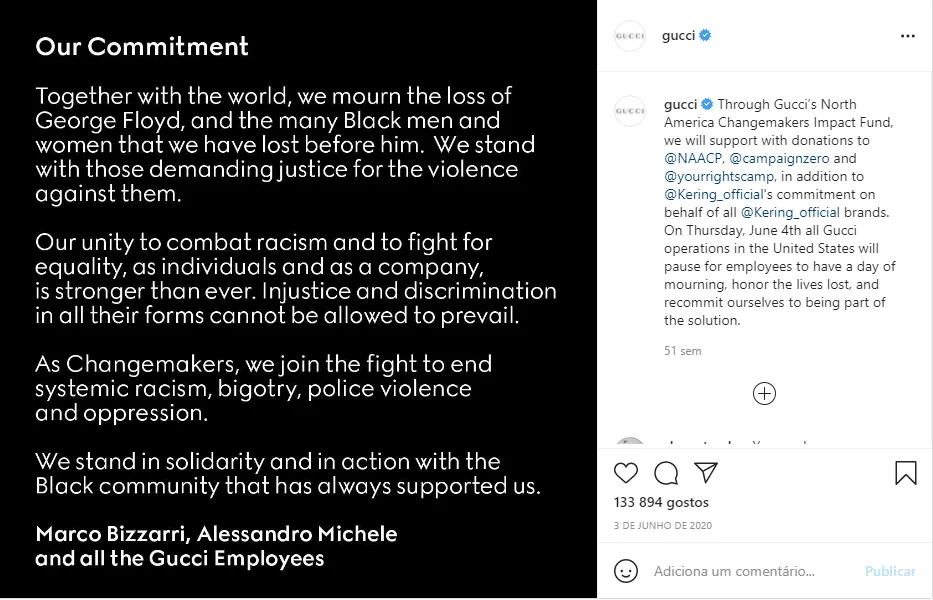
Still on the Black Lives Matter example, some companies issued public statements to show their support for racial justice, while others announced changes to internal policies in favour of ethnic inclusion. Source: Gucci Instagram Source: Sephora Instagram Beyond that movement, there are also brands that have announced actions for gender equality in organisational culture or actions for environmental sustainability.

Brand activism can bring companies a number of advantages — beyond the relevance it gives to the cause itself. The main benefits include brand visibility and recognition, a stronger internal team and customer loyalty. Brand differentiation
A brand that takes activist action is (re)positioning itself in the market.
As well as standing out within its segment, it stands out among consumers, who notice it and will want to get to know it better if they share the same ideals.
With the profile the brand gains comes a domino effect, in which various players start paying attention and talking about it: users on their own social media (including influencers), information shared on third-party websites, offline media, and so on.
Team motivation
An ethical environment, where human values are a priority, makes any company more desirable to most employees — especially younger ones, whose activist spirit is more pressing — because it fosters a sense of belonging that influences their productivity.
If, on top of that, the company stands up for social or environmental causes that benefit everyone, it will not only attract other professionals but also make it unlikely that those already there will want to jump ship — or rather, leave their post.
Customer engagement
When a consumer likes a brand and identifies with the cause it actively defends, an emotional connection is created. That makes them want to buy its products or services, because they know these align with what they believe in and they want to contribute to it.
In other words: an engaged customer is a loyal customer.
And, of course, a brand cannot survive without customers. After all, their behaviour influences what companies do. Consumers are paying attention and expect responsibility from companies — above all, that they take real action consistent with what they claim to support. What do consumers really want to see? Real action.
Sometimes companies create campaigns that in practice turn out to be ineffective or, worse, ring false.
Consumers want to see brands reshaping their internal culture and recruiting people regardless of their ethnicity or background.
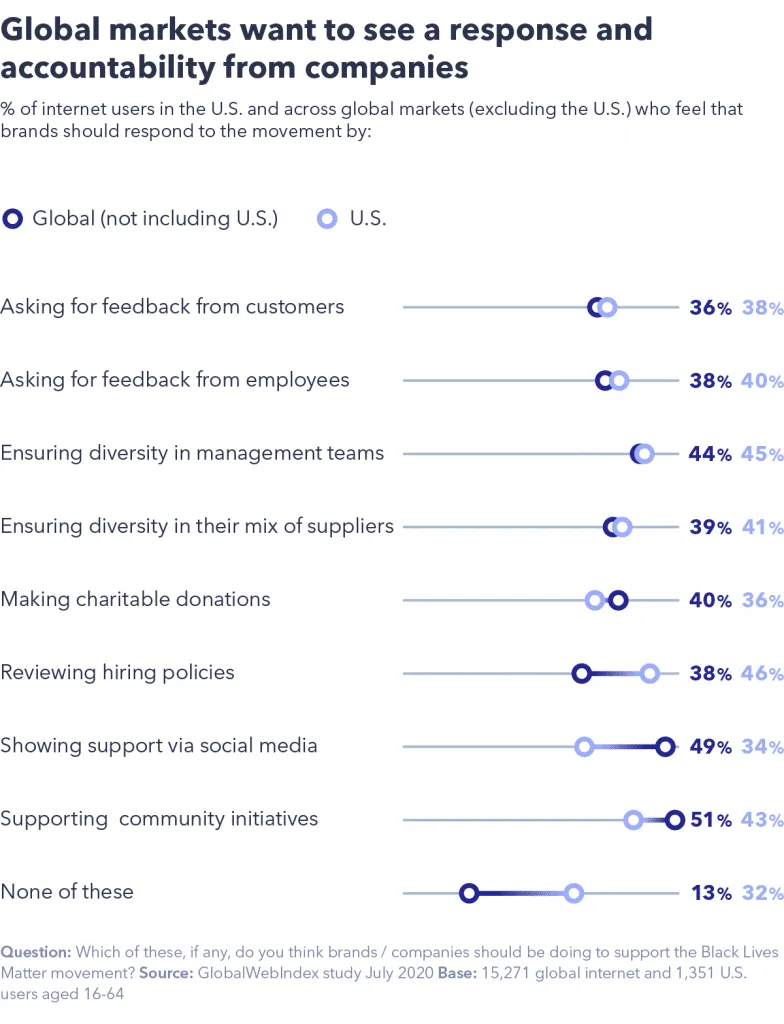
The Global Web Index study (2000) mentioned earlier shows that the main actions in support of the Black Lives Matter movement that people expect from brands are:
- sponsoring local initiatives;
- publicly showing their support through social media;
- inclusion in the company’s leadership positions.
Source: Global Web Index, 2020
The power and responsibility of consumers/users
Every purchase we make is a political act.
What we buy and where we buy it is a choice we make over another. In other words, it is up to the consumer to decide who gets their money — and their power. Online the logic is the same, albeit with slightly different nuances. Each user has the power to influence in proportion to the size of their network.
1 click – 1 vote
We can show interest in and support a person, a movement or an institution through:
- pages we follow
- posts we «like»
- comments we write publicly
- sharing activist content
Off social media, we can spread the word about their actions, forward their emails, petitions, and so on.
Commitment vs taking the easy way out
As we can see, all our online behaviour represents what we identify with, and what we do can serve as a vote.
However, it is essential that this behaviour remains consistent offline too, and that is one of the challenges of digital activism. The project “Ativismo digital em Portugal: um estudo exploratório” points to the complacency that exists online, given how easy it is to hand out likes or share content, and how more concrete actions expose the hollowness of that commitment. Where to start? Which cause will the brand invest in?
Considering the brand’s history and reputation, what drives it? Which cause makes sense to stand up for? Once the cause and its motivations have been identified, it is essential to do plenty of research and gather facts and all kinds of hard information that make the issue indisputable.
Draw up a financially viable strategy
When a brand decides to publicly back a cause, it needs a carefully thought-out strategy. One of the basic principles is having a sustainable financial structure in place to cover both the campaigns and any unexpected developments.
Know your audience
Who are your customers and followers? Are they aligned with the cause you want to support? How can you communicate the message so that users take it in properly? On the other hand, it also pays to know your opponents.
Vary the formats across your communication channels
Digital platforms offer a whole range of publishing options. From live videos to images or videos with educational captions, petitions, event creation, hashtags dedicated to the movement (hashtivism), stories and fundraising.
Educational content
Give your followers useful content that explains the reasons behind the cause the brand supports and the studies that back it up, share the changes being made to your own organisational structure, and use infographics to explain how each consumer can contribute.
Support network
Nothing moves without the collective. Find partners and digital influencers who identify with the same causes to extend the reach of the message. It will benefit both sides.
Commitment
Real cultural change takes time, and that involves a strong sense of responsibility. In a world of constant change, consumers increasingly value consistency. And that consistency goes beyond the work itself: it also includes the public image, the brand reputation built day by day.
Support for local initiatives
Concrete actions, such as donations to community initiatives, prove the support a brand is giving. Not every company is in a position to make donations, but they can look at what they already do and what they can best offer in the place where they already are.
Integrity in organisational culture
The cause defended publicly should be practised inside the company itself. For example, would it be consistent for a brand to champion environmental sustainability while providing disposable materials or harmful detergents in its offices or shops? Or to back Black Lives Matter on social media and turn away employees from other ethnic backgrounds? Are there risks in taking a stand? Yes.
Some brands have been criticised for standing up for a greater good, and others have provoked public outrage through contradictory actions, as was the case with L’Oréal Paris a few years ago.
In 2017 the brand faced protests for sacking transgender model Munroe Bergdorf over her statements about violence and white supremacy. Three years later, the model returned to L’Oréal, and now sits on its diversity and inclusion advisory board in the United Kingdom.

As the saying goes, you can’t please everyone.
That said, if the cause is already part of the brand’s DNA and there is solid strategic thinking behind it, followers will stay with it on this front too. They are most likely to keep buying consistently and, quite possibly, the brand will also attract new customers precisely because of the cause it supports. Inspiration
I could mention any number of examples of brand activism, but I’ve chosen the cosmetics brand The Body Shop because it brings together several of the principles covered in this article and has been consistent over the years.
Known for its commitment to the environment, the brand has launched a range of campaigns for environmental sustainability and, more recently, on self-esteem.
Refill campaign
The company has installed 7 refill stations in its Portuguese shops so that customers can refill their products in their own bottles.

Self-Love campaign
In this campaign, the brand aims to give people confidence and self-esteem, showing they are worthy regardless of their appearance, gender, ethnicity and choices. Images with explanatory captions and inspiring videos (Instagram, Facebook and YouTube)
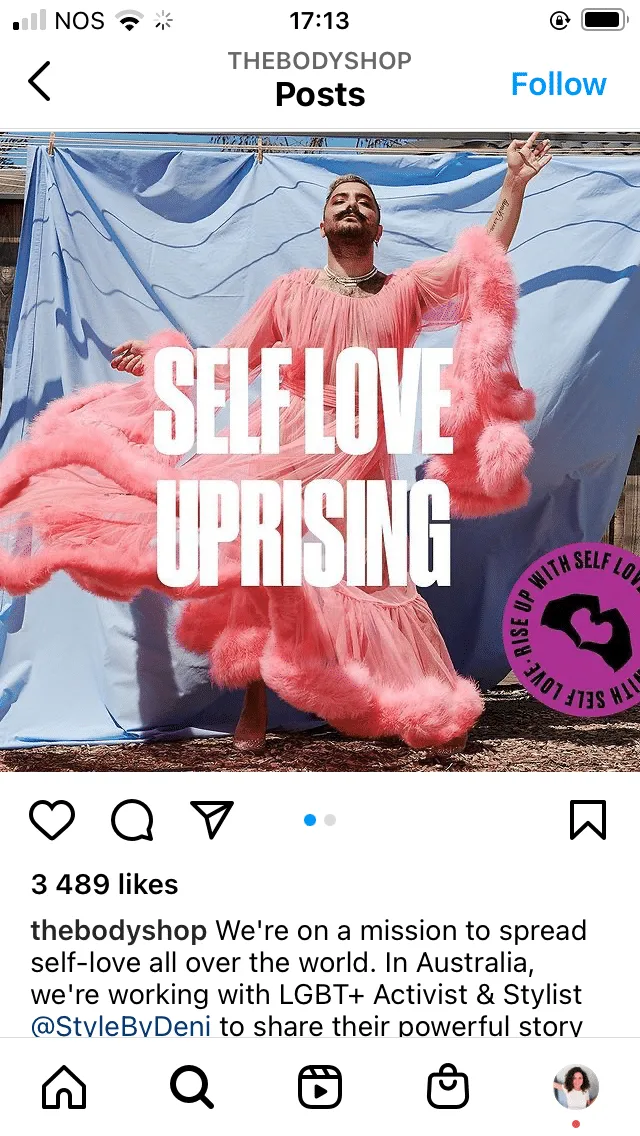
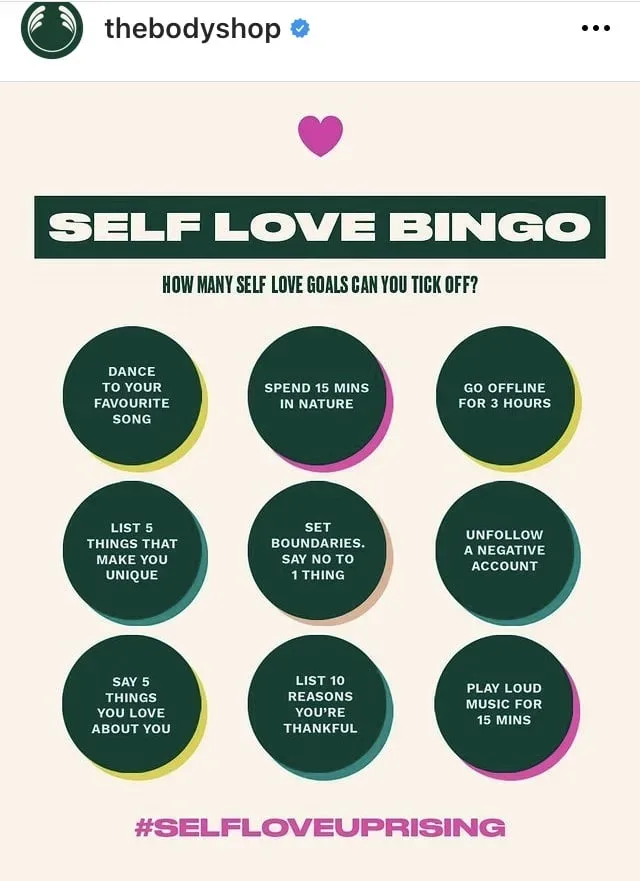
- Interactive images with the campaign hashtags
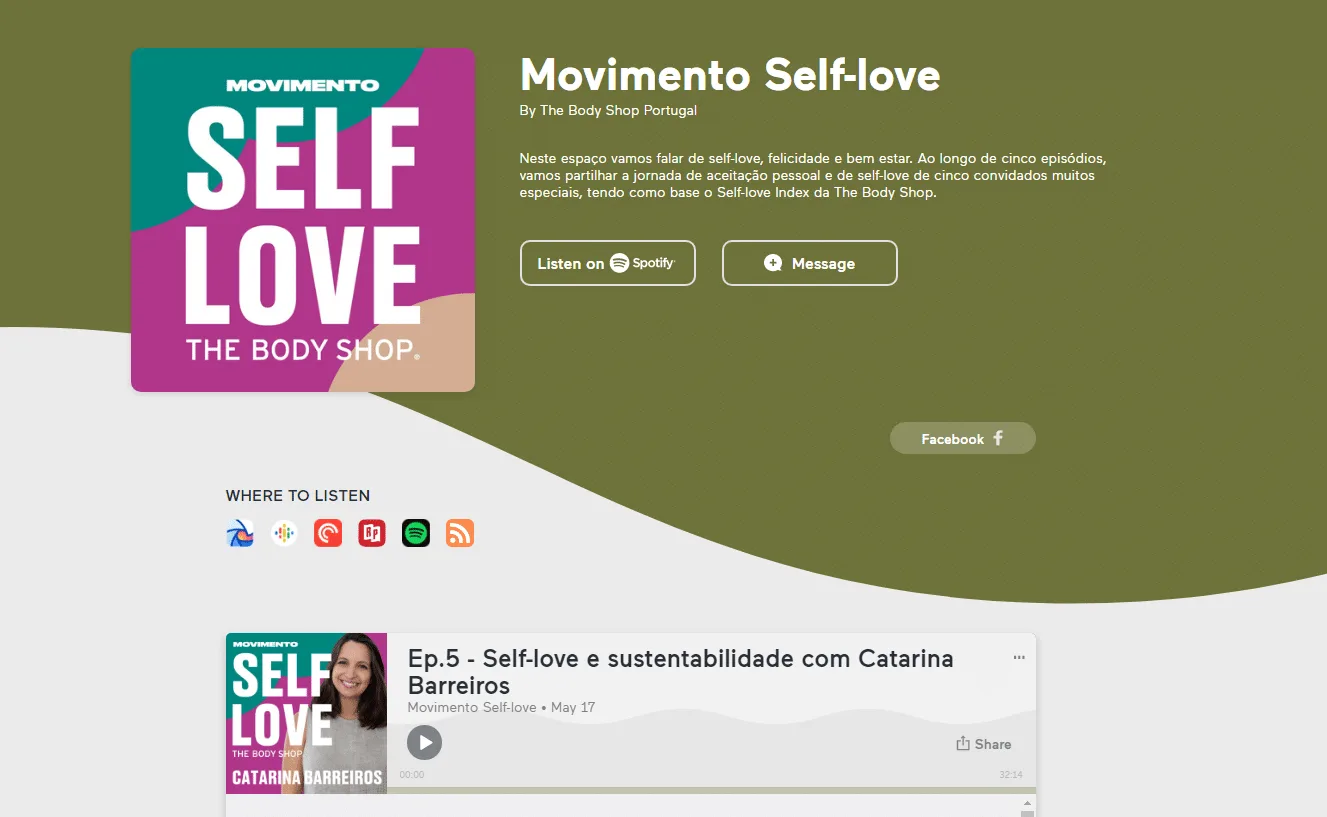
Source: Instagram – The Body Shop Podcast with special guests, including digital influencers Source: Anchor – The Body Shop On its website it published an interesting study on the subject, in PDF format, available to download (in English)
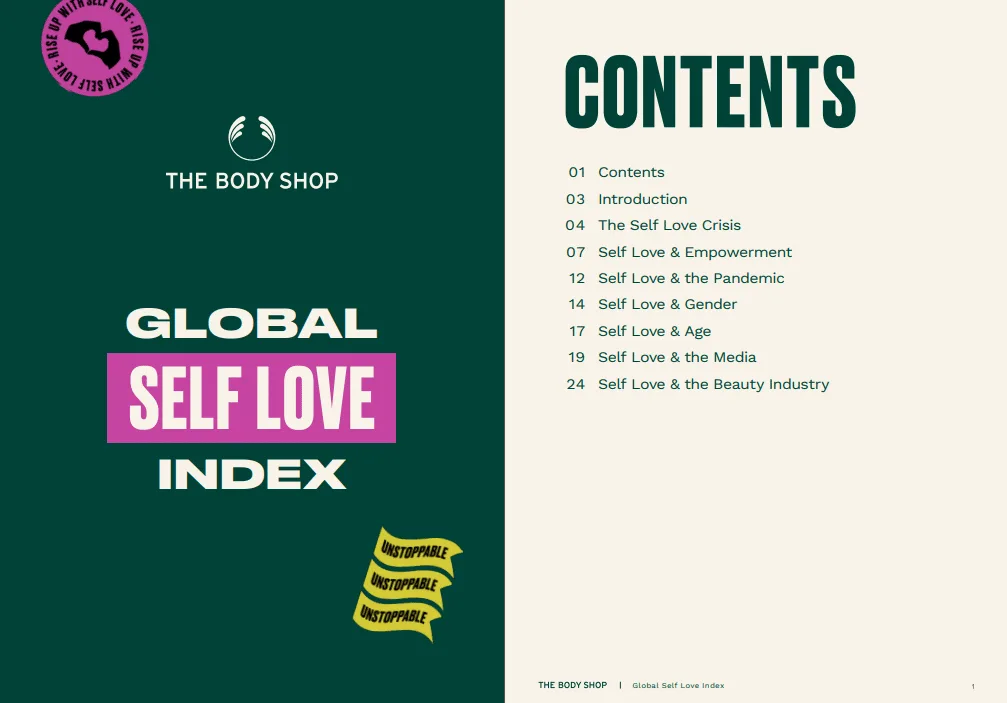
To finish, this example also shows the relationship between what happens on a social network and how it extends into other strategies, such as campaigns, driving traffic to the website, and others that can happen offline, such as conferences, seminars and so on.


Get what we write
No fixed calendar: only when there is something worth your time.