From the Ground to Digital

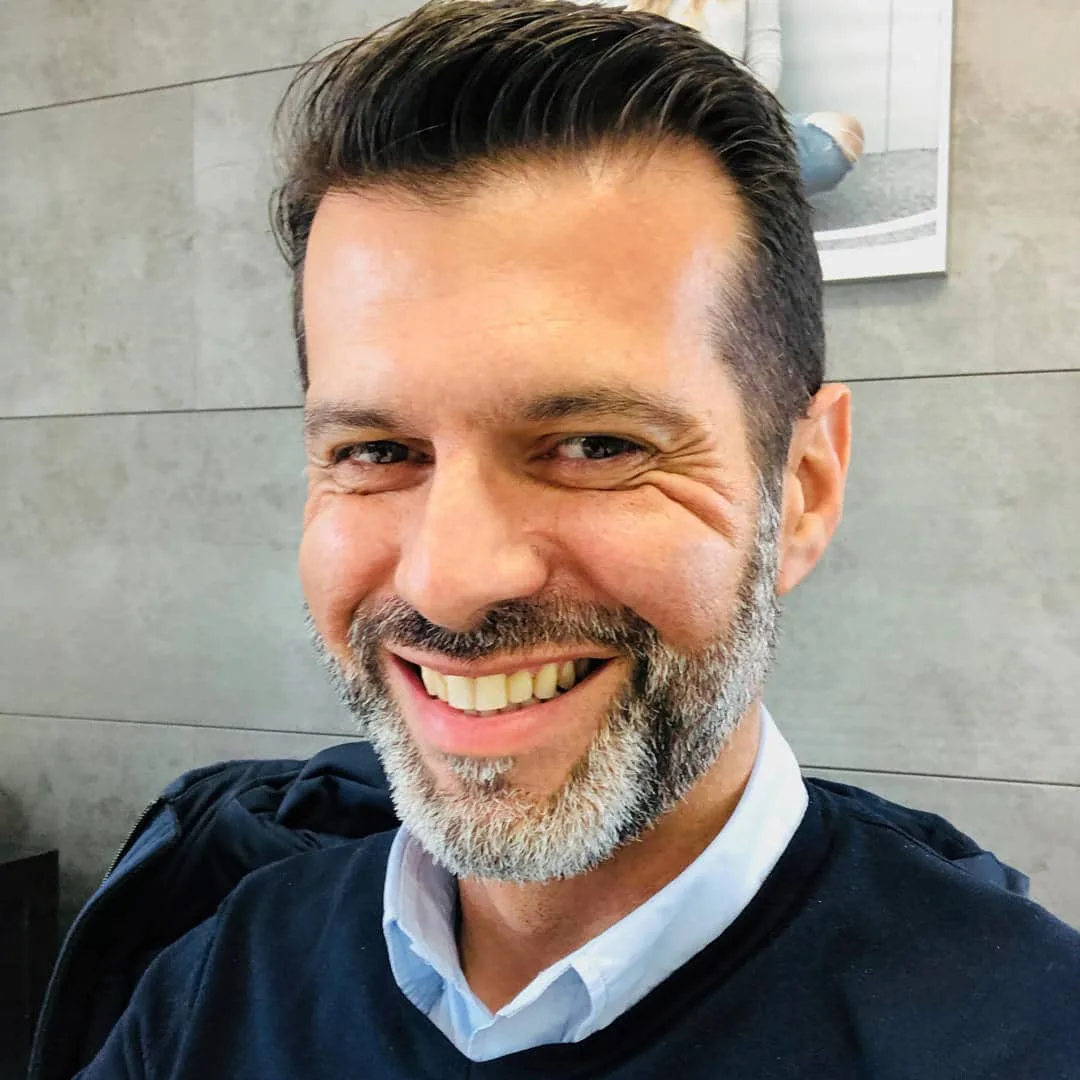
Gonçalo Malho Rodrigues (managing partner)
It was through a client's recommendation that I came to meet this new client, Rui Neves, owner of Mascarilha (in partnership with Alexandre Teixeira). Mascarilha specialises in party accessories and festive clothing, with a turnover of more than €2.5 million and consecutive double-digit annual growth. Mascarilha has 4 physical shops in Portugal and an online shop that already accounts for more than 30% of its total sales.
Gonçalo Malho Rodrigues (managing partner)
It was through a client's recommendation that I came to meet this new client, Rui Neves, owner of Mascarilha (in partnership with Alexandre Teixeira). Mascarilha specialises in party accessories and festive clothing, with a turnover of more than €2.5 million and consecutive double-digit annual growth. Mascarilha has 4 physical shops in Portugal and an online shop that already accounts for more than 30% of its total sales.
The question
It was 2015 and, in conversation with Rui Neves (today also a friend), I realised they were making no investment whatsoever in digital marketing, not even Google Search (the bare minimum you'd expect). Well… To me, the opportunity to sell Mascarilha our marketing and communication strategy services seemed obvious, since the website development and support services were already contracted. So it was in that spirit that I asked him why they weren't investing in digital marketing, or why they didn't have any kind of digital strategy. To which Rui replied, quite unassumingly: “You know… Our marketing has been making sure there's always product available in stock and that it's delivered by the date we promised.”
This paragraph now represents my moment of silence, dedicated to processing that answer.
Let me explain. My mindset was soaring so loftily over the digital universe that this answer, at once unexpected and lucid, pulled me back down to solid ground. Of course, Rui was absolutely right in his strategy. Although apparently old-fashioned, that awareness only showed how responsible and solid his management was. What Rui actually told me was something along these lines: I recognise the importance of promoting Mascarilha with digital marketing activity and I'm open to doing it, but so far we've been focused on delivering an outstanding service to our customers. Rui was, as the results prove, thinking straight.
Overhype or level up?
… Customer Satisfaction happens when we manage, quite simply, to deliver what we sold and by the date we promised.
We live in times of saturation across the channels that are open to anyone who wants to show up and promote their products or services, whether on social networks like Facebook and Instagram or on Google Ads. Because of that, you have to look for differentiation, and it ends up carrying more weight in the sales pitch than in the actual experience we get from the purchase.
Every day we see terms like service excellence and customer satisfaction being thrown around, and products being “injected with steroids”, to create the feeling that the customer isn't just buying the product itself but a whole set of benefits around it. We know these are marketing tactics, and that's fine, as long as the basics are actually delivered first and the extras come afterwards. When that isn't the case, all we do is disappoint.
A practical example: I book a room in a three-star hotel in the city centre with breakfast included, the room has a huge, modern TV, the bathroom has distinctive, exclusive liquid soaps and on the bed there's a tray with a hamper of local delicacies waiting for me. A string of fantastic details. Except I couldn't sleep in that hotel because the mattress was bad, the bed linen smelled and the room was damp. What good did all those touches around the product do the hotel when it couldn't deliver the basics?
I love eating popcorn at the cinema, but only if I can actually watch the film that took me there.
We live in times when Customer Satisfaction happens when we manage, quite simply, to deliver what we sold and by the date we promised. It may sound elementary, but it isn't. A good reputation, whether for a business or in our personal lives, is built on what the Americans like to call walk the talk. Just as in our personal lives, the friend who always turns up on time, who promises to send an email tomorrow with the information you asked for and the next day that email actually arrives, becomes someone reliable and predictable. That's what all of us look for in any company: that it delivers what it sold us. And then, yes, if we're delivering the basics, we can go on to surprise people with details that add value to our product.
Adapt or die
The two partners realised they had to do something about this (…) they took the initiative of setting up a few display units in their small office and, before long, they had their first queue of customers at the door.
All of this becomes more interesting when you know the story didn't start out this way. In July 2004, Mascarilha began trading with the aim of claiming an untapped space in the online market, with its virtual shop selling party goods at www.mascarilha.pt. They had nothing beyond the online shop and a 40 m2 office. And there you go… What happened was that a significant group of potential customers kept asking whether they could see the products in a physical shop before buying them. The two partners realised they had to do something about this, and just 2 months after starting out they took the initiative of setting up a few display units in their small office and, before long, they had their first queue of customers at the door.
What can we take from this story? Mascarilha's original strategy was to be an exclusively online business, but what potential customers were saying revealed that there was perhaps another route that had to be taken first, one that involved cementing the brand's offer on the ground. They could have insisted on sticking with the digital strategy and might even have prevailed one day (though we'll never know how much time and money later) or, as they did, they could respond to what the market was telling them, finding an answer that would build the confidence customers needed in order to buy Mascarilha's products. So the detour they originally made from digital to the ground floor of physical shops turned out, in fact, to be the foundations for carrying them back into the digital universe.
Foundations for a digital strategy
(…) with a management model like Mascarilha's, I know I'll have the most sought-after and interesting books in stock, ready to sell to my customers. Now, how do I carry that same experience over to digital?
First of all, I'd start by forgetting the “digital” (the medium) and focusing on what's core (the essence). What is the essence? It's the business stripped of “trimmings or make-up”. What does my company actually do (or intend to do)? And how? What sets me apart? Am I really delivering what I say I do? What should I decide not to do? Less is more, let's not forget. These are some of the things I'd take into account in order to find the model and the means to make my business so solid that I know I can control every aspect related to my customer's satisfaction. And consequently, my business's reputation.
If, for example, I have a bookshop on Avenida da Liberdade in Lisbon, with a management model like Mascarilha's, I know I'll have the most sought-after and interesting books in stock, ready to sell to my customers. Now, how do I carry that same experience over to digital? I'll obviously need a digital strategy and I'll have to make the necessary adaptations to the physical model of purchasing, stock management, logistics and delivery, so I can cope with the scale and volume that digital will bring me (with the right promotion, of course). It's with this understanding of the nature of our business that giants like Amazon are built. Amazon would always have been a great company, in or out of digital, because its essence holds up regardless of the medium it operates in. In the early days, Jeff Bezos did the maths and instructed his marketing team to get as many leads as possible at a CPA of $20 USD each. No lower, no higher. As I said, he did the maths and worked out that leads at that CPA were qualified and that the conversion window was short. We all know the rest of the story.
With that idea in mind (and in practice), we're ready to put together a Marketing and Communication Strategy geared towards digital, grounded in a firm knowledge of the ground we stand on so we can step onto this new ground we're safely carrying across, from the ground to digital.
JTNDZGl2JTIwY2xhc3MlM0QlMjJmYi1jb21tZW50cyUyMiUyMGRhdGEtaHJlZiUzRCUyMmh0dHBzJTNBJTJGJTJGd3d3LmplbGx5Y29kZS5wdCUyRmFydGlnb3Mtb3BpbmlhbyUyRmRhLXRlcnJhLXBhcmEtby1kaWdpdGFsJTJGJTIyJTIwZGF0YS13aWR0aCUzRCUyMjEwMCUyNSUyMiUyMGRhdGEtbnVtcG9zdHMlM0QlMjIxMCUyMiUzRSUzQyUyRmRpdiUzRQ==
Get what we write
No fixed calendar: only when there is something worth your time.

Gonçalo Malho Rodrigues
Fundador & CEO
Fundou a Jelly – Digital Agency em Portugal em 2010 e a Strivesync – AI-Native Systems no Dubai em 2026. Detém outras empresas, noutros setores, como a Stronddo – Online Art Galleryl, a Scallent – Human Talent. Gonçalo, criou a The Change Framework, que apoia líderes a gerar a mudança através da mobilização de equipas em torno de uma causa.