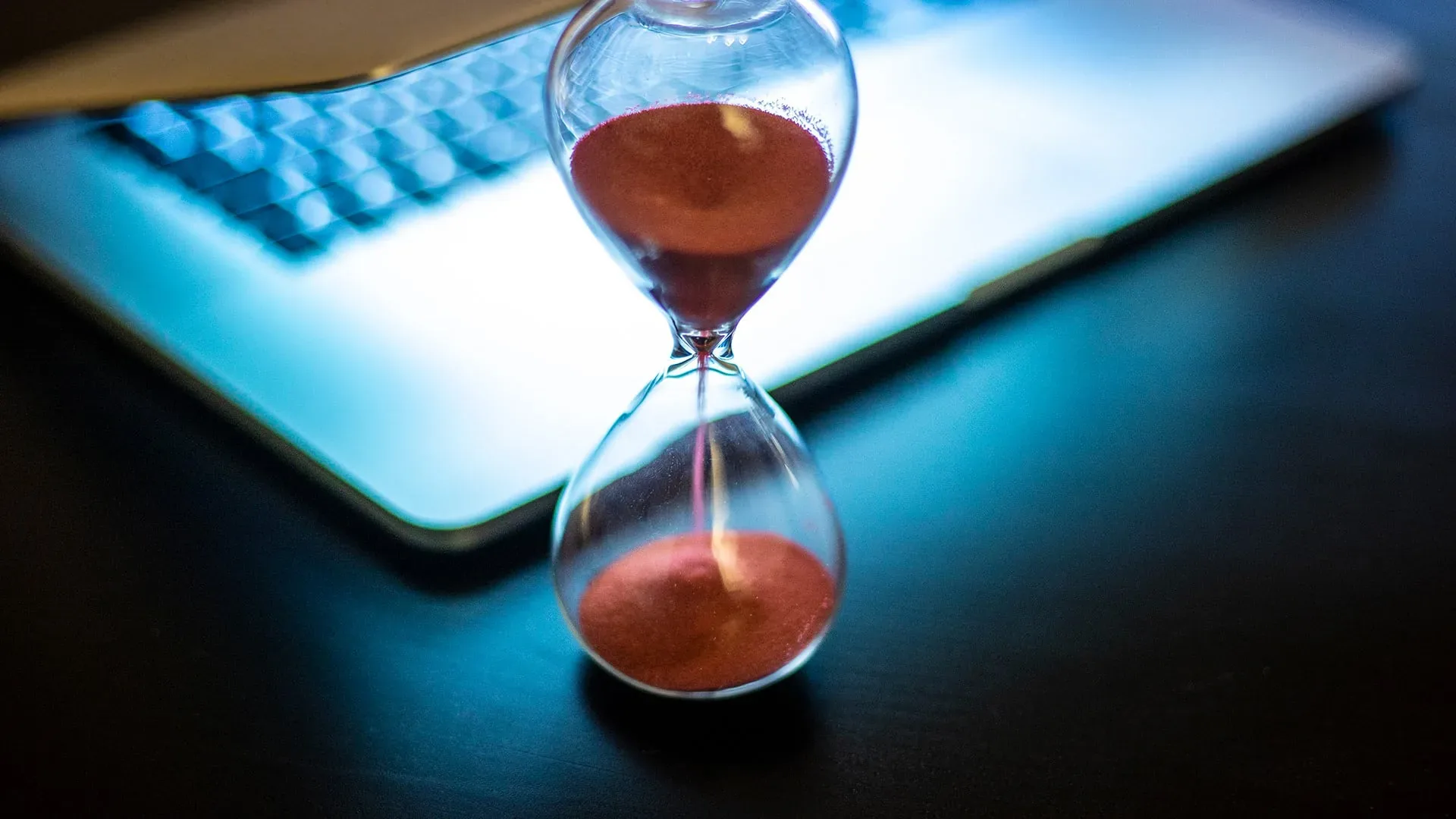
The planning fallacy – the gap between estimate and reality.
Ana Mendonça Morais – Marketing & Communication Strategist –
How often do you get it wrong when predicting how long the tasks you take on will take? Probably more often than you'd like… and if that's not the case, congratulations on your time management skills!
Ana Mendonça Morais – Marketing & Communication Strategist –
How often do you get it wrong when predicting how long the tasks you take on will take? Probably more often than you'd like… and if that's not the case, congratulations on your time management skills!
The truth is that most people don't make very realistic time predictions and end up having to deal with the frustration of tasks that drag on, sometimes with unwelcome consequences. But there is an explanation for this failure, and there are also a number of methods that can help you meet your deadlines more easily and efficiently.
The planning fallacy

This difficulty in estimating how long tasks will take is called the "planning fallacy". It's a term used by psychologists, first coined in 1979 by Daniel Kahneman and Amos Tversky, to describe our tendency to underestimate how long a task will take. As a rule, we misjudge time for one of two reasons:
- We don't take into account how long similar tasks took us in the past;
- We assume nothing will go wrong and cause delays, even when it has happened before — working on the idea that the future will always be better than the past.
There are also cases where both factors combine, creating a perfect recipe for planning failure — we ignore how long previous tasks took and we fail to allow for anything slipping out of our control. And that's how we find ourselves pulling all-nighters at work or rearranging our plans to finish everything that was needed yesterday!
Experience can work against us

Contrary to what you might think, our level of experience with a given task can also influence a poor time estimate, as can the way the task is meant to be carried out. How we perceive the time a task or project will take is directly related to how well we know the subject.
Take, for example, a photographer experienced in shooting product images for e-commerce. Compared with a less experienced colleague, this photographer may tend to estimate less time for the same job. The experienced photographer will be more optimistic when calculating the time because they've already done several similar jobs. If those jobs took 3 days, they may assume they can do the same kind of work in the same time or even less — here they're drawing on historical data (experience), but without allowing for anything going wrong.
The less experienced photographer, on the other hand, may see the same task as more complex and therefore estimate more days to complete it.
Of course, experience can help rather than hinder. In that case, the more experienced photographer will factor in that something might go wrong and that, given how long similar past tasks took, they'll need to allow more time to finish the job.
The less experienced photographer, on the other hand, may have no real sense of how complex the work is and be far too optimistic about finishing it, and so fail to deliver within the time estimated.
The best way to carry out a task
Let's assume we learn from the past, that we always allow for something going wrong and that we're becoming more experienced. Why, then, do we keep getting our time estimates wrong? The answer can be quite simple: because we don't consider the way the task is supposed to be done — the way being the process for completing a task, or the route to our destination.
Take a GPS as an example. We decide we want to get from point A to point B and, based on the GPS settings, it works out a route. Those settings represent the way — I can ask for the shortest route, the one with least traffic, or one avoiding tolls. Right there we have 3 different routes to get where we want to go — which is to say, 3 different ways of completing the task. The GPS works just as well in all of them, but it's up to us to decide which is best for us.
As a second example, take building a website. We can easily conclude that there are hundreds of different wa
ys of fulfilling the same function, right? So, for the sake of greater productivity and effectiveness, we should decide from the outset which one we want, so that we can deliver what's required in the shortest possible time, achieving the intended functionality through the right means. In many cases more time is spent working on the form than on the function, which is why defining how a task will be carried out matters just as much as defining what it has to do.
Time estimation techniques
Now that we know where our time predictions go wrong, it's worth clarifying how to overcome these obstacles so we can sharpen our time planning skills. Here are 4 time estimation techniques that will help you work out how much (real) time a task might take:
Use historical data

Think about tasks similar to the one you're planning and work out how long they took to complete. Of course, to do that you first need to gather this data on past tasks, whether you carried them out or not. A simple way to get it is to use an app that tracks how long each task takes, so you can then analyse it and base your next estimate on it.
Ask someone else to make the estimate

We may not be good at predicting how long we'll take to do something but, as a rule, we're much better at predicting how long others will take! Whoever is making the estimate is far more likely to be realistic and to base it on historical data (something we don't always apply to ourselves).
Estimate for 3 different scenarios

We all run hypothetical scenarios about almost everything in our day-to-day lives. Use these scenarios for your time estimates, with real numbers — hours, days, months or years:
- Think of the best-case scenario, if everything goes as it should;
- Think of the worst-case scenario, if everything goes wrong;
- Think of the most likely scenario, which can be based on historical data from similar past tasks.
Then add up all the figures from these scenarios and divide by 3 — the result will very likely be the most realistic estimate.
Estimate at your least productive time of day

When we're full of energy we feel we can do anything and we take on any challenge, without giving much thought to the difficulties it might involve, and always optimistic about finishing it. When we're more tired, though, or simply in a less productive moment, we're more measured about how long those same challenges will take. Think about when in the day you're most tired, negative or low on energy and use those moments to estimate how long something will take. Then compare that estimate with others you've already made and find a middle ground, for a figure that should be more realistic.
Tip: most people hit their least productive moment in the middle of the day, right after lunch.
We hope these tips help you assess your time estimates more objectively and turn you into a master planner from now on!
Do you have other techniques for overcoming the difficulty of predicting how long your tasks will take, or for managing your time? Share them with us!
JTNDZGl2JTIwY2xhc3MlM0QlMjJmYi1jb21tZW50cyUyMiUyMGRhdGEtaHJlZiUzRCUyMmh0dHBzJTNBJTJGJTJGd3d3LmplbGx5Y29kZS5wdCUyRmFydGlnb3Mtb3BpbmlhbyUyRmZhbGFjaWEtZG8tcGxhbmVhbWVudG8tby1mb3Nzby1lbnRyZS1lc3RpbWF0aXZhLWUtcmVhbGlkYWRlJTJGJTIyJTIwZGF0YS13aWR0aCUzRCUyMjEwMCUyNSUyMiUyMGRhdGEtbnVtcG9zdHMlM0QlMjIxMCUyMiUzRSUzQyUyRmRpdiUzRQ==

Get what we write
No fixed calendar: only when there is something worth your time.