Green Marketing
Marta Peral Ribeiro – Communications Consultant –
With sustainability at the top of consumers' priorities, it's one of the biggest investments a company can make if it wants to win more customers — and make the world better, of course.
Marta Peral Ribeiro – Communications Consultant –
With sustainability at the top of consumers' priorities, it's one of the biggest investments a company can make if it wants to win more customers — and make the world better, of course.
A European study carried out in 2019 by Oney and OpinionWay shows that 85% of Portuguese people care about consuming sustainably (and 60% of those are women).
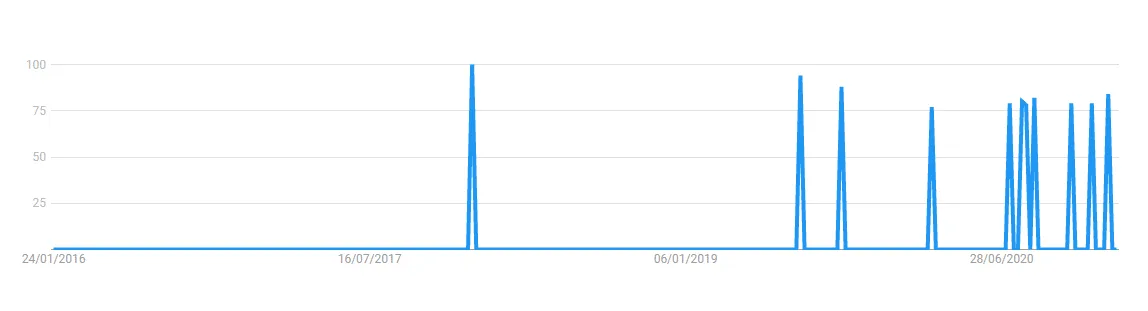
The growing number of searches for “sustainable brands” on Google Trends over the past few years confirms it:
What is Green Marketing?
Green marketing, ecological marketing, eco-marketing, sustainable marketing, environmental marketing… these are all names for the same concept: marketing focused on sustainability.

It can refer to the sustainability of products, of services, or simply to an attitude (of an organisation or brand).
How we got to environmental marketing
The impact of climate change, plastics in the oceans, deforestation, pollution and dwindling natural resources has never been so obvious in our daily lives.
As we've become more aware of the state of the world, our consumption habits have changed too.
We've started to realise we have to change something: what specific actions can we take? Which products can we buy that won't add to our carbon footprint? Which brands do I choose to support because they're investing in this?
And so brands started coming under pressure to change as well. From there to marketing was a short step.
Benefits
As well as directly benefiting the planet we live on, green marketing brings other advantages:
- Any consumer warms to a brand that cares about the planet — and therefore about people.
- It attracts investors, for the same reason.
- An eco-friendly stance helps your image, reputation, visibility and the sale of your products and services.
- In the medium and long term it will make the business money.
- It's one of the big global marketing trends, so investing in it puts you a step ahead.
What do consumers expect from brands?
1. Sustainable products (for the wallet too)
When it comes to buying a product, these are the things people weigh up:
- The price of the product
- The impact on health
- How long the product lasts
- Whether it's a local product
- Whether it's recycled and/or recyclable
- Whether it comes from fair trade
- The brand's reputation
2. Transparency
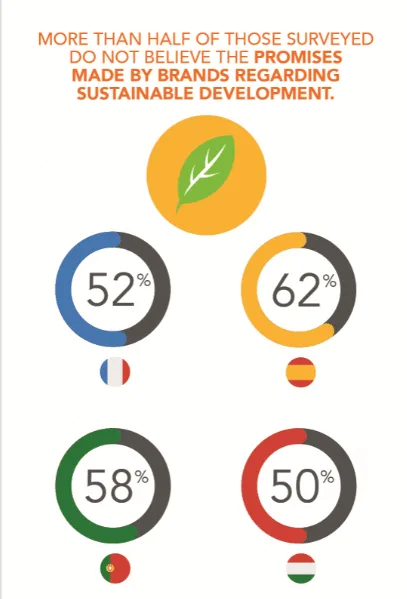
The fact that 58% of Portuguese people doubt brands actually keep their sustainability commitments shows that companies need to review how transparent they are.
Going green starts inside the company
- What sustainable measures has the company already put in place in the workplace?
- Does the team share an eco-friendly attitude?
- How can the business's activities reduce their environmental impact?
- Do suppliers practise fair trade and use environmentally friendly means to transport their products?
Sharing the progress made
As the company carries out actions for the environment, it should share the results so consumers can see the change happening.
3. Actions
Today's consumer wants to see concrete actions proving that brands actively stand behind the causes they promote (as mentioned above). For example:
- Programmes that consistently support an environmental cause.
- Initiatives that promote good consumption habits (for example, drink refill schemes; campaigns offering a discount on a new product in exchange for a used one; second-hand shops, and so on).
- Support for setting up environmental study centres.
- Partnerships with organisations driven by the same purpose.
4. Knowledge
Even when they want to do their bit for the environment, consumers don't always know what to do or where to start. What interests them:
- Information about products and services, understanding how a product is made, including how sustainable it is.
- Practical guidance to help them make everyday decisions that have less environmental impact (for example, how to cut down on food waste).
- Information about brands' current and long-term environmental policies.
- Tools that let them track their own green progress.
The magic formula of environmental marketing
Being sustainable isn't enough: you have to tell the world
While some companies are vocal about the environmental measures they're putting in place, others need to develop their communications strategy so consumers know about the progress they're making. In other words: they need to know how to get the word out.
That said, for communication to work you obviously need to know the market segment you're speaking to.
Once you've identified your target audience, you'll need to adjust the tone of the message, because not everyone cares about sustainability to the same degree. Nor do they have the same attitude. So the content will be different.
One of the questions to ask is: which communication channels are you going to focus on?
Social media: fertile ground
Digital platforms — and social media in particular — are the starting point for discovering new products, finding out about brands and hearing what other people say about them, as well as shifting opinions (and even awareness).
But what exactly do consumers want to see on social media?
Creativity and practical information
Consumers want realistic ideas and suggestions about sustainable lifestyles, so they can build sustainability into their daily lives.
How: explainer videos, infographics, Q&A posts.
Storytelling
Knowing the story behind a product or service (or even a campaign) has a big influence on how a user perceives it. Once someone understands the process, their thinking can shift and lead to changes in habits (including buying habits).
How: visually rich content, blog articles that build the narrative around a product.
Credibility
As a rule, a brand with a sustainable attitude looks after its reputation carefully and restates its values with conviction, because its reputation reflects its culture.
And how do we form an opinion about a brand? From what we know of it, what we hear about it, how credible we find it and, of course, the image the brand puts across.
In turn, a good reputation can win back consumers' trust in a brand, particularly through other customers' reviews.
How: surveys, infographics, encouraging reviews.
Brand interaction
Building a good relationship with users does a company a lot of good: it brings the audience closer, sparks conversation and increases the likelihood of conversion.
- User-generated content
User Generated Content (UGC) is, as we've mentioned in other articles, one of the most effective ways to influence other users. It includes reviews of products or of the brand.
How: hashtag challenges, videos or images.
- Communities
Communities connect people who share the same ideas and concerns, encouraging them to take a more active role and be part of the change.
How: live streams with in-depth Q&As, podcasts with experts on a particular environmental topic, interviews with people connected to sustainability.
Easy access to products
Social platforms themselves are developing tools that improve the customer experience, allowing sales directly from a brand's own page. So companies should streamline the e-commerce process within these platforms, making it easy for users to buy their products.
What we can learn from…
Ben & Jerry's
The ice cream brand known for its fair trade ingredients communicates in a way that brings consumers closer. How?
- By sharing its story and its progress through creative visual content.
- By building a good relationship with its followers and involving them in its narrative.
- By running campaigns that are consistent with its mission.
View this post on Instagram A post shared by Ben and Jerry's Portugal (@benandjerryspt)
IKEA
The furniture giant every family knows uses its digital platforms to show the steps it's taking to make the world a better place. How?
- By optimising the resources used to make its products.
- By putting circular economy solutions in place that extend the life of its products, such as furniture buy-back schemes, where used or ex-display furniture is resold at a reduced price in the Bargain Corner.
Portugal Manual
The Portugal Manual network is a platform that showcases small contemporary Portuguese artisans at home and abroad, with sustainable consumption as its founding principle. How?
- Through storytelling: we get to know who the ceramicists, designers and other makers behind the brands are, how they make their products and what those products are made of.
- By promoting local and fair trade: with visually appealing content and interviews on the blog.
- By making things easy for the user, who with one click can buy a product they'd otherwise struggle to find, because it isn't stocked in just any shop.



Get what we write
No fixed calendar: only when there is something worth your time.