Pandemic: the new opportunities for tourism brands
Miguel Afonso Gonçalves
Copywriter and
Travel Blogger
Covid-19 arrived and the world stopped. Catastrophic scenarios flooded our thinking, our expectations and our lives. But nobody has really tried to look at the less negative side of it. Is there really no hope for tourism? How can tourism brands adapt to the new reality?
Miguel Afonso Gonçalves
Copywriter and
Travel Blogger
Covid-19 arrived and the world stopped. Catastrophic scenarios flooded our thinking, our expectations and our lives. But nobody has really tried to look at the less negative side of it. Is there really no hope for tourism? How can tourism brands adapt to the new reality?
The sharp fall in global tourism demand, in the order of 70%-80%, back to levels not seen for 30 years
Throughout 2020, tourism has been the subject of thousands of news stories and comments in newspapers, on television and across social media. One of the economic sectors that contributed most to the economic and financial recovery after the last crisis is now going through one of the most turbulent periods in its history.
The sharp fall in global tourism demand, in the order of 70%-80%, back to levels not seen for 30 years, paints a very guarded picture of the sector's future, both in the short and the long term (figures from the OECD and the UNWTO).
It is worth remembering that among those affected by the pandemic are not only the people who make a living from the sector, directly or indirectly, but also the brands operating in this market — and it is their vitality that will drive the sector's recovery. That is why we are going to talk about them and try to understand how the Covid-19 pandemic can be the ideal opportunity to rethink the brands, the offer and the communication of the tourism sector.
A new kind of demand
The level of restrictions, the weak response in containing the virus and the slow recovery of the aviation industry are some of the factors the World Tourism Organization (UNWTO) points to as crucial for the sector's recovery
Up to now, Portugal has shown itself capable of reinventing itself again and again to remain a top of mind tourism brand on the international stage. Part of that strategy has been built on tracking what motivates consumer demand and constantly redefining products to meet it, as the many awards and distinctions on the industry's most acclaimed stages demonstrate — take the World Travel Awards, which even in its 2020 edition named Madeira “the world's best island destination”, Lisbon “the world's best city-break destination” and the Algarve “the world's best beach destination”.
However, the unexpected new global context has redefined the motivations behind choosing a destination. The level of restrictions, the weak response in containing the virus and the slow recovery of the aviation industry are some of the factors the World Tourism Organization (UNWTO) points to as crucial for the sector's recovery, but the field's leading influencers — whether respected institutions, specialist magazines or bloggers — list many other examples that will create new trends in tourism demand in the near future. What are those trends, and why should tourism brands be paying attention?
Domestic or nearby tourism
health safety and the ease of getting back home will become crucial criteria in the consumer's decision-making process.
Over the past decade we have witnessed the true power of social media and seen people rise to prominence through these tools. So-called influencers have an ever more evident influence on consumer buying behaviour — from micro-influencers to macro-influencers.
In Portugal, we saw the #EuFicoEmPortugal campaign, led by the Associação de Bloggers de Viagens Portugueses (ABVP) in partnership with tourism operators and local councils, and picked up by the media. Its primary aim was to call for tourism activity to continue, albeit with a clear focus on domestic tourism.
In the months, if not years, ahead, geography will carry far more weight than it did before. Why? As we have already said, faced with varied and unpredictable restrictions, health safety and the ease of getting back home will become crucial criteria in the consumer's decision-making process.
So to what extent is domestic tourism already driving the recovery in tourism? The image below illustrates the reality we can already identify.
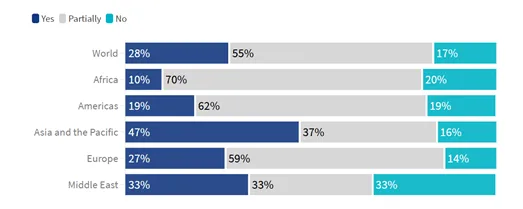
The global response has been unequivocal. The vast majority of people believe that domestic tourism is already, at least in part, the main engine of the tourism industry's regeneration.
A launch pad for new products
the end of mass tourism as we know it is a prediction from the World Tourism Organization itself, as a consequence of the pandemic.
If we have established that domestic or nearby tourism is an indispensable engine for the sector's recovery, how can tourism brands adapt their products to consumers' main needs?
In recent years, the leading tourism products tended to create mass tourism movements, partly fuelled by instant, high-profile exposure on social media. So urban, cosmopolitan destinations such as Europe's major cities and capitals will certainly continue on their successful path, thanks to the work done in recent years.
Even so, the social distancing rules now in force have opened up space for brands with rural and nature-based tourism products, off the usual circuits, to launch themselves into the industry. In fact, the end of mass tourism as we know it is a prediction from the World Tourism Organization itself, as a consequence of the pandemic.
This slump in the market buys time to build genuinely differentiating brands — something often noted as lacking in the strategic direction of many tourism brands before the current situation.
How long do brands have to reinvent themselves?
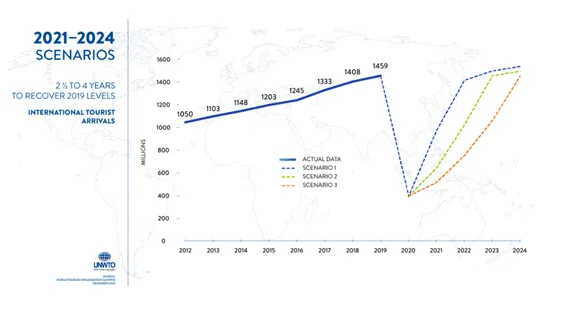
Whatever time tourism takes to recover, the World Tourism Organization's estimate shown above suggests a window of at least two and a half to four years in which brands can adjust, renew themselves, create consistent tourism products and build effective communication strategies, so that they can respond in a considered, well-prepared way to the new demands of consumers.
After all, as Bloom Consulting's City Brand Ranking 2019 study puts it, “increasingly, the brand of a country, region or city is an asset with tangible or intangible value that requires strategic management (…)”.
There really are the conditions to rethink brands and their communication and marketing strategies. On the one hand, for many brands the pool of potential consumers will widen to other segments. On the other, other tourism brands will have to reshape the products they offer to meet consumers' new needs and desires.
The chance that the tourism chessboard will change significantly over the next few years is real and, as always, it will be the brands that adapt best to the new circumstances that end up a step closer to success.
*The author of this article uses the old Portuguese spelling convention.

Get what we write
No fixed calendar: only when there is something worth your time.