The potential of partnerships

Marta Peral Ribeiro – Communications Consultant –
The most innovative ideas come from working together, from different points of view, from diversity — not from one person's head. It's in the contrast that we get new perspectives and can redefine concepts and campaigns. But how do you choose a business partner? What do you gain from it? And is there anything to lose?
Marta Peral Ribeiro – Communications Consultant –
The most innovative ideas come from working together, from different points of view, from diversity — not from one person's head. It's in the contrast that we get new perspectives and can redefine concepts and campaigns. But how do you choose a business partner? What do you gain from it? And is there anything to lose?
If we think about what the word itself means, a partnership is the collaboration between two or more people with a view to achieving a common goal. In business, it means a strategy of cooperation between at least two organisations, with profitable results for both.
Partnerships are common between companies in the same market whose products or services complement each other. But there are also companies looking to expand their line of business in order to meet the specific challenges of the current strategic climate.
Another fascinating aspect of partnerships is that they can even be set up between competing companies. In fact, that's one of the reasons to look for a partnership: when there's a lot of competition and competing on price becomes unsustainable, you may as well «join them», as the saying goes, and be the missing piece rather than trying to be the best.
And, as always, the focus should be the customer. What matters to the consumer? Is what company X has to offer of any interest to company Y's customers?
The advantages of partnerships
More diversity, a bigger audience
Since there are customers on both sides, the market segment becomes more diverse too, widening the reach of the audience.
What's more, by combining their strengths (whether skills, strategy or experience), the companies now have a better offer for customers: they can create products, services or campaigns and convert leads into customers.
Enriching the teams
Partnerships can and should be explored in a way that enriches not only customers' lives but those of the companies' own staff. For example, through courses in which the organisations exchange knowledge and skills.
Exclusivity
One strand of a partnership can be creating an exclusive product for a company or brand. Especially when the partnership is between a smaller brand and a larger one, the former can gain greater visibility and sustainability (benefiting from the trust and standing the other company has earned), while the latter can offer an exclusive product.
Across borders
Because of where they are, some companies have a lot to gain from joining forces with foreign organisations, particularly when the currency is different. As well as having someone overseeing the business on the ground, the foreign company is able to adapt the business to its country's culture and currency.
Digitally in particular, life becomes much easier for customers who want to buy a product on a foreign website and find a representative of the company they recognise, with the currency conversion already sorted. Otherwise, they'd most likely abandon the purchase.
The fears
One of the concerns when considering a commercial partnership is sharing information, whether about the company and its customers, or ideas, strategies and so on.
That said, the benefits tend to outweigh these fears: when you share, you also receive from the other side, along with a wealth of new ideas and technical and theoretical knowledge.
There's another common fear too: will the organisation we're teaming up with hold up its end? On that, once again, you have to trust. Without trust, it's hard for a project to move forward.
To keep expectations aligned, partners should clearly define their roles, how commission will work, who will provide customer support, and any other details they consider relevant.
How do you choose a partner?
1. Get to know your partner properly
Study what the partner organisation does, how it does it, its goals, its target audience, its values, its vision and its communication style.
The more you know, the easier it will be to spot the opportunities that work for both sides.
2. Mutual respect
There has to be trust and respect on both sides, and enough information shared about how the companies work internally to leave the door open for a new project.
3. Authenticity
This is valued more and more. The consumer's critical eye forces brands to be as authentic as possible. As a rule, if customers feel the partnership is purely commercial, they'll lose interest.
4. The same values and a shared ideal
Especially for younger consumers, who care about social causes, it's essential that partner companies share not only the same values but also a clear purpose (visible through their actions) of building a better society.
5. Products and services that complement each other
The partnership proposal has to solve the needs of customers on both sides, and one way to get there is to find products or services that complement each other.
6. Aligning expectations
This is the moment to put on the table what each side expects to get out of working together, with a genuine interest in building a real, solid relationship.
#ad: partnerships with influencers
In recent years, one of the big trends we've seen in the marketing world is partnerships with digital influencers.
According to a study by the agency LINQIA, in 2020 companies showed a clear intention to keep working with influencers, using the content across different marketing channels:
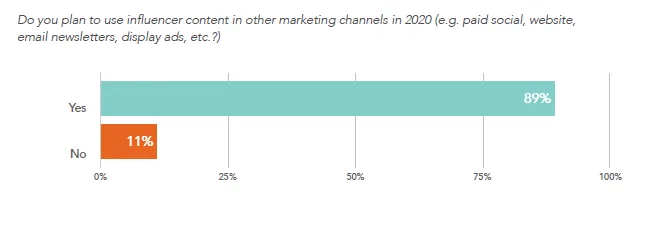
There are now agencies dedicated to studying this market, looking for the best match between brands and influencers. So if your company wants to set up a partnership but doesn't know which influencer to choose, you can turn to agencies that offer this service.
Another relevant point is diversity, as mentioned earlier. A brand can and should look for a partnership with an influencer who isn't the most obvious choice, in order to reach a wider audience.
For example, if the brand sells baby products, it doesn't have to assume the digital influencer will be a woman. There are fathers too. The piece will be more original with a dad as the face of the campaign.
Case study: IKEA and LEGO
Anyone with small children knows how maddening it is to find Lego pieces scattered around the house — especially when you step on them!
We know that IKEA values children's play, keeping the home organised and feeling good in it. It also pays attention to consumers, who put together systems to solve the problem of storing toys — LEGO in particular, an iconic toy in family homes across the world.
What better solution could there be than to combine the playfulness of Lego with the organisation of IKEA?
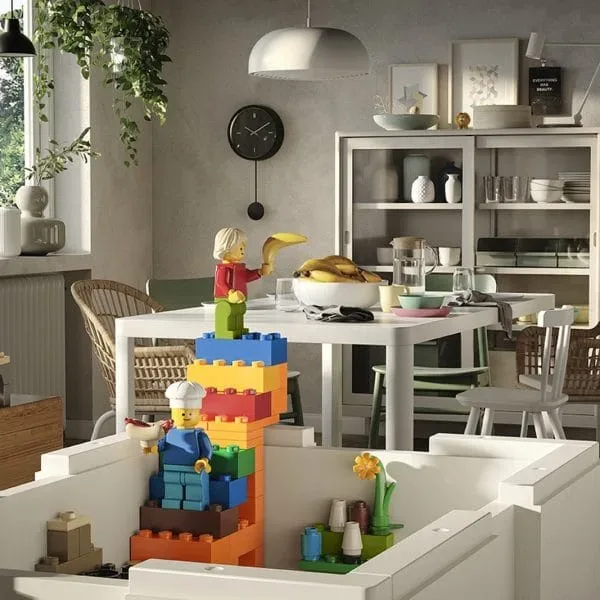
That's how BYGGLEK came about: a range of storage boxes compatible with LEGO bricks, in different sizes, which as well as storing the pieces can also be played with.
This was certainly a well-conceived partnership, in which two big brands managed to combine their experience and creativity to meet consumers' needs (both younger and older). Equally clever is the parallel between the child building their toy with Lego bricks and the adult building their IKEA furniture.

Get what we write
No fixed calendar: only when there is something worth your time.