Thinking like a designer

Marta Peral Ribeiro – Communications Consultant –
Design Thinking in business
As a collaborative approach, Design Thinking is gaining ground in Portuguese companies. The focus is always the same: the human being. How can a five-step process bring people together and deliver solutions to clients?
Marta Peral Ribeiro – Communications Consultant –
Design Thinking in business
As a collaborative approach, Design Thinking is gaining ground in Portuguese companies. The focus is always the same: the human being. How can a five-step process bring people together and deliver solutions to clients?
The context
As far as we know, most companies tend to look for solutions and create new products and services by putting business first – and fighting to stand out from the competition.
With Design Thinking the approach is different: the aim is to solve problems creatively, putting people and their needs at the centre of the question.
In fact, many professionals, particularly in Marketing, know that this is precisely a rising trend: improving the user experience.

Here are a few examples of products that weren't designed with the consumer in mind: Take that last example, known as “The Norman Door” — who hasn't felt a certain frustration when pulling a door that, as it turns out, needs to be pushed?


When usability is centred on users, you start to question the point of putting handles on both sides of the door, which lets you rebuild the idea, this time with a handle only on the side you're meant to pull:
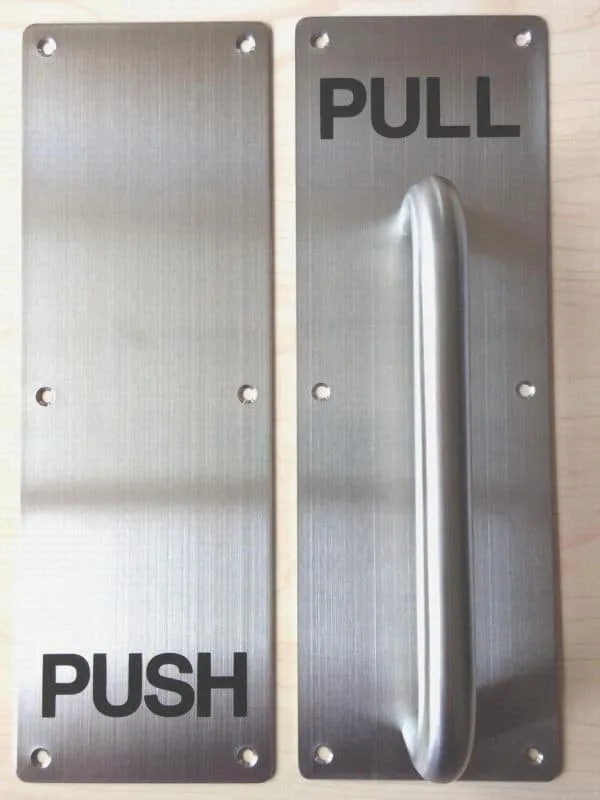
For users it means satisfaction, because things are built around their needs and therefore make sense.
Despite the name, Design Thinking is something practical, and a philosophy that isn't just for designers: it's for anyone who needs solutions, whatever their line of business.
Another feature is that it's teamwork: with several perspectives on the same topic, the chances of finding a more innovative solution are far greater.
The stages of the process
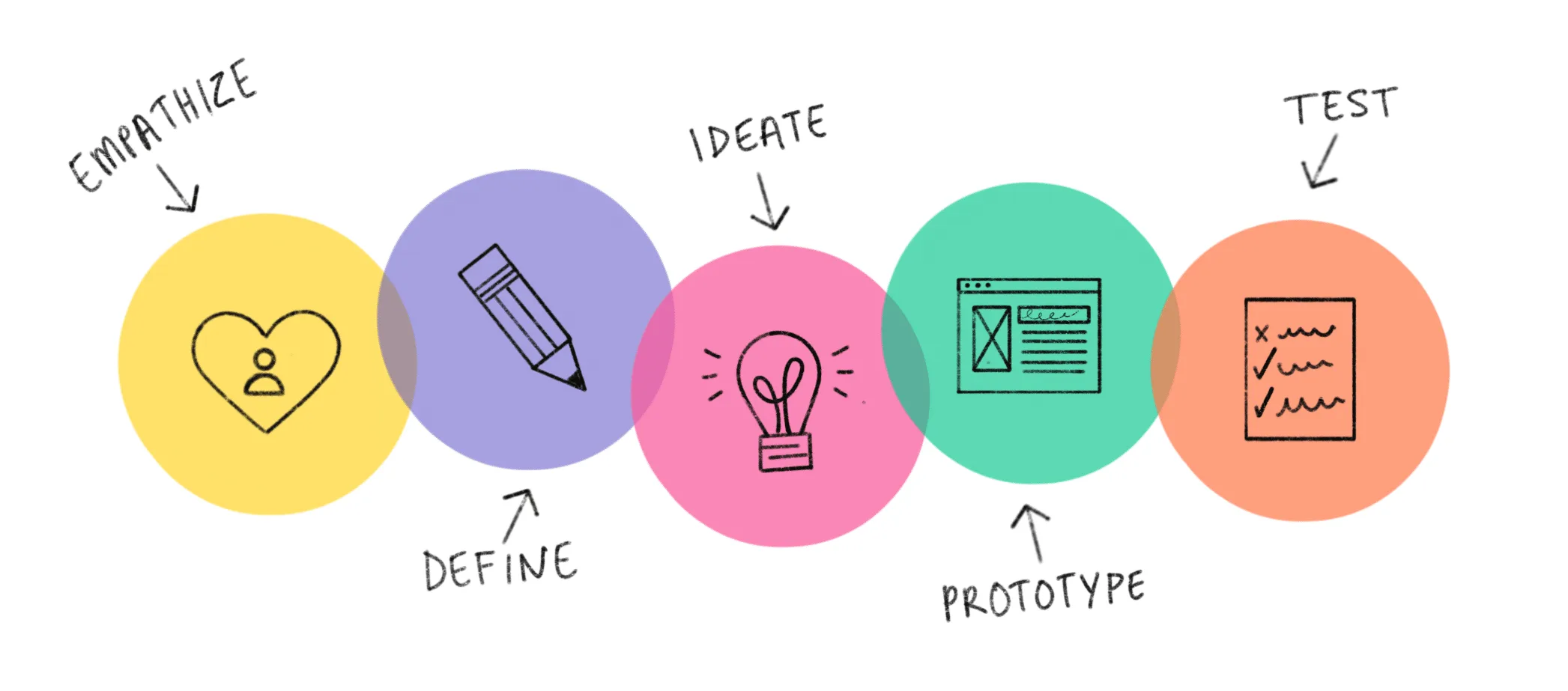
1. Build empathy
First of all, you need to understand who the client is and what they need, by putting yourself in their shoes: what matters to them? What are their expectations? Which verbs or expressions do they use often when they communicate? What is their social environment?
By asking the right questions, with active listening and genuine interest in the client, the team may even identify a need the market hasn't picked up on yet.
The closer you are to your clients, getting to know their activity and their habits first-hand, the richer the process will be.
2. Define the problem
After assessing the results of the research carried out in the first stage, you record words or actions mentioned by clients/users: is there a common denominator between them? If so, that should be the problem.
At this stage it's worth identifying the right problem so that the real need is addressed.
In other words: there's no point spending energy solving a problem if that isn't actually the heart of the matter.
3. Ideate
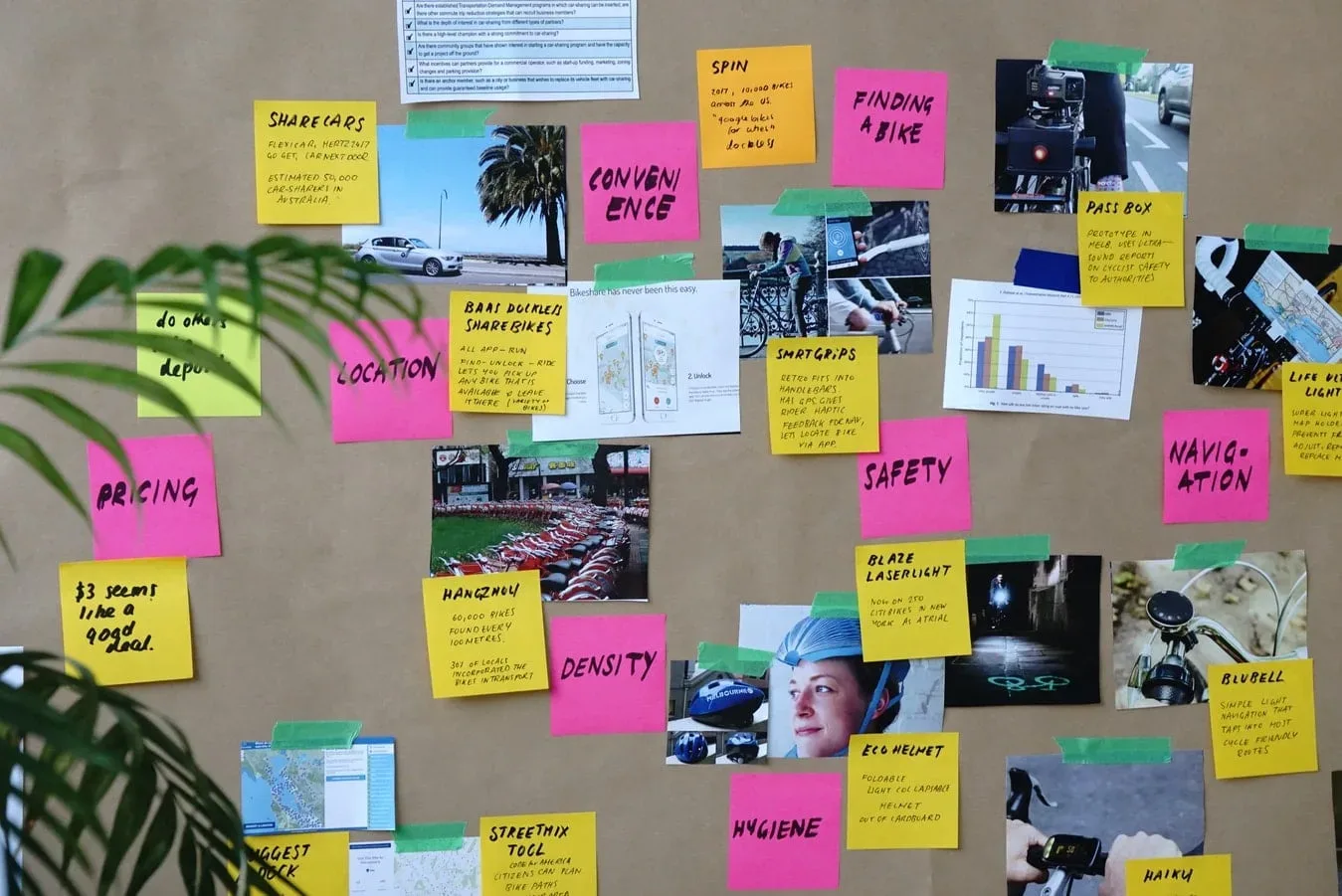
This stage involves brainstorming, where team members share ideas without limits in order to solve the problem. Ideas can be captured on post-its, as a mind map, on boards, and through other means.
There are digital tools such as the Miro app with templates for organising ideas.
4. Build a prototype
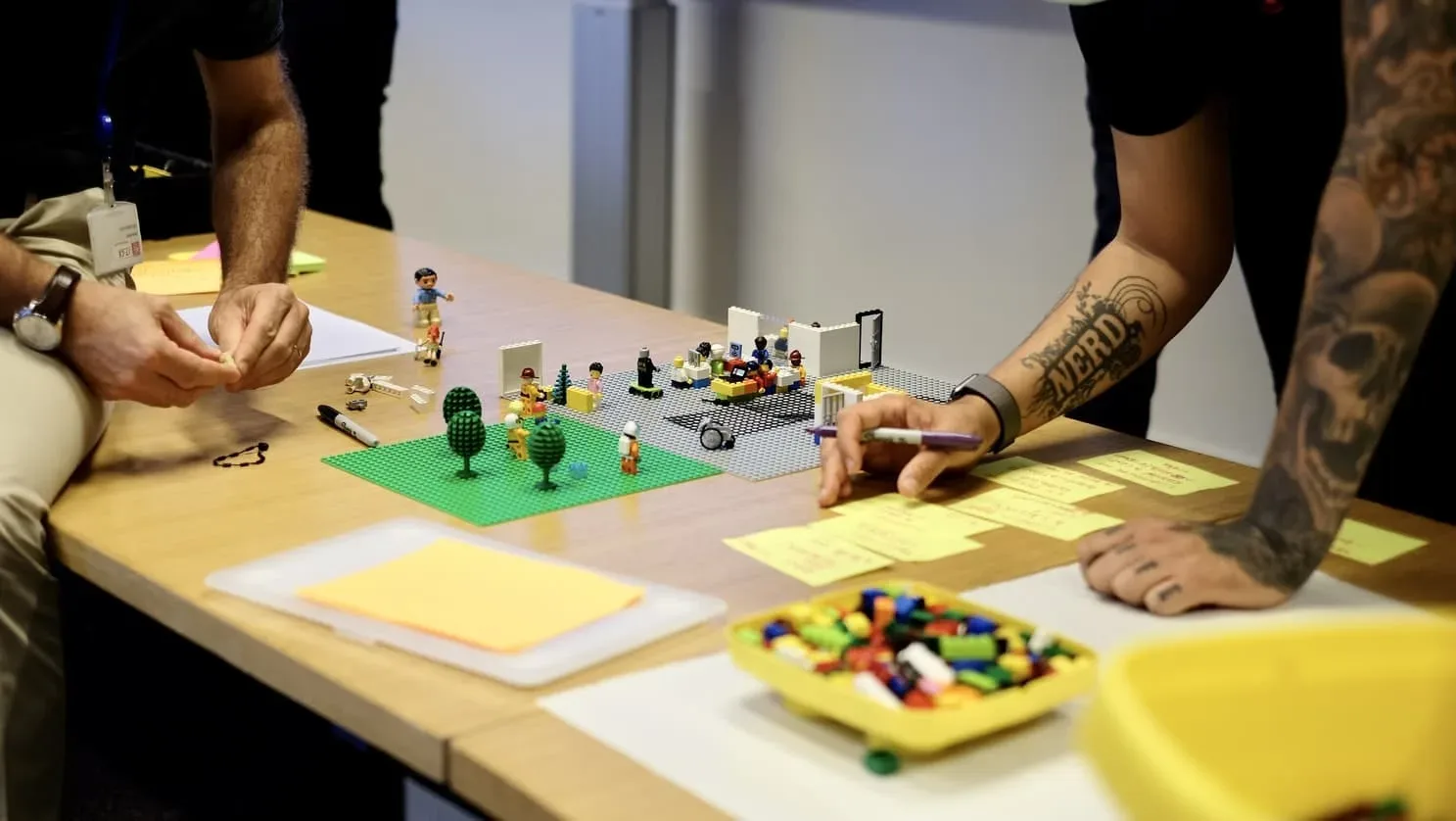
This is where you present a sketch, a mock-up, a drawing, slides or something else that concretely represents the final product. Essentially, this prototype (or prototypes, if you want to explore more ideas) is there to answer the question: can this idea be brought to life?
That said, however tempting it may be to spend time perfecting the prototype, it's better to present something less polished that can be tested – so you quickly find out whether it's viable – than to create a perfect prototype that later doesn't work.
5. Test
Has the client's problem been solved? That's the most pressing question in the final stage of Design Thinking.
Once the solution has been trialled with the client or user, you assess how well it works in practice. And of course, you have to listen to them. If they didn't like the idea, the best thing to do is take on board what worked and what needs improving and go back a step to reshape the solution until it solves the original problem.
Trial and error is part of the process, and so is repetition. With experience, the team will be quicker at spotting gaps before the prototype stage, minimising risks at the testing stage.
Why it matters for brands
Adopting Design Thinking as a strategy for finding solutions for clients brings a company several advantages, namely:
- Recognising the limitations of a product or service in terms of usability;
- Greater capacity for analysis and response;
- Better solutions, projects and business models;
- Richer content that feels closer to the user;
- Setting the brand apart in the market;
- Valuing employees and their ideas;
- Better communication within the team, because everyone is involved;
- A culture of empathy and innovation in the company;
- Productivity for the company thanks to a motivated team;
- Increased sales, because clients are satisfied;
- Reduced risk when launching a new product or service.
Where to start?
Training
Investing in Design Thinking training is essential to nurture a spirit of innovation focused on individuals, allowing the team to learn the methodology in detail and adapt it to the company's reality.
“When in Rome”
To genuinely understand your audience, you need to immerse yourself in their context: go to the places they go, get to know their habits, take part in the communities they belong to on social media, read what they comment, practise active social listening.
Analyse the data available
Companies that already have a sizeable client base can use the data they already hold to add to what they know about them, uncovering their preferences, activities and frustrations.
Use brainstorming to innovate
The result of different perspectives, thanks to the sharing of ideas that emerges in a multidisciplinary team at the ideation stage, is fertile ground for devising new products, personalising services and adopting a new style of customer service, among other possibilities. The whole process works in favour of business efficiency.
Set metrics for each stage
Putting numbers to the stages of the process helps to make objectives concrete, because they guide the team. For example, deciding that 50 client interviews will be carried out in the first stage, or that the limit on ideas coming out of the brainstorm is 10 and that 2 prototypes will be built.
Set standard questions
Alternatively, you can set standard questions instead of numbers, which will sharpen the methodology to the point where each process is better than the last and, in turn, help you adjust the business and audience objectives.
Feedback from clients and business partners
Inviting other stakeholders, including partners and clients, to take part in the process is a real asset for surfacing relevant opinions and predicting whether an idea will succeed.
Design Thinking in the company's DNA
From the leaders to the newest members of the company, everyone should be steeped in a culture of empathy and collaboration.
And the challenges?
Many professionals and companies have already adopted Design Thinking, but the fact is that specialists and deeper experience in the field remain scarce, as it isn't yet fully charted territory.
On top of that, many companies need more time to be able to integrate every stage of the process, or to use it on an ongoing basis so they can get the most out of it.
There may also be technological or organisational limitations that make it harder to bring this tool into a company – especially if that company is built on a rigid structure.
Applying Design Thinking fully within an organisation takes time, people, collaboration, flexibility, creativity and plenty of empathy.
For all the reasons mentioned, the simpler and more intuitive the implementation, the better for the company.
Portuguese brands that have adopted Design Thinking
NOW – No Office Work
Formerly Coworklisboa, NOW is a shared workspace in Lisbon that grew out of a Facebook community whose members were discussing the lack of a place where they could work together. It was thanks to the empathy that developed between them, and to everyone's involvement, that this space came about.
In its manifesto, NOW makes its collaborative, human-centred spirit clear — unmistakable traits of design thinkers:
“You are unique and that is exactly how we will treat you. As a unique human being. We don't believe in managing communities. You are the community. We nurture it the only way it can be done: by taking part.”
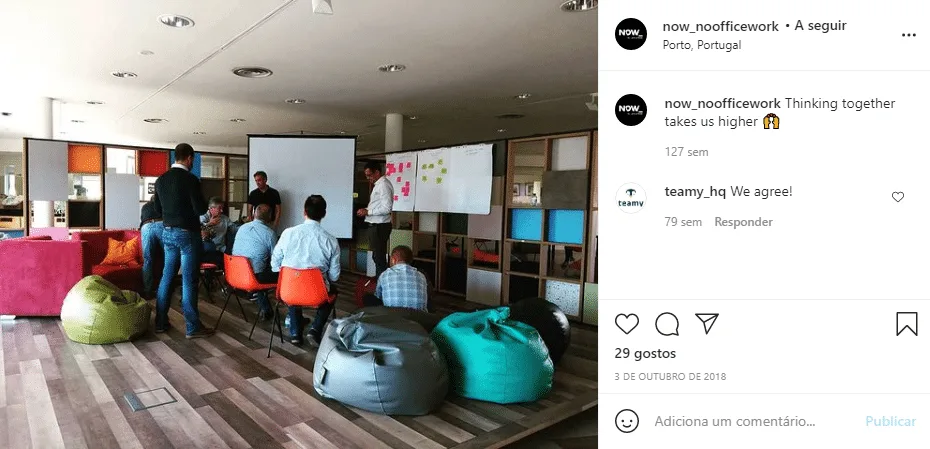
And on social media they reinforce this with images of people working together, whether or not they're on the same team, and captions such as “Thinking together takes us further”:

SIBS
SIBS, the company responsible for managing the ATM Express and MULTIBANCO networks, also uses Design Thinking as an approach to solving problems, focusing on clients/users to add value in an increasingly intense technological context.
Its human-centred character carries over to social media through a tone that is empathetic and assertive at the same time.
In this example, they start by pointing out what matters to Portuguese consumers (the effectiveness of payment methods as a crucial factor when buying online), which shows that research was done – the first stage of Design Thinking. They then reinforce the priority they give to users by sharing security tips for online payments.
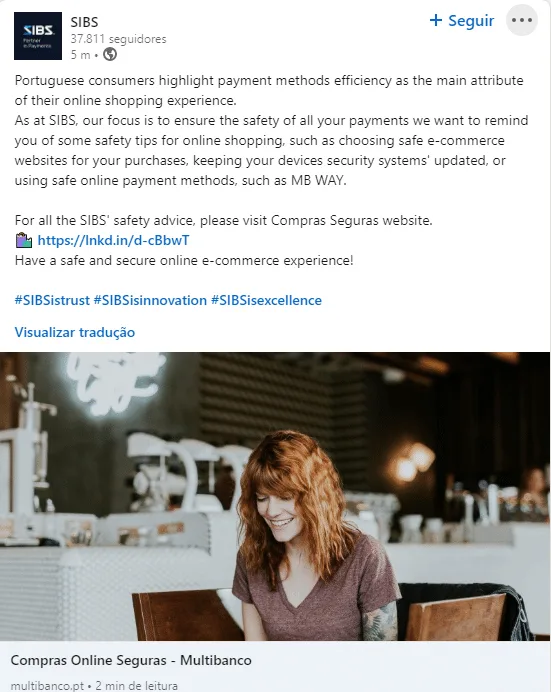
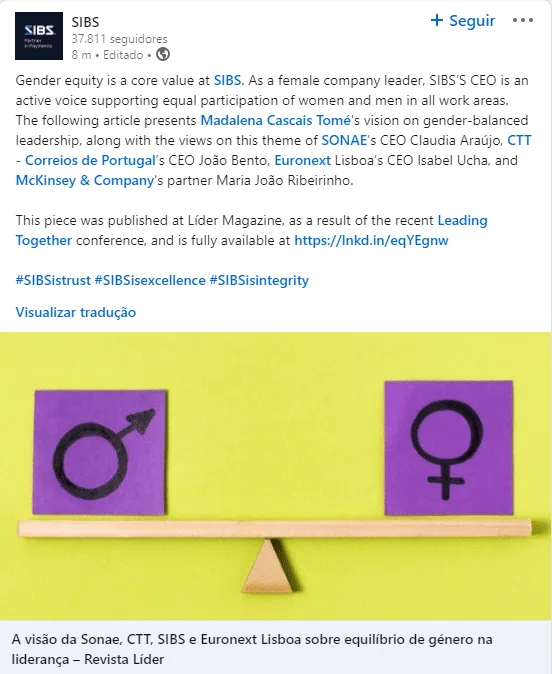
In short, they walk clients through their process, meet their needs and give them what they need to ensure the best possible experience. Finally, they emphasise security – an essential feeling in the relationship between company and client – through keywords such as “Trust” (#SIBSistrust): In another example, it's also clear that the Design Thinking culture is lived inside the organisation itself, through the way it values its members regardless of gender:

Get what we write
No fixed calendar: only when there is something worth your time.