Voice and tone in communication

Marta Peral Ribeiro – Communications Consultant –
What does your brand sound like?
We can compare a brand's tone of voice to a person's personality: just as an individual can stand out from the crowd through sheer charisma and grab your attention, a brand's tone of voice conveys a particular attitude that appeals to a particular audience.
Marta Peral Ribeiro – Communications Consultant –
What does your brand sound like?
We can compare a brand's tone of voice to a person's personality: just as an individual can stand out from the crowd through sheer charisma and grab your attention, a brand's tone of voice conveys a particular attitude that appeals to a particular audience.
Brand voice as identity
What is Voice?
It describes the brand's personality, what it says. It is consistent and can be pinned down with a single adjective, for example: inspiring, assertive, empathetic, irreverent, and so on.
What is Tone?
It adds an emotional inflection to the voice, expressing how it speaks. It might be, for example: more corporate, more informal, humorous, traditional, and so on.
Why define a tone of voice for your brand?
How a brand presents itself matters just as much as how we present ourselves as individuals.
A person conveys their personality through the clothes and accessories they wear, their haircut, their posture, their gaze, their voice, their language.
In the same way, a brand's personality comes across through the message it puts out, its vision, its principles, the language it chooses, the colours, the images, the videos, the graphics, the way it interacts on social media.
For example: a product or service that can be enjoyed with family or friends may reveal a fun, sociable personality. The more the tone of voice plays up those qualities, the more customers will associate it with social settings, friends and downtime.
When the identity is clearly defined and consistent across every channel it communicates on, consumers can easily recognise that a piece of content belongs to a particular brand, which brings them closer to it and can sway their purchasing decision.
Types of tone of voice
The tone of voice shifts depending on the situation. It's easy to picture if you think about the tone used to advertise a new product versus the tone used to respond to a complaint: they certainly won't be the same.
Taking a closer look at the types mentioned above:
- Inspiring – encourages the audience to better themselves, instilling energy and confidence, and pointing towards an idea or a positive thought.
- Competent– results-driven, it is generally aimed at a more executive, ambitious segment such as managers, for instance, or a more traditional audience. This tone can be well-grounded and approachable at the same time.
- Empathetic– it is light, informal and brief, yet assertive in its message (usually informative in nature), and it builds closeness with the audience, delivering valuable content to them.
- Irreverent – unconventional, with a message that thinks outside the box. It tends to draw attention mainly through its choice of words, sometimes puns, and through bolder imagery.
How to find the right tone of voice
In theory, the concept is easy to grasp. In practice, working out a brand's tone of voice is more complex.
There are two key moments for doing this: at the outset there has to be some soul-searching to define how and who the brand is, so that it can then communicate with its audience.
1. Reflect on the brand's positioning
Define the why
Simon Sinek, known for his motivational talks on Organisations, argues that a brand must first define why it exists: what is its purpose ('profit' doesn't count as an answer), what cause does it believe in? In other words, how is the brand going to make a difference in people's lives?
Develop the tone of voice
The tone of voice should be unique to your business. It's useful to look at how other companies in the same field express themselves, so you can take on board what works or, conversely, set yourself completely apart. But you don't need to raise your voice to be noticed. You just need the right tone, the brand's own tone of voice. One interesting question that can help define a brand's voice is: if the brand were played by a celebrity, who would it be?
Match the brand's expression to the persona
Once the persona's profile has been defined, the brand's tone of voice needs to be adjusted:
- Exclusive / accessible
- Traditional / contemporary
- Young / mature
- Formal / informal
- Serious / fun
- Urban / eco-friendly
- Stable / dynamic
Graphic elements and language
Moving on to the practical side of communication:
- What will the brand's logo look like?
- Which colours will dominate?
- What is the typeface on the website?
- How does each email open?
- And how does it sign off?
- Does it speak in the first person?
- And will the audience be addressed informally?
- Which terms will definitely NOT be used in your communication?
2. Communicate consistently across every channel
Define the communication channels
Depending on the persona, the target audience and, of course, the company's resources and objectives, the channels chosen for communication may vary.
So it's important to know where your audience is and which channels they use.
A corporate brand might prioritise email and LinkedIn, whereas for a brand whose target audience is a younger segment it may make more sense to use Instagram and Twitter.
The tone of voice is adjusted to suit the purpose of the content. For example, a video post on Instagram, where the visual element is the strong point, calls for a close, practical tone of voice, whereas a blog article can take a more informative, assertive tone.
That said, don't forget any campaigns that may be running offline.
Create a brand communication guide
A company's communication isn't handled by just one person. That's why it's worth drawing up a document setting out the guidelines for the whole team to follow, so there's a consistent standard.
This guide will ensure coherence across the company's various communication channels, allowing consumers to recognise the brand when they move from its website to social media, when they see an advert for one of its products or services in the street, or when they open an email.
A personality that evolves

A brand's personality is constantly maturing. After all, behind every brand are people, who are also evolving.
A brand may therefore decide to adjust its tone of voice, which is a sign that it is keeping pace with changes in the world around it. But how do you do that without losing your identity?
On the one hand, you need to review the communication the company already has in place, to get the overall picture. On the other, it's important to weave those unique aspects into the creative side.
Here are a few starting points:
- Which aspects set the brand's voice apart?
- Is the voice consistent in terms of language on both social media and the website?
- How does the audience interact on the different channels?
- Which posts had the highest interaction rate from users?
The voice of brand representatives
One special ingredient you can add to the brand recipe to set its Voice apart is the voice of its own executives.
According to Forbes, in 2018, “A company's leadership reputation is directly responsible for 44% of a company's market value”.
In practice, this means that a company's leaders can extend the influence they have over their team out into the wider community, if they use the media shrewdly. They can take the brand's messages to another level and, in turn, reposition it in the market.
Examples of tones of voice
1. Matinal milk: a manifesto for self-esteem
Long associated with a predominantly female audience, the Matinal brand has been repositioning itself, inspiring every woman to celebrate her individuality.

Even the slogan has shifted in nuance over time, moving towards progressively more affirmative language. It went from the question “If I don't like myself, who will?” to a more positive tone, “If I like myself, who won't?”, and today it has become a certainty: “Because I like myself”.
This tone is inspiring and champions the individual power of every woman, regardless of her beauty, style, age, role or status.

2. BPI and Millennium BCP: signing up to the App
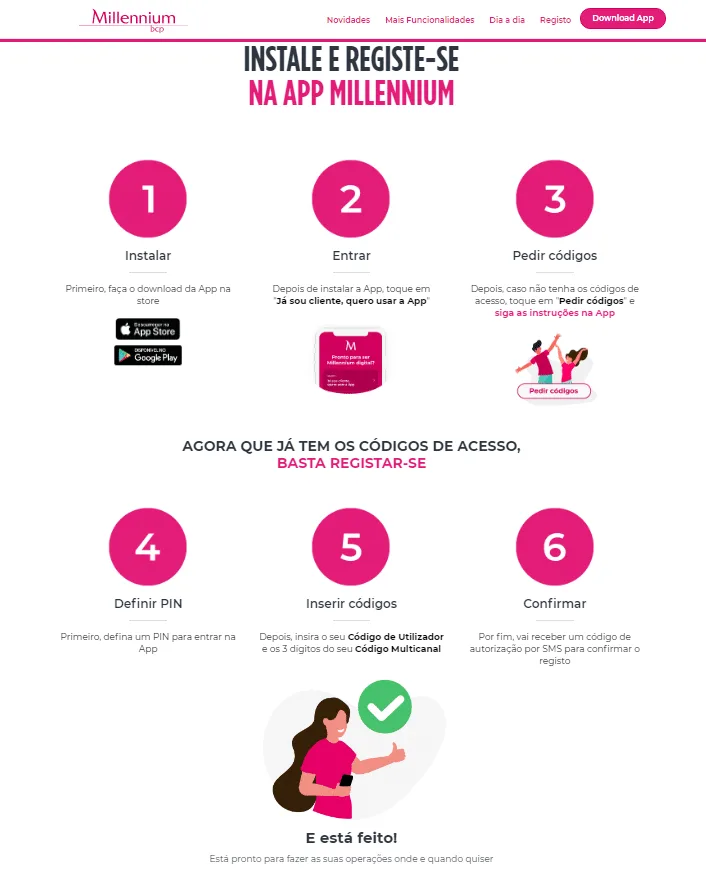
In these two pieces of communication the aim is the same: the banks explain how to create a user account on the App. Although both present the information concisely, the difference in tone of voice between one and the other is striking:
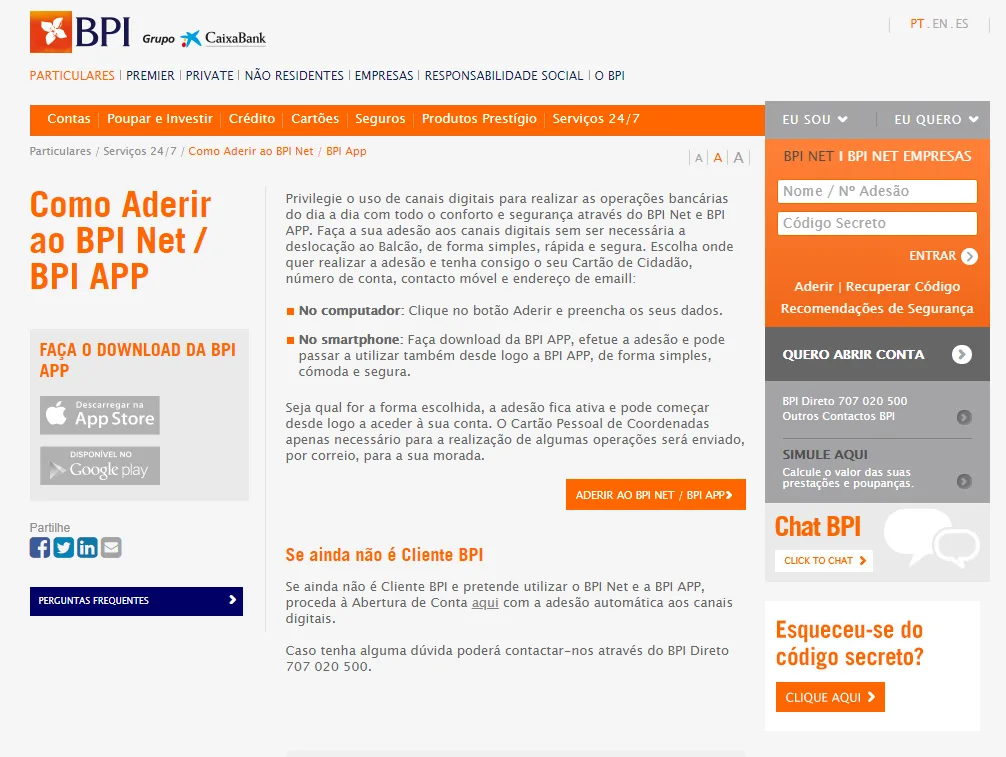
BPI opts for a more serious tone and the information is presented as text, on a website with muted colours. It corresponds to a
more traditional, competent tone
Millennium BCP, on the other hand, goes for a more empathetic tone, with the information summarised in steps through infographics in bright colours, signed off with a gif at the end that conveys the feeling of a job done (“And that's it!”). It corresponds to an empathetic, flexible tone.
3. Renova: elevating toilet paper to lifestyle status
Over the course of its history, Renova has managed to turn one of the most basic products in our homes, one whose purpose is anything but appealing, into a utilitarian design object. How? By taking an outside-the-box view of what is traditional and adopting a lively voice that goes as far as calling its toilet paper “the sexiest on the planet”.
A few years ago it repositioned itself internationally by launching black toilet paper, and has been recognised beyond Portugal's borders ever since:
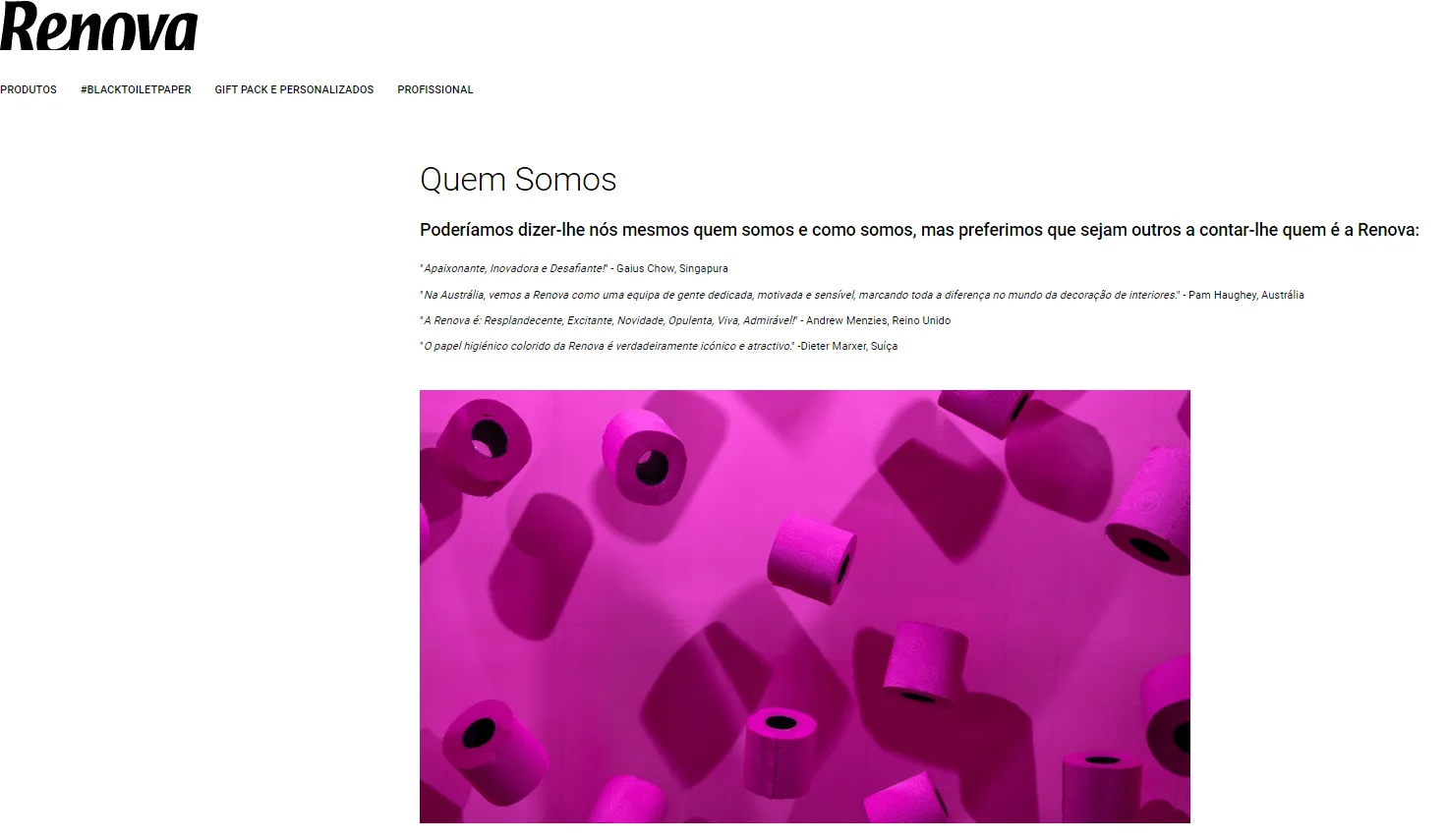
On Instagram, we recognise the irreverent tone of voice because the brand keeps those qualities, expressed through the bright colours, the 'international' element and the playful message:


Get what we write
No fixed calendar: only when there is something worth your time.