Children's behaviour in the digital world

Marta Peral Ribeiro – Communications Consultant –
Can good habits be built?
In the age we live in, children's access to the digital space is inevitable. So it's better to face reality and get ahead of it, rather than letting them dive into the internet on their own.
Marta Peral Ribeiro – Communications Consultant –
Can good habits be built?
In the age we live in, children's access to the digital space is inevitable. So it's better to face reality and get ahead of it, rather than letting them dive into the internet on their own.
An overview of children's relationship with technology
Some of the things we know…
- On the whole, children spend at least 2 hours a day in front of mobile devices, and the tendency is for that to increase as they get older;
- Most children (5-12 years old) use a smartphone or tablet, and often have one of their own;
- The main activities are: playing games, watching videos and listening to music;
- From the age of 10 they also start talking to friends and looking up popular profiles on social media;
- In Portugal, many parents aren't entirely sure what their children do online.
What does a healthy interaction with the digital world look like?
Interaction with media is healthy when technology is used consciously, without putting mental or physical health at risk – whether our own or other people's.
In the specific case of children, it means that the fundamental things that support their healthy development (positive connection with adults, play that stimulates cognitive skills, motor coordination) aren't compromised by the use of technology.
Finally, a balance needs to be struck between the time they spend online and physical activity.
When does it stop being healthy?
In general, most children handle technology reasonably well. The problem is that some children are more susceptible to the effects of media:
- Disrupted sleep
The blue light emitted by screens shines straight into the eyes and affects the pineal gland in the brain, impairing melatonin production. That is the main reason sleep is affected, either because there isn't enough of it or because it isn't restorative.
That said, the content itself tends to produce an excess of stimulation, creating stress that affects sleep.
- Obesity
Because of the time they spend inactive in front of a screen, children get too little physical activity and put on weight.
It has also been found that children are more susceptible to the advertising they see (often for sweets and snacks), coming to prefer those foods – as well as eating without limits while distracted.
- Autism, anxiety and attention deficit
Children with challenging behaviour, anxiety, attention deficit or autism are more vulnerable to the negative effects of technology. Especially when they see scenes of violence.
Ironically, they are also the ones who generally spend the most time with gadgets (possibly because they are the ones who need the most attention, and this is the most efficient way of keeping them still).
- Dependency
The digital sphere is designed to be addictive, based on what we know about how the brain works.
The devices themselves are built to give us a pleasant experience: they're easy to handle, generally portable and fast. Apps, in turn, are intuitive and designed to keep children (and adults too, as we know) distracted for hours on end, day after day.
When relationships with peers or family start to suffer, when disinterest in school and other activities grows, it's time to stop.
Another warning sign is when a child reacts explosively when the tablet (or whatever device it is) is taken out of their hands.
Is there a right age to start using digital platforms?
Not really. But the later, the better.
When a child asks for a smartphone or a tablet, the golden rule is that they should already be responsible enough to use it. For example, that means not losing it, not breaking it, knowing when it needs charging and using it under the conditions agreed with their parents.
Beyond that, it's worth weighing up the real value of the technology: how much of it, and which parts of it, actually contribute to the child's development? Some do, such as listening to stories or playing on educational platforms, but a lot of it is completely unnecessary.
What does all this mean for parents?
The adult's presence and active role
In the first 12 years especially, the biggest influence on how children interact with technology comes from their own parents.
For example, if we spend too much time in front of the TV or on our gadgets, if we frequently post selfies or photos of our children on social media, it's to be expected that they will do the same, just as naturally.
Being present, not just physically but by being alongside the child as they use their devices, is crucial to building healthy digital habits.
On top of that, sharing with your child the things you usually do on your smartphone helps them understand what it's for – paying a bill, checking the weather, looking up a translation, and so on. This approach shows the child both transparency and conscious use of what you're doing.
Trust and digital literacy
There's no point in frightening children about the dangers of the internet, or pretending technology doesn't exist.
Unlike many of us, who watched the internet and gadgets come into our homes bit by bit, the new generation was born into a digital environment. Their behaviour will inevitably be different.
On that note, now that online learning is a reality, it really is necessary – even if it takes up time parents don't have – to explain step by step how Word or the digital platforms work.
But that's the most effective way to help a child use technology intelligently: sharing knowledge, side by side, showing them what they can learn, how to search, which sites are reliable, and so on.
Security matters
It isn't just about what children learn through technology. What digital media might learn about our children and their online behaviour, and what they'll do with that information, is also a concern.
- Access to content and apps
Children should always ask their parents for permission before downloading apps. There are also parental control features that let you limit the content they can access and manage how long they use an app for.
- Protecting privacy
Teach them to create strong passwords and to recognise a secure WiFi network – they'll know it's secure if the network asks for a WPA or WPA2 password.
- “Once on the internet, always on the internet”
It's essential that children understand that even when they post something visible only to a few friends, or send it privately over chat, it stays on the internet and can even be seen by people with the skills to find it.
- Setting up parental controls
Limit younger children's access to specific web content using parental controls. There are settings and apps for this, such as: – Family Link, provided by Google (Android); – Download and purchase controls in the App Store, built into Apple devices themselves (iOS); – The Dashlane app: designed to protect passwords and other digital data that could end up on the dark web, requiring only a single login (to your Dashlane account) to access any site or app instead of logging in to each one. This app has a family plan, allowing for greater parental control.
Building healthy digital habits
Setting screen time
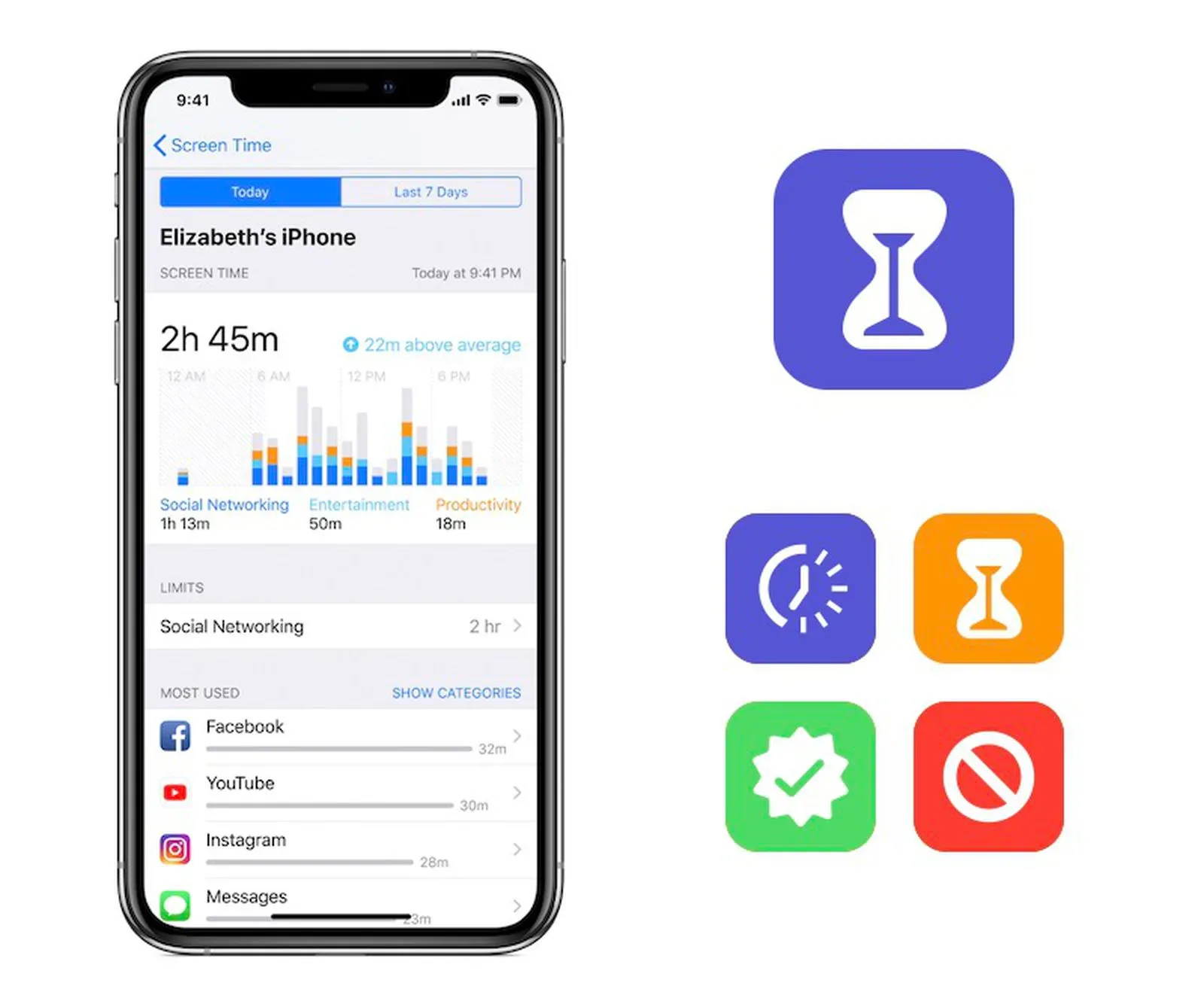
Anyone who has checked the “screen time” setting, which logs how long we spend on our phones, will have realised that our sense of that time is out of step with reality. Why?
Because when we're browsing the internet we lose track of time – especially during lockdowns, when interaction is demonstrably higher. So set usage time limits in your device's settings menu.
Anticipate what's coming
Be ready for when your children or pupils come to you with questions. When a child sees that an adult is familiar with the digital world and knows how to use it consciously and safely, they understand that they can turn to that adult.
Take the time to get to know the app, game or website your children want to use, going through its settings and blocking any access that is unnecessary or inappropriate.
I think, therefore I filter
Instilling critical thinking is healthy.
Children often can't filter what they see, and can't tell, for example, when something is an advert. They immediately click and accept whatever comes up. Because they're naturally curious, and advertisers know it well.
So it's healthy to instil critical thinking, teaching children to tell organic content from sponsored content, and talking about the importance (or otherwise) of the number of “likes” or followers you have, for example.
And finally… don't underestimate children

Although it's fiction – and therefore somewhat exaggerated – one of the things you see in the film “Chef” is how deftly a 10-year-old moves around the digital sphere, and social media in particular. The son of a chef who has just opened a food truck, he posts daily on Twitter about where they'll be, tagging their location so customers can find them. Any resemblance to real life isn't entirely coincidental. There are plenty of cases where it's the children teaching their parents how to deal with technology – not least in the current situation, with parents working from home.


Get what we write
No fixed calendar: only when there is something worth your time.