First-Party Data: a paradigm shift

Inês Tito – Copywriter – In any sector, the companies that really know their customers are a step ahead of the competition. Keeping that advantage takes vision and creativity. And an effective data management strategy.
But data handling is under ever closer scrutiny. Beyond what the public demands, governments themselves are stepping in. This trend has forced companies to change the way they work.
Do you know what happens when you share your personal data?
Inês Tito – Copywriter – In any sector, the companies that really know their customers are a step ahead of the competition. Keeping that advantage takes vision and creativity. And an effective data management strategy.
But data handling is under ever closer scrutiny. Beyond what the public demands, governments themselves are stepping in. This trend has forced companies to change the way they work.
Do you know what happens when you share your personal data? What is First-Party Data?
Also known as “primary data”, First-Party Data is the data a company collects about its customers. The information is wide-ranging and can cover anything from purchase history to how the customer interacts with the company's website or app. It is gathered through the company's own channels, with no third parties involved.
And there are benefits on both sides!
On one hand, companies get valid information straight from the source. The data is collected through websites or social media surveys. On the other, customers get the goods and services they are looking for.
What kind of information can you find in first-party data?
– Demographic information (gender and age, for example);
– Customer behaviour on the website or app;
– Customer comments on social media;
– Data collected from surveys;
– The customer's purchase history;
– Information logged in the customer management software.
There are, however, other sources of information.
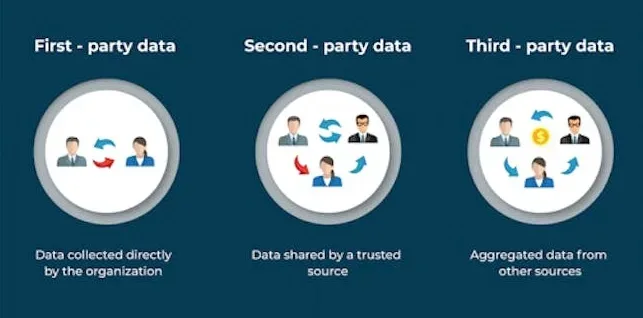
Second-Party Data refers to data collected by partner companies that share their customer information with each other for mutual benefit. This means your data is collected by one company, which then passes it on to another. That second company gains access to the information without having your direct permission.
On top of these, there is also Third-Party Data. Here, the data is collected from a range of sources. Once aggregated, it is sold as a package of information. In many cases, the companies selling the information are not the ones that collected it.
Given that there are so many sources of information, why is First-Party Data gaining ground?
The growing popularity of first-party data
According to a study by Cisco, data handling is closely tied to consumer trust.
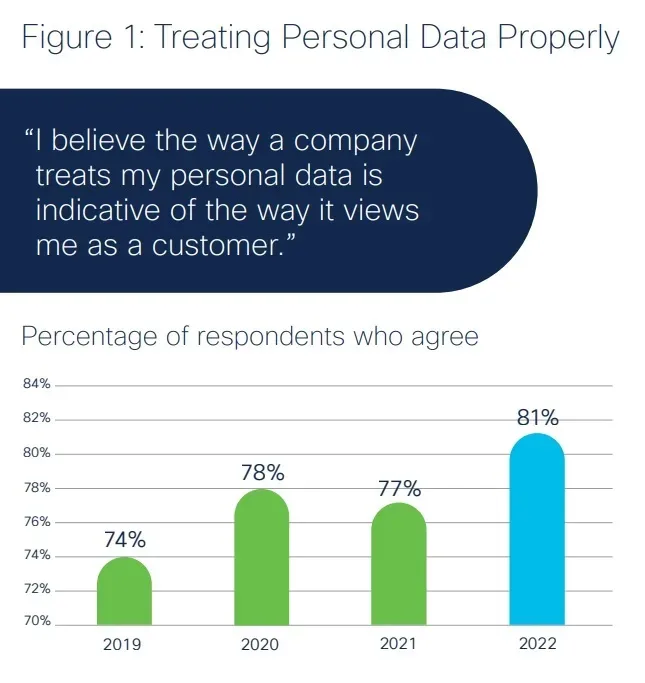
In fact, 81% of respondents said that data management reflects how a company sees its customers. They also believe that presenting information transparently is the best way for companies to build a relationship of trust with their customers.
Other studies show how uneasy consumers are about data handling. More than 80% of respondents feel they have no control over the data being collected. On that note, a study carried out in the United States found that 86% of consumers have already tried, in some way, to reduce their online footprint.
These figures show the public's unease, as well as one of the reasons behind the growing popularity of First-Party Data.
With first-party data, companies are transparent about how they collect and use the information consumers give them. It also cuts the cost of the process and ensures compliance with current legislation. For consumers, it is a way of controlling the information they share.
For companies, this landscape calls for creativity and the ability to adapt. According to a study by Google, feelings of security, transparency, control and usefulness are essential to building a relationship of trust.
Consumers value companies and brands that keep their personal data to themselves, without sharing it with third parties. They also prefer organisations that clearly explain how they will use that information. So companies that meet these expectations stand a better chance of winning loyal customers.
Once a relationship of trust is in place, consumers will feel more comfortable sharing their data. And here is the golden key for marketers: creating a personalised shopping experience! That way you can reach genuinely interested customers and increase the likelihood of conversion.
The growing use of First-Party Data goes well beyond its advantages. To understand how we got here, let's look at the current context.
Cookies

Cookies are small files that a website downloads onto your computer or smartphone to track your online behaviour and remember your preferences. While some cookies are essential for the website to work, others exist purely to collect information for commercial purposes.
Source: Vecteezy
For this reason, cookies are viewed with suspicion.
A study by Global Witness and YouGov found that 57% of respondents do not want their personal data used for personalised marketing campaigns. Consumers are also aware of the rise in security breaches involving data protection.
For many, the most unsettling part is that all this activity is invisible to the user!
Have you noticed that after searching for your next holiday destination, over the following days you are shown suggestions for hotels and activities in that very location? Yes? We're sorry to say it, but your device has been flooded with cookies!
The indiscriminate use of cookies has put pressure on governments to safeguard consumer privacy. That is how laws such as the General Data Protection Regulation (GDPR) and the California Consumer Privacy Act (CCPA) came about.
These regulations have global reach. In other words, any company, wherever it is based, has to comply with them if it holds information on European or Californian customers.
The paradigm shift
Changes to data management policy have led companies such as Apple and Google to rethink their products and ways of working.

Google shocked the world when it announced it would drop cookies from all its browsers. This means companies will no longer be able to collect data without their customers' knowledge.
For 41% of marketers, the biggest challenge will be gathering information that accurately reflects their audience. Those who used cookies for retargeting campaigns are now forced to find a new strategy.
Google later clarified, however, that not all cookies will be banned.
By removing only Third-Party cookies, Google will give priority to First-Party cookies. In other words, browsers will stop collecting information for third parties and will only use cookies that users have expressly authorised.
Breaking down barriers
Privacy concerns and restrictive data management laws have a colossal impact on digital marketing. So, faced with such a hostile context, how do you get past these obstacles?
There are several alternatives, and one of them is First-Party Data!
How do you collect first-party data?
This is the first step towards a relentless marketing strategy. Here are a few examples of the most widely used techniques.
- User registration and loyalty programmes
Asking a customer to register on your website, or to join a loyalty programme, lets you collect detailed information in a matter of seconds. The challenge is convincing them to sign up. In many cases, offering a discount on a future purchase, or for subscribing to the newsletter, can help.
- Surveys and forms
To get to know your customer better, the best strategy is to ask them directly. Ask the right questions and you can get detailed information first-hand.
- Customer reviews
As well as reflecting how satisfied a customer is with a product or service, they are also a powerful source of information about their preferences.
- Content sharing
The content we share on social media reflects what we think. For companies, content sharing is an opportunity to get to know their target audience and identify market niches.
- Logging in with a Google or Facebook account
As well as making it easier for customers to access website content, it gives companies quick access to details such as name, interests or location.
How do you use First-Party Data?
First-party data gives you a detailed view of the customer profile. That allows companies to segment their target audience, map the customer journey and personalise the experience. But what is the best way to achieve this?
- Sharpening the focus of your strategy
When you try to win over every customer, you end up winning none. It's a fact! That's why a marketing campaign needs a focus — a specific audience it speaks to. The key is striking a balance between targeting campaigns at that audience and respecting their privacy.
- Reminding consumers
According to a study by the Baymard Institute, the online shopping cart abandonment rate sits at around 70%. With first-party data, companies have the chance to encourage customers to come back and complete the purchase.
- Building a relationship of trust
Consumers judge a company's integrity through other customers' reviews. In fact, around 70% of consumers read other customers' reviews before completing a purchase. So it makes perfect sense to use that information to win new customers.
- Personalising the customer experience
First-party data offers an in-depth view of customer behaviour, preferences, interests and location. Using these details lets you design marketing strategies tailored to what customers need and want.
- Defining the customer journey
With First-Party Data, companies can map out the entire customer journey. Above all, it helps you understand when and why customers drift away from the brand. Everything gathered can be used to rethink touchpoints with the company, or to reach the customer at the right moment in the journey.
- Creating customer profiles
On each communication channel, a single customer presents several different profiles while interacting with the company. First-party data lets you bring all these profiles together for a complete picture. That makes it easier to understand what motivates the customer across different channels and devices.
How do you measure the success of First-Party Data?
The final step in a First-Party Data strategy is measuring how effective it is. This is an ongoing process, aimed at improving the customer experience and the quality of the information gathered. So, to assess how successful your data collection strategy is, you need to review the tools you use on a regular basis.
The future of data management
For decades, the unchecked use of Second- and Third-Party Data meant consumers handed ownership of their personal information over to companies. Fortunately, that trend looks to be on its way out.

With that in mind, consumers may turn to blockchain technology to protect their privacy and keep ownership of their data. As already happens with cryptocurrencies, this technology makes it possible to track where personal data goes and how it is used, at any moment.
Data protection regulation has played an important part in all of this.
According to a study by Gartner, by 2023 65% of the world's population is expected to be covered by some form of privacy regulation. Legislation on data handling is therefore likely to appear in other parts of the world, beyond Europe and California.
Another major trend in data management is the use of Zero-Party Data. In essence, Zero-Party Data is data the customer intentionally gives a company. The main difference from First-Party Data is that the information is not inferred from the customer's behaviour on a website or app. It is information the customer clearly provides themselves.
In recent years, this method has become popular among marketers. It ensures compliance with data protection rules and allows for precise audience targeting.
From the consumer's point of view, it has never been easier to access the information companies hold. To make this simpler, Google has developed My Ad Center. The aim is to give consumers more control over their advertising preferences. As well as managing their privacy, consumers can personalise ads by topic or brand.
We all know the future is unpredictable. One thing is certain, though: data management will keep pace with technological development. Whichever direction it takes, protecting consumer privacy will be the main focus for companies, governments and consumers themselves. JTNDZGl2JTIwY2xhc3MlM0QlMjJmYi1jb21tZW50cyUyMiUyMGRhdGEtaHJlZiUzRCUyMmh0dHBzJTNBJTJGJTJGd3d3LmplbGx5Y29kZS5wdCUyRnRlY25vbG9naWElMkZhLXZvei1uby1jb21hbmRvLWRvLWZ1dHVyby1kYS10ZWNub2xvZ2lhJTJGJTIyJTIwZGF0YS13aWR0aCUzRCUyMjEwMCUyNSUyMiUyMGRhdGEtbnVtcG9zdHMlM0QlMjIxMCUyMiUzRSUzQyUyRmRpdiUzRQ==

Get what we write
No fixed calendar: only when there is something worth your time.