Voice at the controls of technology's future
Ana Mendonça Morais – Marketing & Communication Strategist –
Is voice the future of technology?
Let's be honest: nobody knows where technology will end up. On the one hand, there are projects that never quite arrive, such as flying cars (once believed to be the transport of the future, and due by the 21st century); on the other, there are those that come off with such success that it's almost unbelievable, like putting Man on the Moon.
So how do you predict the future of technology and the next big leap? The answer may be easier than it seems: by going back to basics. More specifically, by going back to using our voice.
Ana Mendonça Morais – Marketing & Communication Strategist –
Is voice the future of technology?
Let's be honest: nobody knows where technology will end up. On the one hand, there are projects that never quite arrive, such as flying cars (once believed to be the transport of the future, and due by the 21st century); on the other, there are those that come off with such success that it's almost unbelievable, like putting Man on the Moon.
So how do you predict the future of technology and the next big leap? The answer may be easier than it seems: by going back to basics. More specifically, by going back to using our voice. The simplicity of voice within the complexity of technology
It's easy to ask how something so basic and organic can matter so much to technological development. But we mustn't forget that technology's main purpose is – or should be – to make the processes around us easier and to help us evolve in some way. So why not simplify how we use it by drawing on something within reach of (almost) all of us?
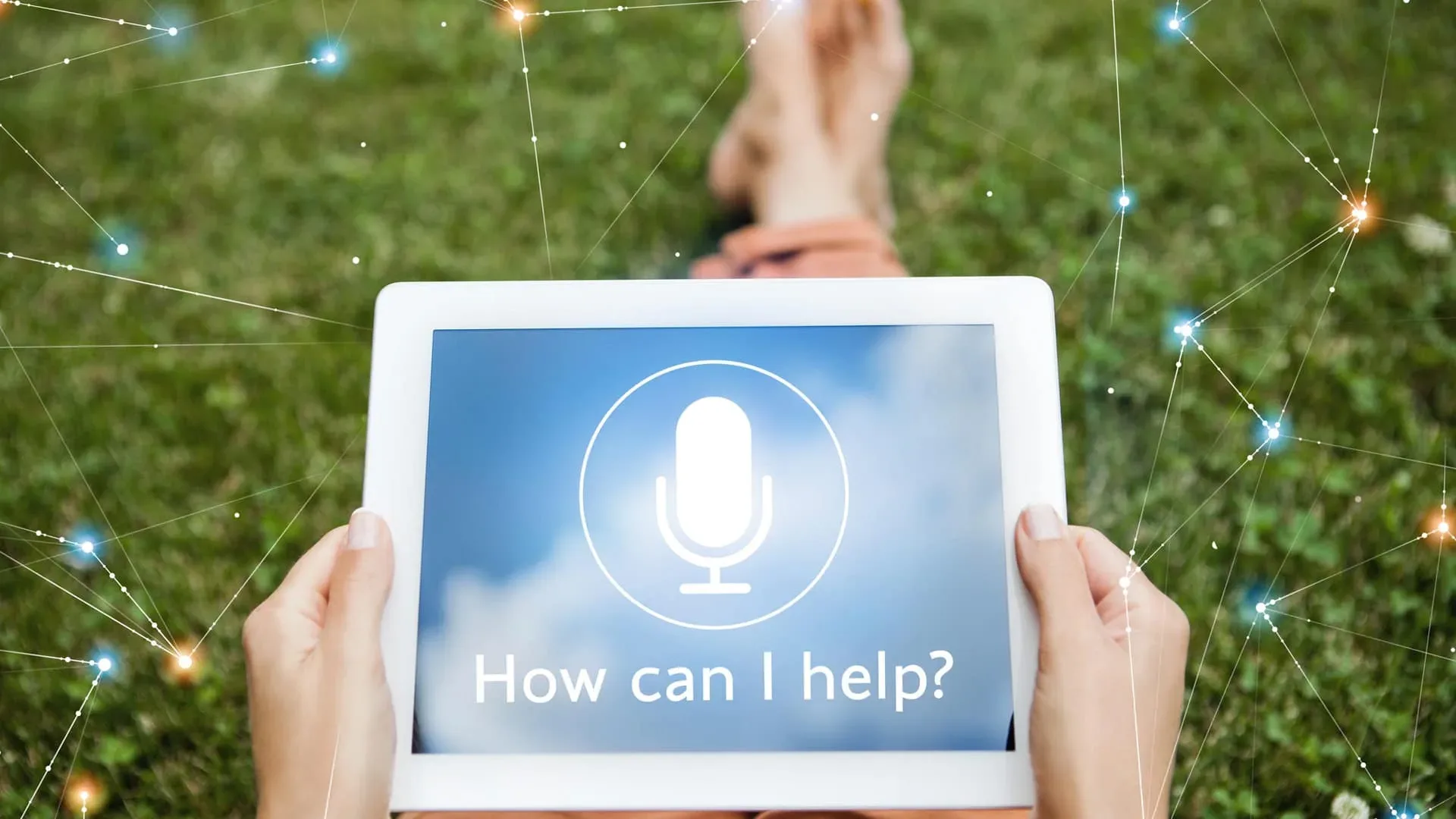
The truth is that, in recent years, voice has taken up more and more space in new tech products. Especially those developed by big companies such as Amazon, Apple and Google. You could almost say that anyone who doesn't know Siri or Alexa is somehow cut off from today's technological reality. Simple things, like setting the timer on your phone or turning the lights on and off at home, become even easier with a straightforward voice command. Comfort, convenience, laziness… call it what you like. But there's no denying its use has been growing.
The impact of voice on technology today
(…) we'll no longer care so much about quick search suggestions as we type into a search engine, because we won't even need to type.
Some argue that, very soon, around half of all searches – or more – will be done by voice. Which says a great deal about consumer behaviour and the kind of products people want to own. Quite possibly, all the investment the tech giants have made so far in developing programmes, apps and the like will have to be rethought. If voice is the way forward, plenty will have to change. For example, we'll no longer care so much about quick search suggestions as we type into a search engine, because we won't even need to type.
What's interesting is realising that these technological innovations almost trip over each other. Because while the focus is on refining what already exists and delivering a final product that meets all our needs, it's also on creating (or awakening) new needs.
The truth is that voice is familiar to us and, by using products that incorporate it, we build greater affinity and comfort in the way we use technology. We form an almost emotional connection because, for better or worse, we have help available at all times, just a voice command away.
Voice as the lead character in new tech products
This is one of the first companies to explore voice technology in gaming, and that's what earned it such a sizeable bet from the tech giants.

We can't limit voice to virtual assistants. Podcasts, for instance, have also been enormously successful. These are programmes usually recorded in audio format, built around opinion pieces, conversations or discussions on all sorts of subjects. And they all have one element in common: voice.
Podcasts are content that audiences can access and consume at any moment, quickly, conveniently and often alongside other tasks such as driving, exercising or even housework, among others. Once again, we see voice gaining ground, and even new businesses springing up around this format.

Beyond podcasts, we can follow the development of other voice-controlled products, such as games. A good example is Doppio, a Portugal-based company focused on developing voice-controlled games. In 2019, with just one game released, the company secured a million euros in funding from companies including Amazon, Google, Portugal Ventures and Busy Angels. They have since released their second game, and both centred on gripping stories in which the player interacts with the characters through voice. This is one of the first companies to explore voice technology in gaming, and that's what earned it such a sizeable bet from the tech giants.
(…) we'll move further and further away from phone screens and do everything through voice, and whether that distance will lead to people (re)connecting more with one another (…)
We can conclude that technology is indeed finding a new path. We want to be increasingly impressed by how simple and practical innovations are. Technology plays an ever more integrated role in our daily lives, and the next step will be spending the day talking – more specifically, making requests / giving orders – to devices, without having to resort to written commands or any other kind.
What remains to be seen is whether we'll move further and further away from phone screens and do everything through voice, and whether that distance will lead to people (re)connecting more with one another, or whether we'll simply swap screens for conversations with responsive software. JTNDZGl2JTIwY2xhc3MlM0QlMjJmYi1jb21tZW50cyUyMiUyMGRhdGEtaHJlZiUzRCUyMmh0dHBzJTNBJTJGJTJGd3d3LmplbGx5Y29kZS5wdCUyRnRlY25vbG9naWElMkZhLXZvei1uby1jb21hbmRvLWRvLWZ1dHVyby1kYS10ZWNub2xvZ2lhJTJGJTIyJTIwZGF0YS13aWR0aCUzRCUyMjEwMCUyNSUyMiUyMGRhdGEtbnVtcG9zdHMlM0QlMjIxMCUyMiUzRSUzQyUyRmRpdiUzRQ==

Get what we write
No fixed calendar: only when there is something worth your time.