Anxiety, depression and social media
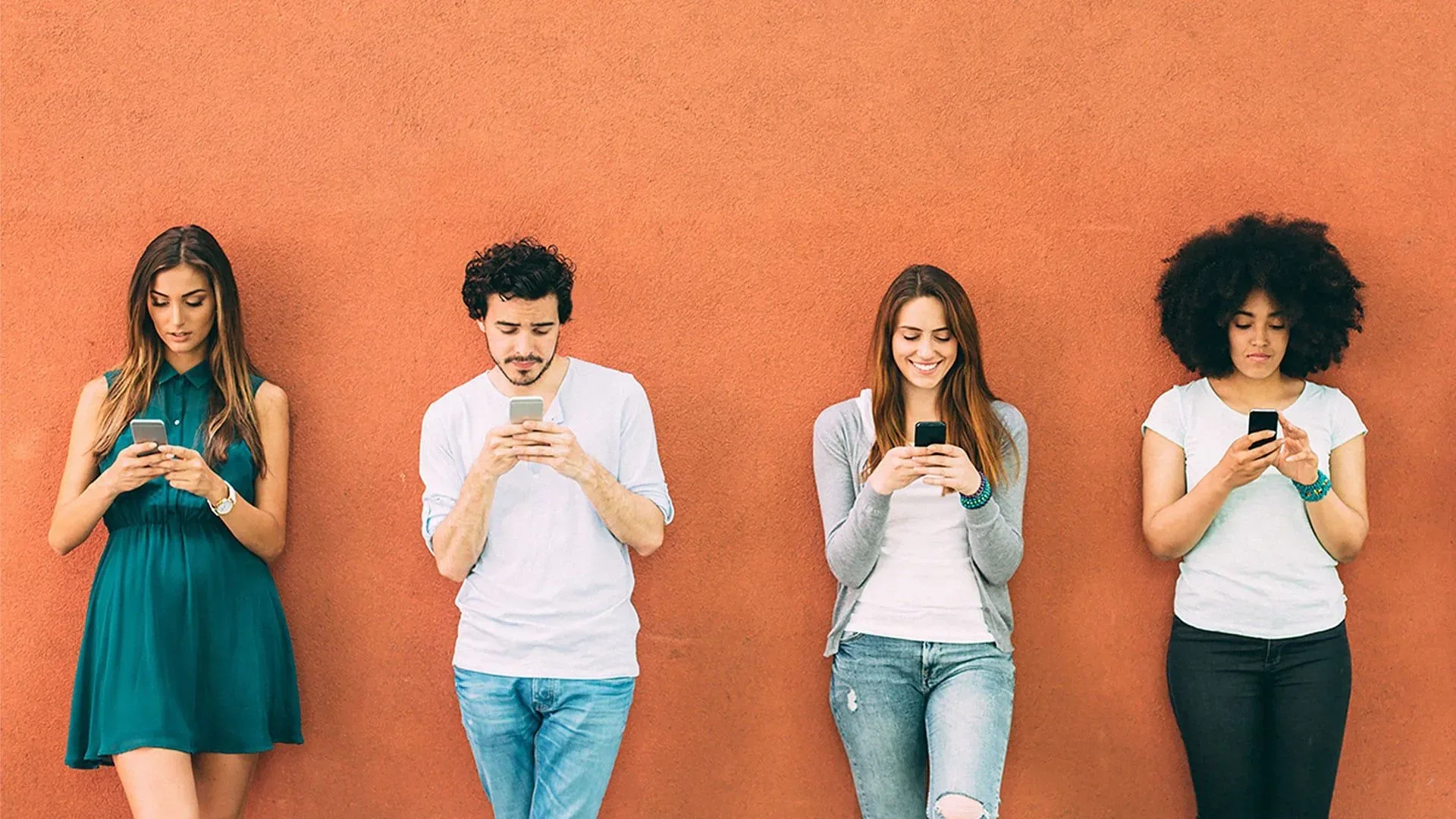
Marta Peral Ribeiro – Communications Consultant – The impact of social media on users' mental health Social media is a tool for doing what we have always done: communicate. But for many people the daily experience of logging on to social media becomes toxic, because they develop feelings of inferiority and of missing out. They question their worth, their identity, their looks and, ultimately, their lives.
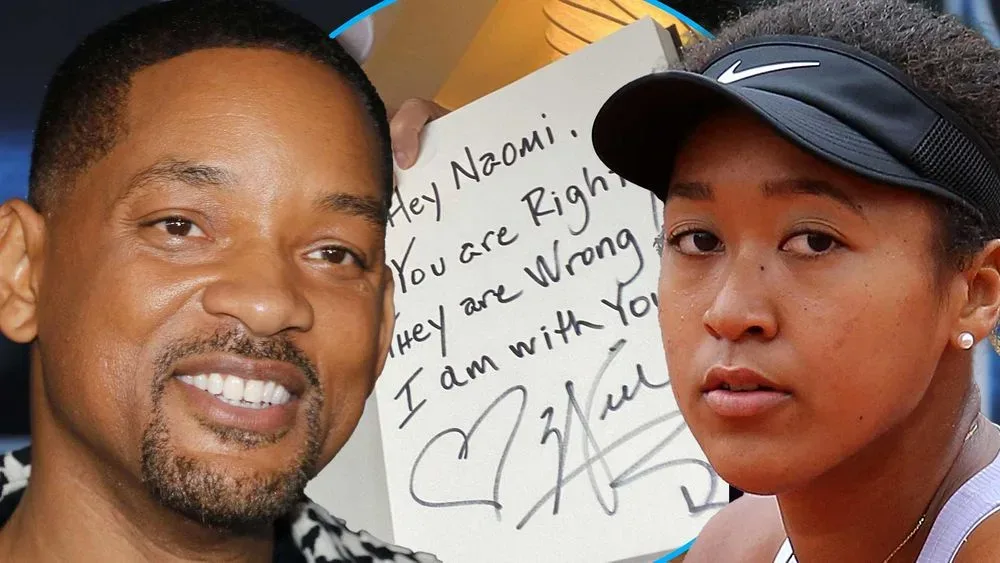
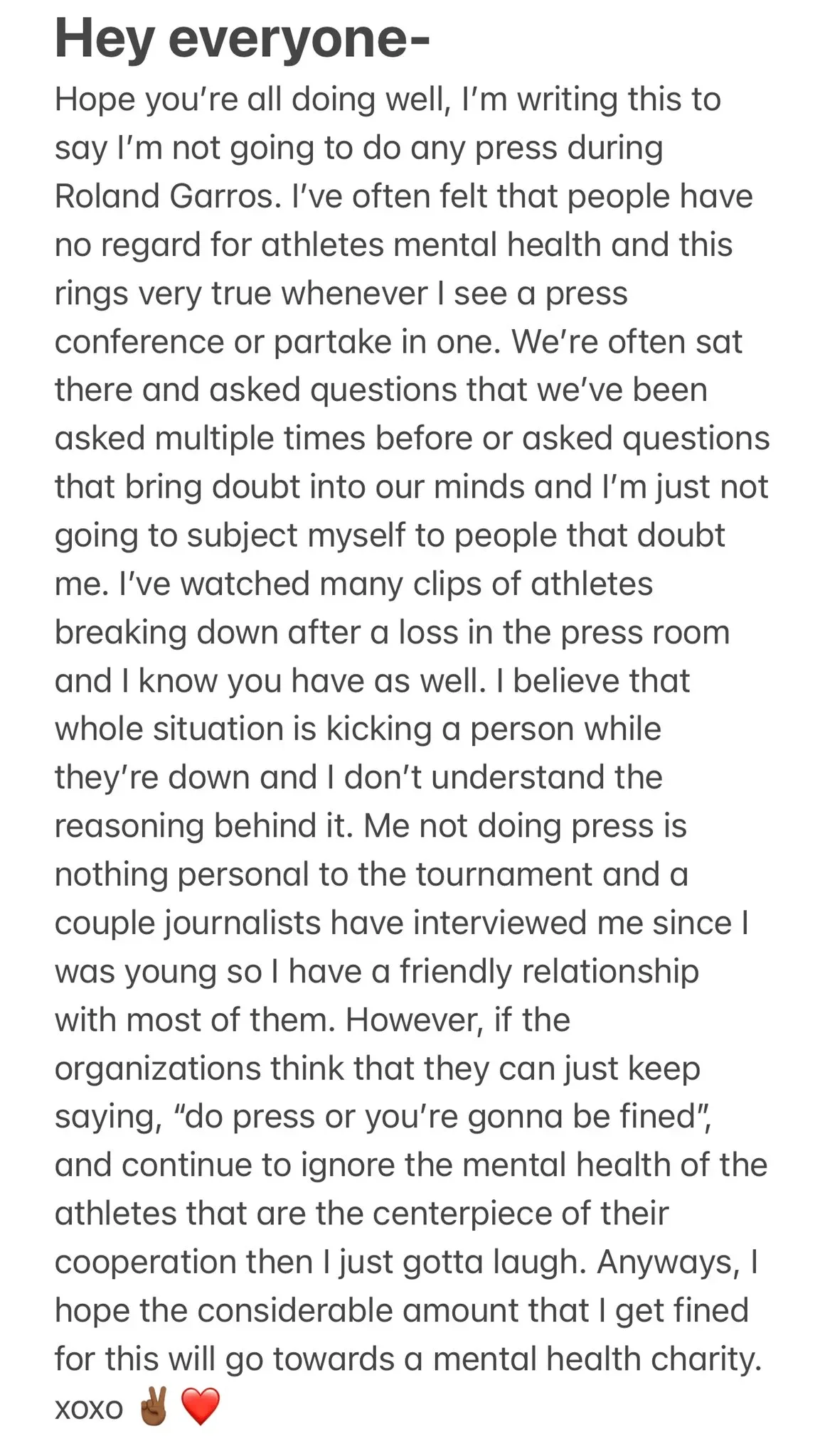
Marta Peral Ribeiro – Communications Consultant – The impact of social media on users' mental health Social media is a tool for doing what we have always done: communicate. But for many people the daily experience of logging on to social media becomes toxic, because they develop feelings of inferiority and of missing out. They question their worth, their identity, their looks and, ultimately, their lives. Using Twitter, tennis player Naomi Osaka recently announced that she was pulling out of the Roland Garros tournament. No, the reason wasn't COVID or an injury, but her mental health – the social anxiety she puts herself through in press conferences, on top of all the pressure that comes with her job, is affecting her performance. Source: Twitter Naomi Osaka Source: The Blast
On another social network, Will Smith voiced his support for the tennis player. Source: Twitter Supercar Blondie
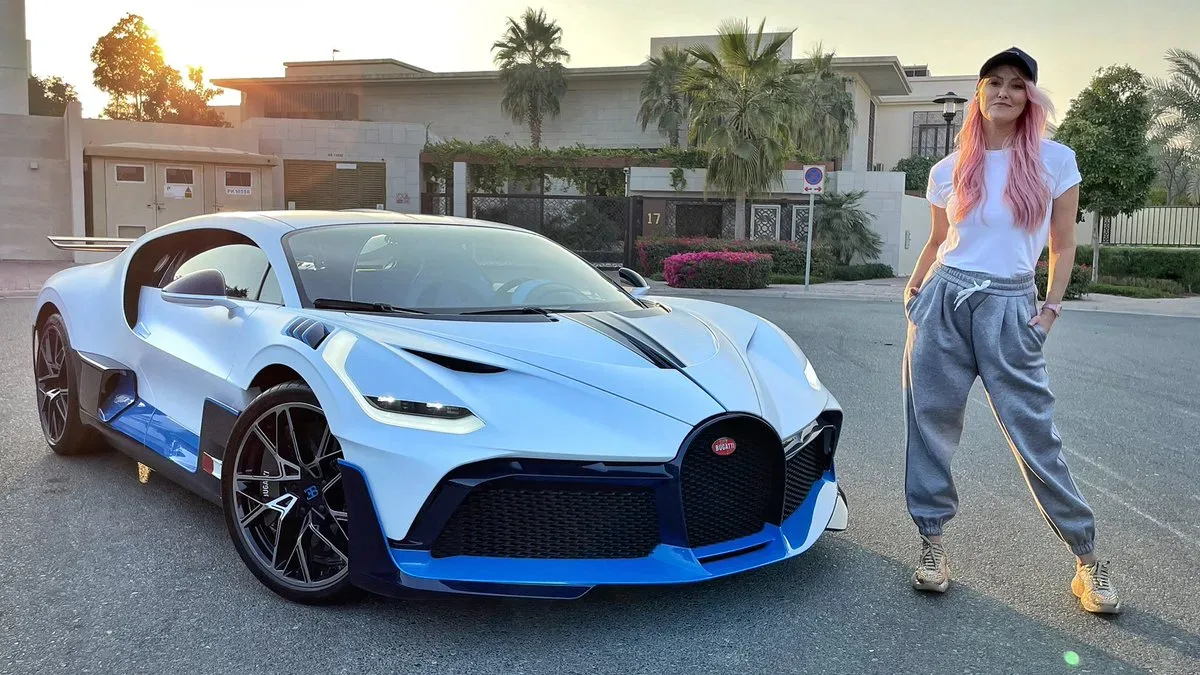
Supercar Blondie, known for her videos driving cars such as Lamborghini, Bugatti or Ferrari, also posted a video on her channels openly describing the symptoms of stress and depression she feels because of online pressure. Followed by millions of people around the world, Blondie talks about the sheer volume of comments and opinions she gets on her digital platforms, the effort she puts into creating content and how all that stress affects her sleep.
Mental health finally seems to be getting the attention it deserves. And while social media is a channel for talking about the subject, it is also one of the biggest causes of anxiety and depression for a lot of people. But why exactly? The context
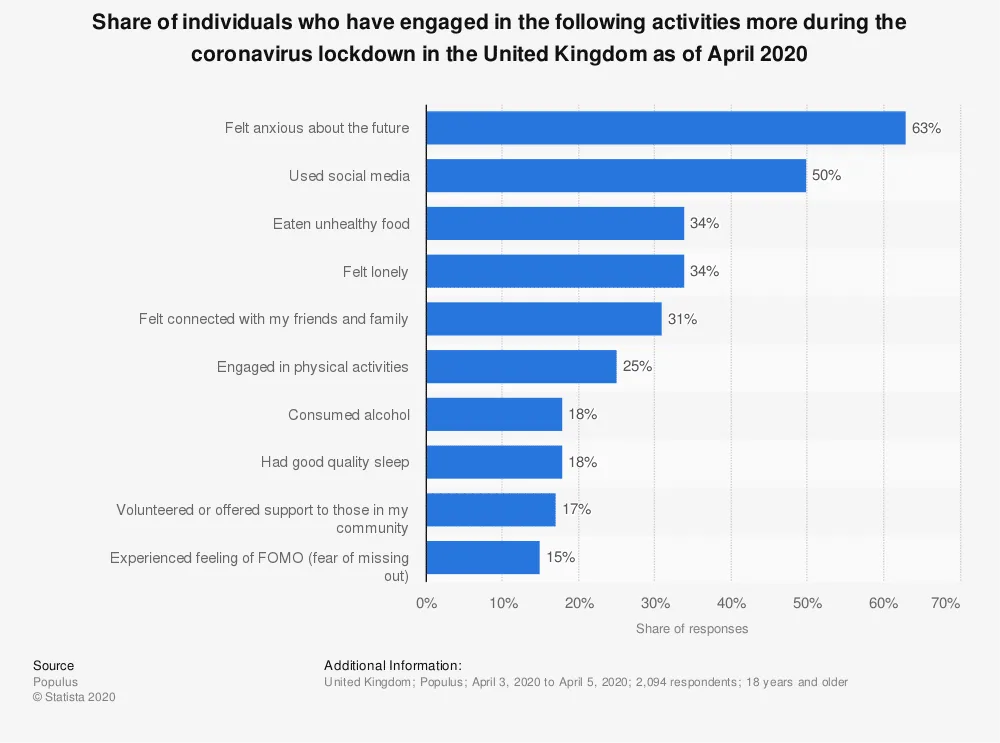
Offline life already gives us plenty of reasons to feel anxious. And the pandemic only made things worse: we became even more worried given the uncertainty ahead and dived head first into the online world, especially social media.
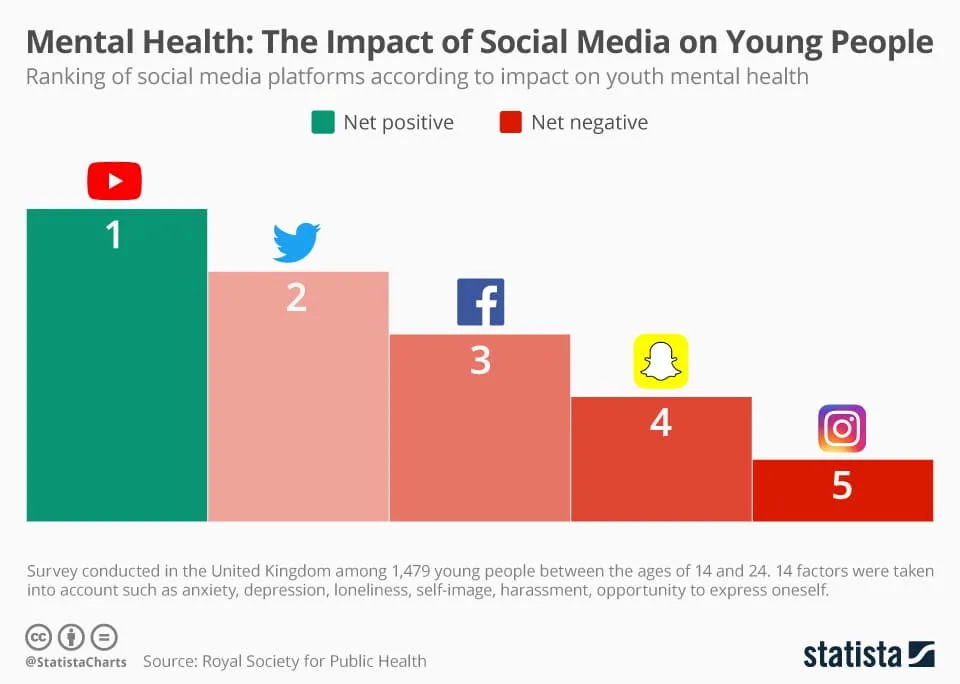
This Populus report was carried out a year ago in the UK, but the reality in Portugal probably isn't far off:
Is there a direct correlation between the two? [nectar_icon_list_item icon_type=”icon” text_full_html=”simple” title=”List Item” id=”1644850684662-2″ header=”Conflict between colleagues working remotely” text=”An article in Exame magazine looks at the conflicts that emerged in the virtual environment over a year of remote working, which wouldn't have happened face to face.
Messages exchanged in company chats, particularly on Whatsapp, frequently give rise to misinterpretation.” icon_fontawesome=”fa fa-comments” tab_id=”1644850684663-7″] [nectar_icon_list_item icon_type=”icon” text_full_html=”simple” title=”Section” id=”1644850684670-7″ icon_fontawesome=”fa fa-users” header=”Young people are the most anxious” text=”It is among the youngest that the issue is most worrying. 90% of people aged between 18 and 29 use social media (and they are starting younger and younger). Which is no surprise, given that Generation Z was born into smartphones and social media.
Their relationship with digital, their «mobile» mindset and the impact they have on how social media itself develops are proof of that. But what about the effect social media has on them?” tab_id=”1644850684670-5″]
Anxiety factors linked to social media
Comparing yourself with others
In most cases, social media profiles play up people's best side and their achievements: the face and the body in shape, the trendy places they're in, the incredible view in front of them, the fun brunch with friends, the perfect family, among other glories.
Not that any of this matches reality exactly, but our tendency, more or less consciously, is to compare ourselves with others. And it's almost guaranteed that we'll come away feeling we're not doing as well as they are.
Signs of addiction
Social media activity starts out as a source of entertainment. Then it turns into a kind of need and quickly takes on the shape of an addiction, much like a drug.
In fact, the brain releases dopamine every time we get a notification, a like or a positive comment. Social media is built for precisely that purpose. It's no accident that the feed never ends, or that suggestions tailored to our tastes keep appearing.
Social capital
The term social capital refers to the influence exerted on social media (whether in communities inside or outside the digital world) and the ability to stand out from the competition. And that comes down to the kind of interaction we get. Basically, the more followers and likes, the greater the social capital.
But does it make sense to measure our own worth, or anyone else's, on that basis? A shift in our sense of identity
When our self-esteem is affected by the number of views and «likes» we get, our sense of identity starts to shift as well. And if personality is shaped by what happens on social media, there's a risk of a new persona forming.
Which, in some cases, can be positive, because a person may find social representation on these platforms (as happens with minority groups, for example). But in many other cases it isn't.
Safety and privacy on social media
There is more and more talk about data being shared with third parties and about how everything we do and say on social media is being monitored, making Orwell's dystopia, 1984, frighteningly close to reality.
On top of that monitoring, which is both an intrusion on users' privacy and a way of feeding their timeline with personalised suggestions, there's abuse between users. From cyberbullying to hacker attacks, as well as child grooming and more.
Anything but missing out
Being afraid of missing something, of being left out, is a real fear and it's tied to something intrinsic to being human: the desire to belong. Social media puts across the idea that everything interesting that could happen is happening there. As if we were going to get bored, lose friends, or miss an event or a one-off opportunity if we didn't have access to Instagram or Facebook. Nomophobia
No mobile phone phobia is an extreme reaction to being without your smartphone, whether because you left it at home, it broke or it simply ran out of battery.
In other words: it's the fear of being unreachable. Here are some signs of nomophobia:
- Constantly checking notifications (messages, emails, calls)
- Taking your smartphone everywhere – including to the loo
- Feeling on edge when there's no Wi-Fi
- Struggling to switch the device off, even at night
- Anxiety when the smartphone battery is about to die
Realised you're nomophobic? You're not alone. What now?
Social media isn't going away any time soon. Deleting your Whatsapp, Instagram, Youtube, Twitter, Facebook or TikTok account isn't the answer for everyone. But how do you handle the stress that comes with it? And what might happen if you did give up social media? You'd have more time to rest. You could still have friends – and more time to spend with them. You could still talk to people all over the world. And you'd discover, or rediscover, other forms of entertainment. You'd have a more realistic sense of who you are.
As the marketer Bailey Parnell put it,
“When we talk about the dark side of social media, what we're really talking about is the dark side of people”.
Which means it's up to each of us to look at how we use these tools, both towards ourselves and towards other people.
Is the aim of this article to encourage anyone to abandon digital platforms? Not at all. But if it helps people who feel anxious understand why, and raises awareness of the impact of mental health on our lives, then it has done its job.
Get what we write
No fixed calendar: only when there is something worth your time.