Artificial Intelligence and Digital Marketing: A match made in heaven?
Sandra Caravana – Copywriter – Tempers flared on LinkedIn: should we or shouldn't we send our CVs in Word format so that HR Artificial Intelligence (AI) systems can better recognise our skills? AI is at the service of recruiters, much like triage in hospitals. If we do it for hiring, why not use AI to build a profile of our customers?
The marriage between Artificial Intelligence and Digital Marketing is more than a film. It's a documentary.
First, let's get the concepts straight.
Sandra Caravana – Copywriter – Tempers flared on LinkedIn: should we or shouldn't we send our CVs in Word format so that HR Artificial Intelligence (AI) systems can better recognise our skills? AI is at the service of recruiters, much like triage in hospitals. If we do it for hiring, why not use AI to build a profile of our customers?
The marriage between Artificial Intelligence and Digital Marketing is more than a film. It's a documentary.
First, let's get the concepts straight. What is Artificial Intelligence?
It isn't a myth, but it isn't anything new either. If we look at AI as a concept, it's easy to see that it's the logical next step in technological evolution. We want machines that help us with our daily chores, from the invention of the car to the tumble dryer. We use these machines for a better quality of life – or to make better use of our time. When we explain the difference between hardware and software to children, we draw an analogy with our own bodies: hardware is the physical part and software is the brain. In 1940, the mathematician Alan Turing developed a machine capable of breaking secret Nazi codes created by another machine, patented by Arthur Scherbius and known as Enigma, during the Second World War. To find out more about the story, watch the film THE IMITATION GAME.
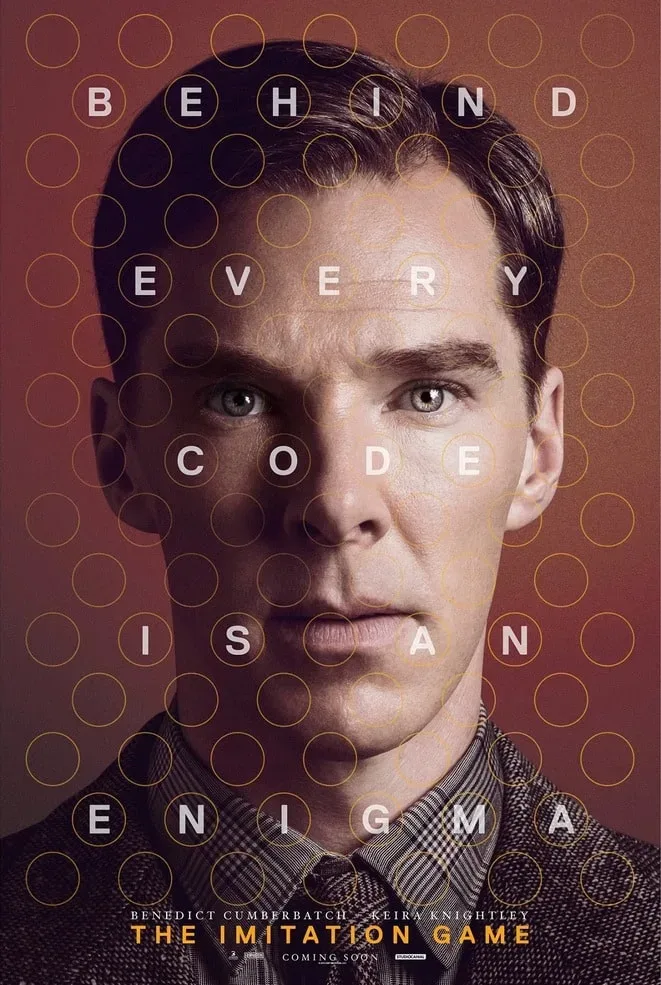
Turing, considered the father of computing, created the Turing Test in the 1950s: a hypothetical test to work out whether or not a piece of software is as intelligent as a human being – the imitation game itself. Did he create algorithms? Perhaps. Turing's great innovation was building a machine that thought like us, in order to save time. And in every area of our lives, time is money. Source: IMDB If AI simulates human thinking, what can it do for my business?
Working from that premise, AI in digital marketing is a method of collecting data on customers – and future customers – with the aim of anticipating their next move and improving their journey as consumers. It analyses customer behaviour in order to suggest (and even decide on) a marketing strategy tailored to that individual. AI can therefore help you build a better, more suitable marketing strategy for your business.

Too much theory? Let's look at some examples. Source: Pixabay It seems like the most basic thing Remember back in 2019, when you were browsing your favourite sports shop website and couldn't decide between two pairs of trainers for walking the Camino de Santiago? ‘Let's walk down to the shop and talk to the sales assistant.' But what if the sales assistant is online with you? In 2022, every retail company uses CHATBOTS. Yes, those dialogue boxes that pop up in the corner of your screen (preferably the bottom right-hand corner) and ask whether you need any help.
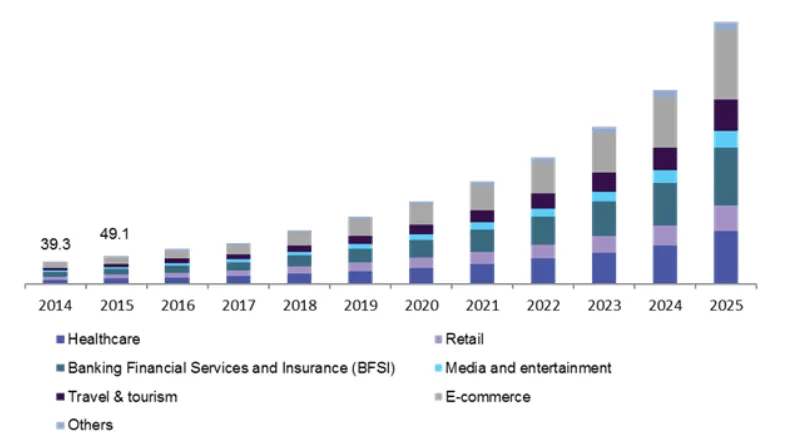
But this is AI serving digital marketing on a small scale, albeit one that's growing fast: Source: 14 Real Life Chatbot Examples to Implement your Bot Strategy
Responses can be automated: many shops choose to offer set reply options (rather like a questionnaire) and steer the customer towards their goal. Where resources allow, some businesses may have a member of staff assigned to answer customers, but as a rule the first message is always the work of AI.
Staying in the realm of words and language, we also find AI in copywriting. Words sell. And in the digital world, words create curiosity, and curiosity leads the customer to buy. Anyone writing for e-commerce is constantly updating their SEO (search engine marketing) strategies and analysing keywords to generate conversions.
How do you sell a baby cot without constantly saying that you sell baby cots?
There's a structure and an information architecture behind it. Not only do we not read information in the same way, we don't read it with the same structure online as we would in a leaflet. So what if we had a tool to help us organise all this information?
We do — with the help of AI.
Platforms such as PERSADO are designed to make the copy on your website more appealing. For email marketing and other forms of direct communication with customers (such as messages), the PHRASEE platform personalises your message. One platform that has been very successful in Portugal among designers is Figma, whose suggestions are always geared towards the user's perspective: UX/UI design.
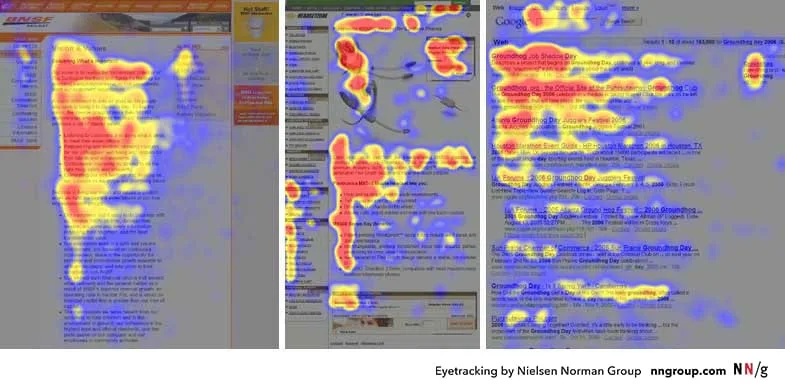
These are three examples of the use of natural language processing (NLP): it allows a technology to understand what a human being says or writes and formulate comprehensible responses, in line with the findings of eye-tracking studies, which show that we read in an E or F pattern, from left to right.
AI serves digital marketing not only through words, but through images too.
virtual reality
is now a reality. And not just in gaming. During the height of the pandemic, many museums added
virtual reality platforms
to their websites, allowing people to visit without leaving home.
Augmented reality is an immersive digital resource, with 3D images that interact with a real-world environment. If we can visit a museum, we can also shop. This augmented reality option is genuinely useful when we're talking about purchases that can't be returned. Robbialac offers customers a colour simulator so they can try out various paints without any risk. As customers, we can visualise our choice before physically enjoying it and, as a brand, we reduce our customer dissatisfaction rate. Source: Pixabay For the more creative among us (or for fun, learning and developing an eye for aesthetics), the DALL-E app creates realistic images from a text description. My shop is smarter than yours
We can talk about smart shops for two reasons:
1 – When they understand the customer's pain points;
2 – When they study customer behaviour.
Why do we abandon items in the basket? Why do we click on a backpack, look at all the available colours, read the description, check what it's made of and then not buy it?
AI brings all this information together. It's our digital footprint. And through it, the brand can analyse customer expectations. The “abandoned basket” metric is so important that some brands send us a personalised email saying “you forgot to complete your purchase!” or more creative messages like “the items you chose are feeling abandoned”. It all depends on the brand's voice, but nobody ignores an abandoned basket.
Data Analysis – everything we do and think
After this more creative side of images and words, AI also carries real weight in analysing customer data. With the right strategy, which means choosing the right parameters, we can even reach the conclusion that a breakfast-cereal-flavoured ice cream would be a viable product.
We already know we have a digital footprint. We know that our search engine (mainly Google) is trained on our personality and tastes. But how do we group and analyse this data? How do big brands manage to send an email with personalised suggestions to every single customer? A good analysis of consumer behaviour can determine the success of your business. These AI tools group, organise and establish links between all the data collected:
– Personal data: age, where they live, whether they have children and how old those children are;
– Online behaviour: which sites they visit most, which online shops they buy from most, how long they spend researching products online, which newsletters they subscribe to, which social media accounts they follow, what kind of posts they publish on social media, and so on;
– Customer behaviours specific to each brand: what they bought, why they decided to buy item A and not item B, average basket value, average quantity purchased, how regularly they buy and, of course, abandoned baskets.
The famous A/B tests aren't just for measuring customer satisfaction levels. With the right strategy, we can decide on our brand's colour and tone of voice. And with those results, we can understand our customer's tastes (which means communication can be personalised) and build the perfect audience for our business.
Building the perfect audience is, in 2022, AI's great challenge, underpinned by the best possible consumer experience and journey.
The challenges of AI in Digital Marketing
All the strategies and platforms mentioned above are used mainly by retail companies. Why? Because they have the structure to absorb the cost of buying and licensing these AI systems. Of course, these companies are already established in the global market and have built their perfect audience, but it's a massive audience. Their growth is due in part to these artificial intelligence tools working alongside digital marketing strategies.
So, we just buy a licence for a data analysis tool and that's that?
No. AI also needs time to learn.
AI in digital marketing doesn't just collect data, it also turns that data into conclusions. How is a digital tool going to connect the organisation's or brand's objectives with customer preferences, trend history and the context in which all of this is happening? Through training, testing and a few failures along the way. And all of that takes TIME.
And can I do whatever I like with the data I've collected?
No. AI and digital marketing are also covered by the General Data Protection Regulation (GDPR). This regulation has to be part of the marketing strategy itself, and you need to train your data analysis tool to use data ethically. That means choosing your sources wisely. This is where a data privacy standards strategy comes in.
OK, I've got a GDPR policy. Can I get going?
Steady on. AI needs a strategy, just like your business does. It needs objectives and partners. Yes, you may even need outside help to carry out this data analysis. That way, the data assessment will be more reliable and impartial.
Once that's in place, you'll know the best place to advertise, which images and copy to use, and you'll even be able to personalise your communication with customers.
We all have a different Spotify and Netflix interface: both offer the user suggestions that combine the apps' objectives with the user's trends and history, using sound and images.
OK, OK. We've talked enough about the customer. Shall we talk about money?
Of course. You can use AI in your business to work out the best price for your products and services. AI can be used to gauge competitors' prices and the expectations of your ideal audience. That way, you make sure you get a return on your investment.
If AI does all that, am I going to lose my job?
There's a study suggesting that 6 in every 10 marketing specialists could see their jobs replaced by intelligent marketing technology. Let's not spread panic: we'll wait for more literature on the subject.
Portugal's National Statistics Institute shows that (provisional data) out of every 100 marriages, 91% end in divorce. The marriage between Digital Marketing and AI keeps bearing fruit — and profit. But if it's perfect…

Get what we write
No fixed calendar: only when there is something worth your time.