Black Hat SEO

Marta Peral Ribeiro – Communications Consultant –
When SEO tries to outsmart the algorithm
SEO (Search Engine Optimization) techniques are used every day in digital marketing. Their aim is to generate more traffic and optimise digital content so that it lands on the podium of the user's search results.
However, some content is built artificially to trick the algorithm and grab the top spots.
Marta Peral Ribeiro – Communications Consultant –
When SEO tries to outsmart the algorithm
SEO (Search Engine Optimization) techniques are used every day in digital marketing. Their aim is to generate more traffic and optimise digital content so that it lands on the podium of the user's search results.
However, some content is built artificially to trick the algorithm and grab the top spots.
What (White) SEO is:
It's all content optimised transparently, putting the user experience first.
As well as offering substance that matches the keywords we searched for and adds value, its structure is clear and the language simple, easy to access even on mobile. As a result, the algorithm will consider it relevant and show it at the top of the search results, which generates organic traffic. That increases the visibility of the page and of the brand behind it. So what is Black Hat SEO?
Black Hat SEO, on the other hand, refers to practices that try to manipulate search results, abusing optimisation (SEO) techniques so that the algorithm places them in the top positions.
The problem is that these actions are only about ranking, regardless of the experience the site's visitor will have – which breaches search engine guidelines, namely Google's, whose focus is the user.
Examples of Black Hat SEO
It's useful to know which actions can amount to unethical SEO, so you can avoid them at all costs. It's worth stressing that these strategies change over time, as nothing on the internet stands still. Here are a few:
Keyword stuffing

This is possibly the most common
black hat

SEO technique. To increase the density of a keyword, the same page repeats it countless times, whether in the body text, the title, the subheading, image captions, and so on.
Consequently, that density will be read as relevant by search engines. However, saturating a page with the same keywords harms its readability and its context, which becomes tiresome for the reader and will end up losing points with Google. How do you check keyword density? Once you've optimised an article, simply divide the number of times you used it by the total number of words in the text. The figure should be no more than 2%. Alternatively, you can use synonyms. Doorway Pages
Also known as gateway pages, these are several pages that lead the user to one and the same page, even though they appear separately in the search results.
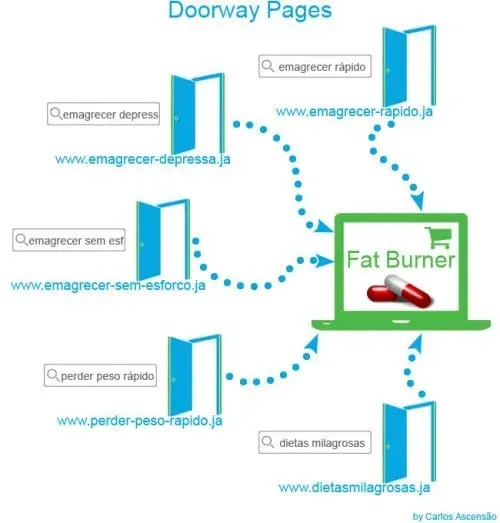
These pages are optimised with different keywords that act as bait to secure good positioning in the search results. However, when we access their content, they redirect us to other pages – usually malicious ones, which is why they are considered a form of cloaking. Source: WebHopers Cloaked pages (Cloaking)
There are several forms of cloaking, including:
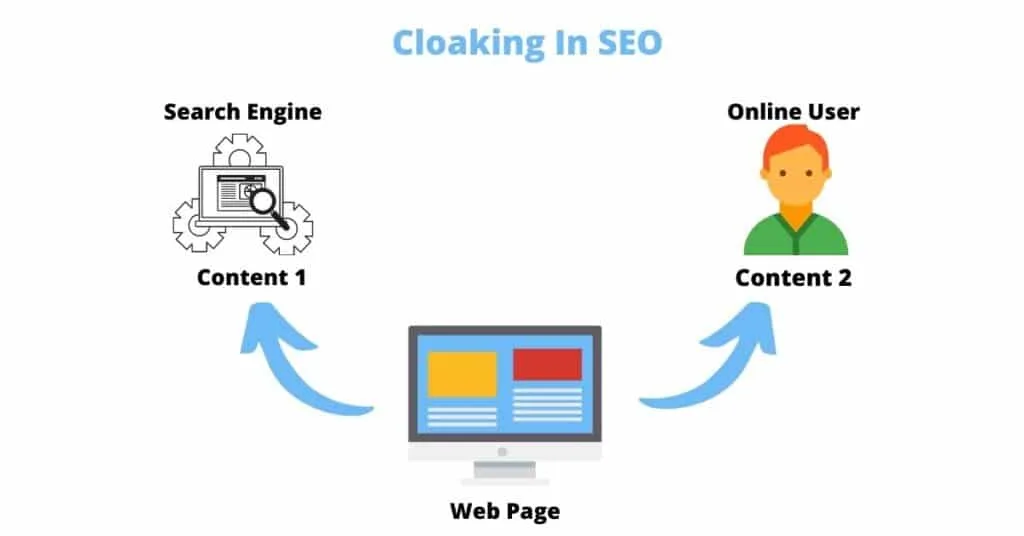
Page with two versions: Through a particular set-up, the same page is served in two versions: one for the search engine (so it gets indexed in the top results) and another for the user (with no relevant content). For example: a page that appears in HTML to the search engine bots, but shows up as Flash for the user, which is a nuisance because, once again, it doesn't match what they were looking for. Source: Santhosh Natarajan Text cloaking: The idea is to hide content, usually containing important keywords, so that only the indexers pick it up and consider the page relevant (because of the keyword density). That pushes the website's ranking up.
For example, a page with a predominantly blue background uses words and links in blue font too, or hides text behind images. The user can't see them, but the search engine can. Source: ALI Tech & Co Private blog networks (Link Wheels)
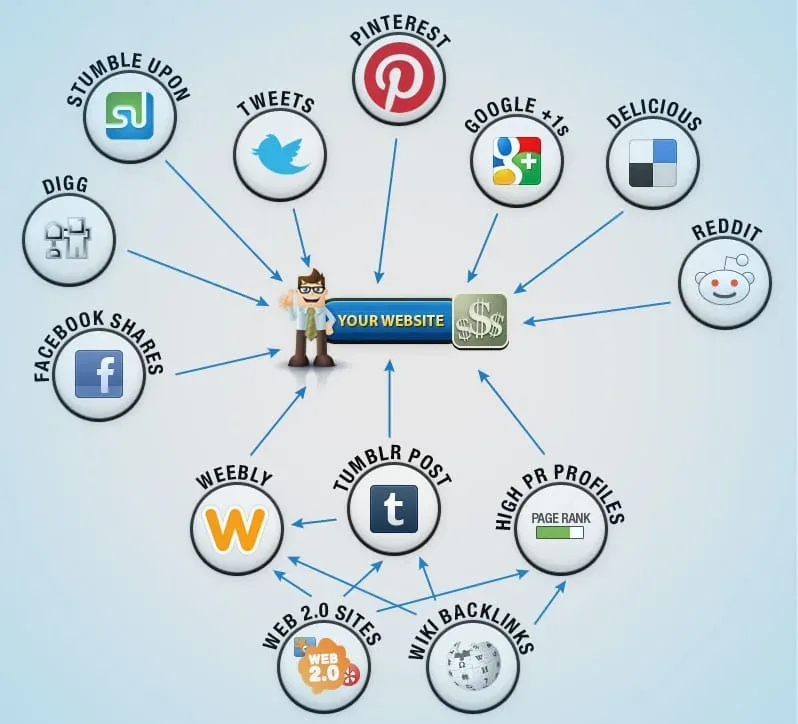
Also known as Private Blog Networks (PBN), this is a link building strategy to drive more traffic to a website using off-page SEO.
In practical terms: several blogs are created that point to one main website. That flow of links generates more traffic to the website, which then looks relevant and is placed at the top of Google.

Whereas ethical SEO involves organic backlinks, this technique is an artificial way of getting the same result, which is why it's considered black hat. Source: Moz Duplicate Content
This means content is replicated on the same website or on other interlinked ones. The practice isn't very effective, since it adds no value and search engines will give priority to the original content – that is, whatever was published first.
Instead of duplicating, you can rework the content as video, images and infographics – including on the brand's social media.

It can happen that a website's mobile version, its paginations, among other things, are treated as duplicate content. So it's worth checking what settings need to be in place to avoid this. Source: Power Suite Paid links
This is probably the hardest tactic for Google to detect, because it doesn't know whether a link from one site to another was arranged between the parties or is organic. If there's a reward involved, the link generated is considered sponsored.
One way for Google to track the relevance between the two websites is to check whether their topics are related. What happens when Google detects these practices?
Over the years, as technology has evolved, the algorithm has also been developed to detect abusive use of SEO. Which means it's increasingly difficult to get around it.
If it identifies a black hat action, Google will penalise the page in question by:
- Limiting organic traffic
- Controlling the ranking of new content
- Dropping the page from the results list
- Banning it (in more serious cases)
On the other hand, if one of these strategies was a one-off, Google may treat it as a slip and lift the penalties. Either way, the problems need to be fixed immediately. Why doesn't Black Hat SEO pay off? The user won't convert into a customer: As soon as users realise they've landed on a page whose content is nothing like what they expected, they'll feel cheated. And with such a fragile connection, they'd never become a customer. Indeed, if the user's interests aren't the focus, what kind of loyalty could there be towards that brand? Google will penalise you: If one of Google's main concerns is a (positive) user experience, and black hat practice means a bad experience, Google will do everything it can to push that page down the results ranking. In the medium and long term they lose effectiveness: When content isn't relevant, the algorithm automatically pushes the page down, so it stops appearing in the top search results. You lose visibility: On top of that, it's hard to be recognised in the market – including by competitors – when there's no fair play. Who's going to take seriously a brand that doesn't offer a good user experience? What the fable of The Hare and the Tortoise taught us
It's essential that digital marketers keep up with good and bad SEO practices, not only to avoid Google penalties but also to keep their communication transparent and protect their reputation as a brand.
For a brand to reach the consumer and the top positions in the results, the focus must always be the user. And that means thinking like them: giving them useful, up-to-date information that's easy to read, backed up with studies, charts or links, and above all listening actively so you can answer the questions they ask, whether on social media, on the website or even offline.
Just as the tortoise always beats the hare, no unethical strategy beats high-quality content that adds value for the user.
Get what we write
No fixed calendar: only when there is something worth your time.