BookTok: the phenomenon redefining publishing marketing and the behaviour of young readers in Portugal

Jelly – Digital Agency
Over the past decade, we've watched entire sectors be transformed by social media. Fashion marketing changed with the arrival of Instagram, restaurants went through a revolution with TikTok food, and now it's the book trade's turn to face its biggest turning point since online sales went mainstream: #BookTok.
We see this phenomenon not just as a cultural trend, but as a case study in how the attention economy, algorithms and the influence of micro-influencers are reshaping consumption habits — in this case, reading habits, particularly among younger audiences. This movement, which is to literature what "TikTok food" is to cooking, raises a question: are we witnessing the birth of fast-food literature?
In this article, we look at how the BookTok hashtag became the main sales driver in the Portuguese book trade, transforming stock management, translation cycles and the very identity of young readers, and we consider the urgent need to balance the algorithm's enthusiasm with the responsibility of literary curation.
What is BookTok and why has it become so powerful?
BookTok is a global community within TikTok focused on books, made up of readers, micro-influencers and creators who produce short, emotional, highly shareable content about what they're reading.
Its strength rests on three key factors:
1 – Perceived authenticity
Young people trust a 30-second video filmed at home by someone "like them" far more than a traditional book review. Emotion is the main currency. 2 – A discovery-driven algorithm

Unlike other platforms, TikTok favours content that holds attention, not necessarily content from accounts with large followings. That allows an unknown book to go viral overnight.
3 – Highly replicable content
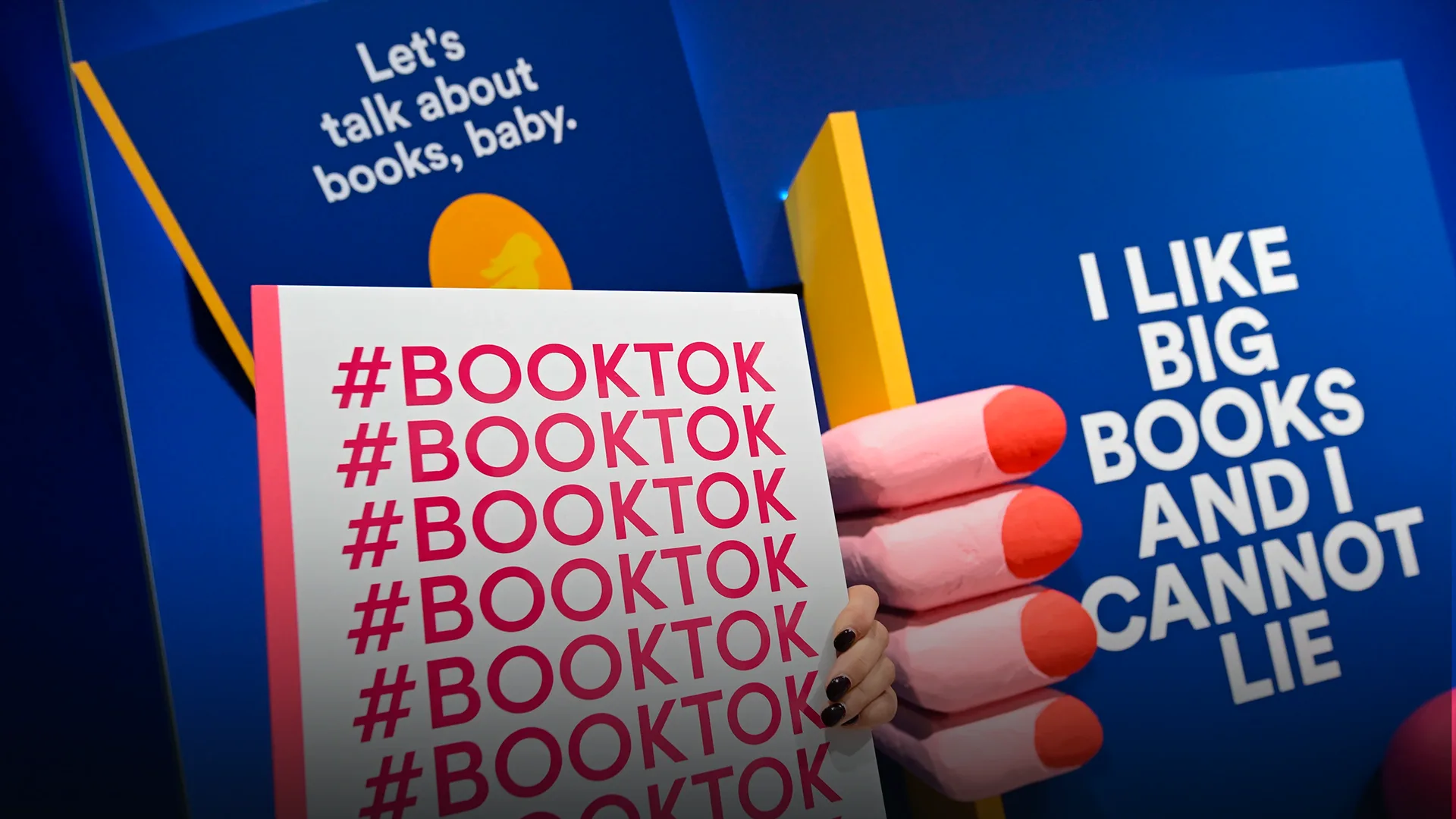
Hashtags may have lost their relevance on Facebook and Instagram, but on TikTok it's a different story. Here they work as a genuine search engine, guiding users towards niches, trends and specific communities. In the world of BookTok this is even more obvious: hashtags such as #BookTok, #bookrecommendations, #bookclub or #bookgirl have become anchors for discovery. Alongside them are thousands of new hashtags identifying literary genres, subgenres and reading moods. The result? An ecosystem where book recommendations turn into viral trends capable of moving the market in real time. Books sell out, unknown authors become phenomena, and reading lists grow at the speed of the scroll.
The direct impact on Portuguese bookshops
Bookshops here are no longer responding only to traditional demand: they're responding to the algorithm. And it shows in several key ways.
1 – Sections dedicated to TikTok
Almost all the big chains — Bertrand, Fnac, Wook and even independent bookshops — have created dedicated areas for titles that are big on TikTok. These sections turn over faster than the new releases tables.
2 – Sales spikes that are unpredictable but explosive
A book goes viral, hundreds of young people walk into the bookshop looking for that title, and they buy it. The cycle is so fast that many bookshops admit they've had to adapt their stock management with unprecedented agility.
3 – Shifting publishing priorities
Portuguese publishers have been:
- reissuing older titles with more "TikTok-friendly" covers;
- bringing forward releases by authors who are popular on BookTok;
- investing in faster translations to keep pace with international hype.
BookTok isn't just a channel — today it's a driver of commercial decisions.
How young readers behave: trend, emotion and speed
Young audiences have found in BookTok a community that has given reading its glamour back. Even so, there are specific patterns worth examining.
Patterns we've observed:
- Dominant genres: contemporary romance, fantasy, thrillers;
- Impulse buying: many young people buy books with no context at all, purely on the emotion conveyed in a video;
- Reading as identity: photographing books, sharing shelves, writing summaries and reviews have all become part of the experience;
- Social pressure to read "what everyone else is reading": a form of belonging, but also a limit on literary diversity.
In digital marketing terms, this shows that young people respond to narratives more than to arguments. What sells is feelings, not synopses.
The "fast-food" side of literature — and what it means for brands
The article in Comunidade Cultura e Arte raises an essential question: is BookTok promoting a "fast-food" literature?
The truth is that, from a marketing point of view, the answer isn't simple. On one hand, the phenomenon has breathed new life into the young adult market: it has increased sales, brought more people into bookshops and put books back at the centre of the conversation. And there's another very positive side to this shift — recommendations are no longer the preserve of the big publishers and now circulate far more freely and democratically.
But there's a less shiny side too. Increasingly, reading seems to follow the logic of the algorithm, prioritising what moves you quickly over what invites you to think. Choices start to repeat themselves, creating a uniformity that impoverishes cultural diversity. And with so many "trending books", the bookseller's role as someone who guides, suggests and uncovers can end up sidelined.
Ultimately, this shows how digital marketing can drive an entire sector forward, but also how it can make that sector dependent on fast-moving trends — which leaves brands, readers and bookshops facing a new challenge: making the most of the phenomenon without losing what reading is really about.
BookTok is an opportunity — as long as the sector doesn't give up on curation
At Jelly, we see BookTok as a genuine case study in the power of communities and organic recommendation. The impact is impossible to ignore: suddenly, thousands of young people are walking into bookshops again and talking about books with enthusiasm, something the sector had been trying to achieve for years. It's even more significant when you look at Portugal, where we've managed to get two generations — Gen Z and the younger end of Gen Alpha — reading books, something that had become critical in this country. But at the same time, we do have some concerns. The publishing market sometimes seems to follow the algorithm's logic a little too closely, trading diversity and cultural purpose for immediate sales spikes. And we know all too well that when a strategy becomes entirely hostage to a trend, it becomes fragile.
What we argue for is simple: balance. Let BookTok be a way in, not the only route. Let Portuguese bookshops use the phenomenon as a tool, not as a compass. Let young readers find not only the "viral book", but also the one that genuinely stays with them and changes them. And let publishers build digital strategies that combine the best of both worlds: the power of trends and the responsibility of curation.
BookTok isn't the end of literature. It's just a new chapter. And, as in any story, it's up to the sector to decide whether it simply wants to follow the plot or take on the role of co-author.
Get what we write
No fixed calendar: only when there is something worth your time.