Brand success goes far beyond setting KPIs

Inês Tito – Copywriter – There are plenty of brands out there. Yet only a few succeed! Building a brand takes far more than coming up with an eye-catching design. You need to know the company, the product or service and, above all, the customer. A brand is a company's voice, soul and personality. Today, brands such as Apple, Google and Amazon are among the most valuable in the world, not only because of the quality of their products and services, but because of their ability to build a close relationship with customers. A relationship built on trust.
Inês Tito – Copywriter – There are plenty of brands out there. Yet only a few succeed! Building a brand takes far more than coming up with an eye-catching design. You need to know the company, the product or service and, above all, the customer. A brand is a company's voice, soul and personality. Today, brands such as Apple, Google and Amazon are among the most valuable in the world, not only because of the quality of their products and services, but because of their ability to build a close relationship with customers. A relationship built on trust. So what's the recipe for success?
There are several, and none is better than the others.
In truth, the best yardstick for measuring success is the one that fits each brand's objectives. That's why it's important to know which indicators really matter and which ones can help strengthen the bond between brands and their customers.
How important is the relationship between brands and customers?
- Customers prefer brands they trust
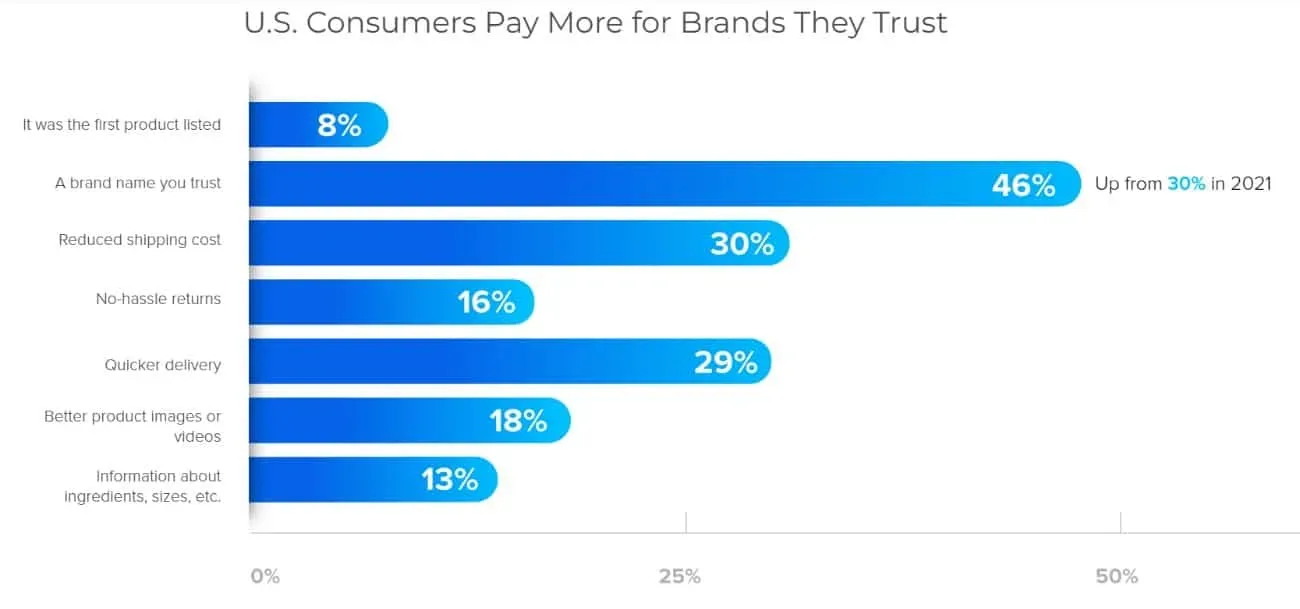
A study carried out in the USA found that 46% of the consumers surveyed would rather pay more to buy products from brands they trust. The same is true in other countries, such as the United Kingdom, France and Germany.
Brands that build long-lasting relationships with their customers earn their trust, prompting them to share their experience with other consumers.
- Authenticity matters
Today's society is constantly bombarded with commercial offers promising to solve every problem. With such a huge flow of information — often not particularly relevant — authenticity becomes a precious commodity.
According to a report by Stackla, 88% of consumers say authenticity is a decisive factor.
This means customers prefer brands that care about moral values rather than monetary ones. With that in mind, transparent, assertive communication is the key to showing the authenticity consumers are so keen to see.
- Consistent brands make higher profits
A brand's consistency is measured by how well its products or services, its image and its communication with customers align.
By maintaining a consolidated image, consumers find it easier to recognise the company and associate it with the brand. A Lucidpress survey shows exactly that: brands consumers consider consistent see their profits rise by 33%.
- Consumers want to know where brands stand on social and political issues
Today, society has all the tools it needs to express an opinion on any subject, at any time.
Our stance on a given social or political issue can even affect our circle of influence, transforming it completely.
The same goes for brands. According to a report by consultancy PWC, around 64% of consumers worldwide may favour or boycott a brand depending on the position it takes on controversial issues.
That said, it doesn't mean every brand is “forced” to take a stand. As mentioned earlier, what matters is staying authentic. At the end of the day, customers can always tell whether a stance is driven by moral or financial motives.
- Brands that improve the customer experience stand out more
In an increasingly automated world, human contact may well be the key to success.
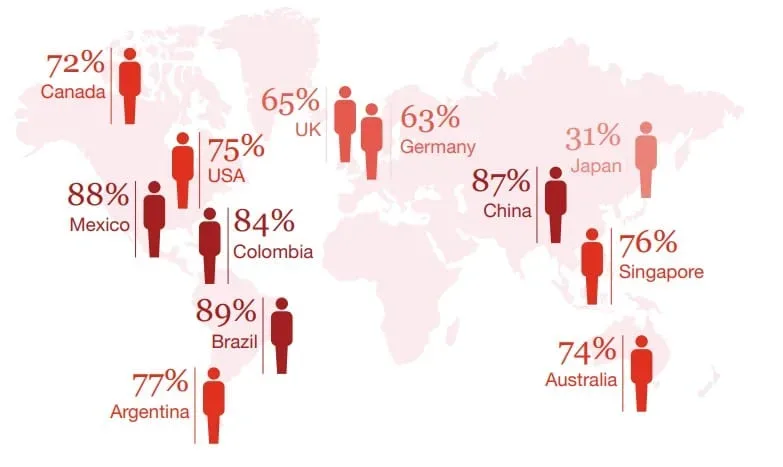
In fact, the quality of customer support leads 73% of the consumers surveyed by PWC to prefer brands that invest in the customer experience. They want to be heard and treated with appreciation. That's why brands that commit to close, personalised contact win over more customers and stand out from their main competitors.
The chart below shows just how important the customer experience is when it comes to choosing which product or service to buy.
The means to an end
These findings show that the customer–brand relationship is a complex one. Throughout the buying process, consumers weigh up all sorts of factors, many of which have nothing directly to do with their needs or with the product's features.
So how can brands anticipate their customers' behaviour and offer them exactly what they're looking for?
Key Performance Indicators (KPIs) make it possible to gather information and analyse how well the brand is aligned with the company's objectives.
The business world is familiar with strategic, operational and functional KPIs. These indicators, however, are too focused on the company's financial management.
Finding the KPIs that measure brand success means going further. You need to know what people think and how they behave towards the brand.
Essential indicators for measuring brand success
In a highly competitive world, where new products, services and brands appear all the time, it's essential to spot shifts in how consumers think and behave.
What consumers think
Customers' perception of brands breaks down into four essential factors: awareness, association, intent and experience. Each one reveals a different level of customer thinking.
- Brand awareness
This refers to the extent to which a brand is recognised by potential customers. It includes their ability to associate a product or service with a particular brand simply by hearing its name.
This KPI can be assessed by a customer's ability to think of a brand in relation to a product category, recognise the brand when shown a logo, or accurately describe an advert for a specific brand.
- Brand associations
These relate to how customers feel about a brand.
Analysing this indicator means considering both functional associations (characteristics consumers see as logical, such as the product's quality level or price) and emotional associations (feelings such as nostalgia or anger linked to the brand or its products and services).
- Brand intent
This reflects the customer's willingness to use a particular brand, or to choose one brand over another.
The indicators used to assess this stage of the customer journey should measure consideration (the percentage of customers who have considered using the brand) and preference (the number of customers who actually use it) separately.
- Brand experience
This is a broader indicator covering preference for a given brand, satisfaction with it and the likelihood of recommending it to family or friends.
Analysing customer satisfaction levels is one of the most widely used KPIs for assessing brand experience, as it's a powerful tool for gathering consumers' opinions and their reactions to the brand at different stages of the buying process.
How consumers behave
Behaviour reflects consumers' beliefs, feelings and desires. Once you've gathered information on how they perceive the brand, the next step is to understand what shapes the way they act.
- Engagement
Brand engagement relates to the emotional or rational relationship consumers build with the brand, including their purchasing behaviour.
Thanks to digital marketing, brand engagement is now easier to measure.
Social mentions, for example, let you analyse what consumers are saying. They show how many times a brand is tagged in posts across the various social networks it's present on.
Alternatively, data gathered through Google Analytics — such as website activity or the number of clicks on an advert (click-through rate, or CTR) — makes it possible to analyse customer preferences, the time between viewing and buying a product, or how long someone spends on a page.
- Acquisition
Acquisition behaviour is directly linked to the brand funnel, specifically the preference and usage stages.
To analyse acquisition behaviour, you can look at indicators such as product or service usage, how often it's used, and the value of a customer's purchases over time.
These indicators can be an inexhaustible source of information. That said, the sheer volume of data collected can become hard to manage. That's why it's important to narrow your KPIs down to the essentials. Why?
— To cut operating costs;
— Remove irrelevant data;
— Keep the focus on the most important information;

By investing more time in the right KPIs, you can gather valuable information that can quickly be turned into practical strategies. Source: Freepik The right push brands need
Consumer perception is constantly shifting. This means brands have to adapt their strategies to meet consumers' needs.
Identifying the KPIs that measure brand success is an important step towards driving brands forward. Without constant monitoring, however, those valuable indicators become obsolete.
Tracking these indicators over the long term makes it possible to assess brand recognition, guide marketing campaigns and analyse their impact on consumers. It's also important to take customer satisfaction and brand recommendations into account.
By taking a holistic view, brands can focus on the essential KPIs, cross-reference indicators and, in doing so, identify opportunities to drive growth and improve their market positioning.

Get what we write
No fixed calendar: only when there is something worth your time.