Customer Experience: how does it influence a company's results?

Sandra Caravana – Copywriter – We're all customers. Capitalists or minimalists, we buy products, book services and pay for them. But along the way we have an experience that can sometimes be wilder than a theme park ride.
Sandra Caravana – Copywriter – We're all customers. Capitalists or minimalists, we buy products, book services and pay for them. But along the way we have an experience that can sometimes be wilder than a theme park ride. CX: customer experience
Back in nineteen-something-or-other, I went to a group job interview at a huge retail company in Portugal. I was paired with a candidate I'd never met and they handed us a star product from one of the shop's brands. This was role-playing methodology and we had to choose who'd be the salesperson and who'd be the customer. I ended up selling a product I'd never seen before. I tried using the trendy sales techniques of the day. I broke the item. I carried on trying to sell it to my partner.
Long story short: we were both hired.
After this tragic episode with a happy ending, I spent many years learning sales techniques, some of them contradictory.

What's the best type of question to approach a customer with: open or closed?
Open question: “Hello, good afternoon. Have you seen our 100% waterproof trainers? What size do you take?”
Customer's answer: “38″.
Even if the customer doesn't buy, and doesn't say much, they'll try them on. And more importantly: they won't forget the experience.
Closed question: “Good afternoon. Can I help you?“
Customer's answer: “No.“
This is what the sales manuals tell us. As a rule, this is what happens.
The type of approach will depend on the brand's voice, more or less formal. Fortunately, I've worked with brands where the simple.
“Good afternoon. I'm around if you need any help“ was enough, because these brands know that after this (half) closed question, the most common reply was “Actually, could you give me a hand here…”
In e-commerce, we rarely approach customers when they arrive at our shop.
How can we deliver a good online customer experience in practice?
“Once a salesman, always a salesman.” – David Ogilvy, 1988
Sitting in Google Analytics 4 24 hours a day trying to send a welcome message to every potential customer who lands in our online shop isn't feasible or productive. Not least because you can install a chatbot on your site. But it's still a robot saying hello, even with a The most current cliché in the commercial world is: sell while you sleep.
“A few years ago bots had a really bad name. People would try and circumnavigate the bot to get to an agent as quickly as possible. But the world has moved on and customers are recognizing that bots can actually be really helpful, if they’re implemented well.” – Jon Ross, VP of Product, Messaging at Zendesk
The solution for driving your business forward is no longer about how you approach the customer — it's about the customer experience — CX.
How does CX contribute to increasing turnover?
#1 – Customer retention
Whether in a physical shop or online, attracting new customers costs more than retaining existing ones — keeping them buying. The focus isn't on acquiring new customers, but on retention. It's about trying to do more with less.
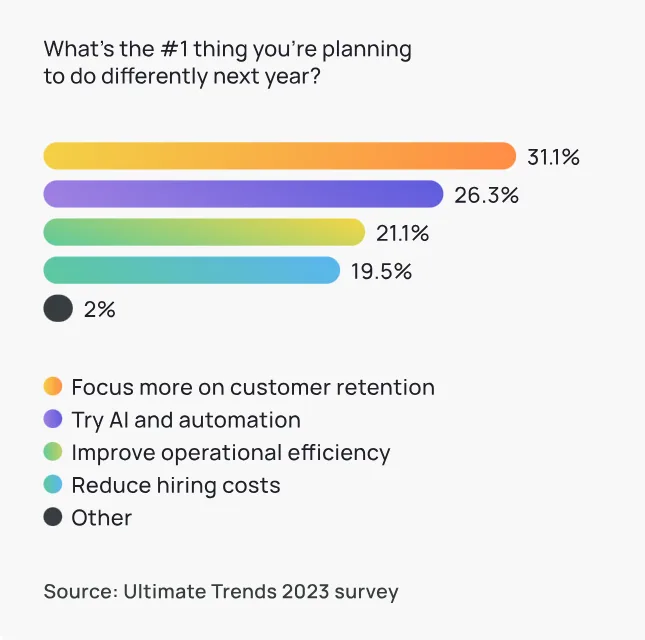
But how? 1.1 – Talk to your customers. Use social media, use online surveys and forms, send a message or call them! The answer may be one click away. 1.2 – Track Customer Lifetime Value (CLTV) and repeat purchase rates among your customers to measure the value of loyalty to your brand. 1.3 – Reliability builds trust. Creativity is required, but so is consistency.
In practice, use one of these strategies (or both): Upselling: a sales strategy in which the customer is encouraged to buy a more complete, upgraded, higher-value version of a product or service. Like the new iPhone, even if the current one still works.
Cross-selling: a sales strategy in which complementary products or services are added to the purchase to improve the customer experience. Have you noticed that night lights are always sold right next to the children's lamps?
#2 – Customer success generates revenue, and therefore profit
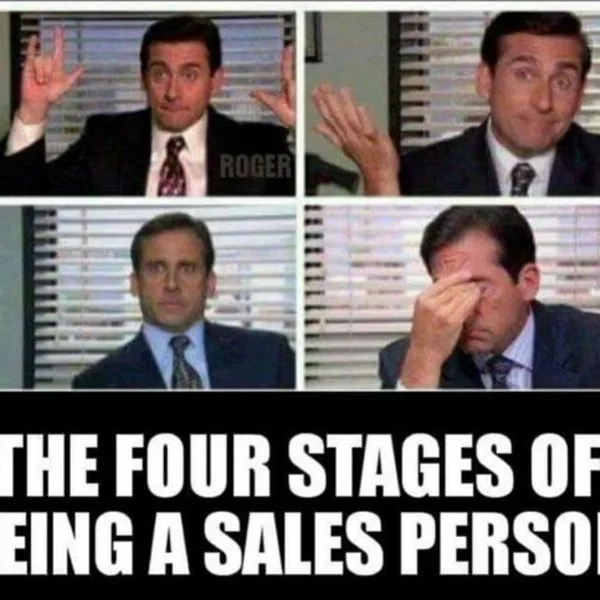
The concept of CS – Customer Success – is married to customer support or after-sales services. It may not be a perfect marriage and it may need couples therapy from time to time, but if your company wants to stand out from the competition, this could be the trick. The Office isn't a collection of memes; it's a series adapted from Ricky Gervais's dark humour that gives us a satire of big companies and a clear conscience for small ones. It's a service that costs money before it makes any. So how can a customer support service pay for itself?
- Reduce the need for support. If you have two complaints about the same product, don't wait for the third.
- Bring your sales, after-sales and marketing teams closer to the customer.
- Invest in the right tools to analyse all your customer service data.
Omnichannel
Winning a new customer is 7 times more expensive than keeping one. The strategy for keeping them comes down to a pleasant, happy experience. That strategy includes a number of practices, some more everyday than others:
- Call centre services. Having the brand one click away makes customers feel comfortable. Easy contact has taken the negative edge off making a complaint.
- Website. If you're not on Google, you don't exist.
- Being omnichannel. Physical shop, phone, email, website, social media, mobile app. Whatever's easiest for the customer.
It's not enough to have the channels. You have to use them.
The sales unicorn: the newsletter
Email marketing isn't dead (nor is Facebook, but we'll talk about that another time).
The analogy between the newsletter and the advertising flyers that land in our letterboxes is outdated. A newsletter is far more than that: Continente sends its customers a personalised catalogue, because it knows which items each customer buys most; Delta Cafés runs discounted private sales for customers registered on its site; Bertrand gives its customers a surprise €5 discount, also with site registration.
It's also common practice to offer a small discount on the brand when you subscribe to the newsletter. The truth is that these are a long way from aggressive selling, since we only open the email if we want to, and they're miles ahead of the flyer because… well, it's digital and we've already recommended the button, largely thanks to the CTA Click here.
The newsletter is therefore a CS strategy tool that undoubtedly brings profit to the brand.
#3 – Less D2D at dinner time, more “here's my online diary, book a meeting with me at whatever time suits you best”
With the pandemic, many shops adapted to virtual reality. In creating communication channels, they had the same epiphany that was doing the rounds on social media about office work: some meetings could have been an email.
The account manager is no longer a role exclusive to the banking sector. Big brands now have account managers to build closer relationships with their customers. Depending on the sector, you might also hire a community manager — more common when you want to build a sense of team and community with your customers, and widely used in services.
Once we have the talent, we choose the channels:
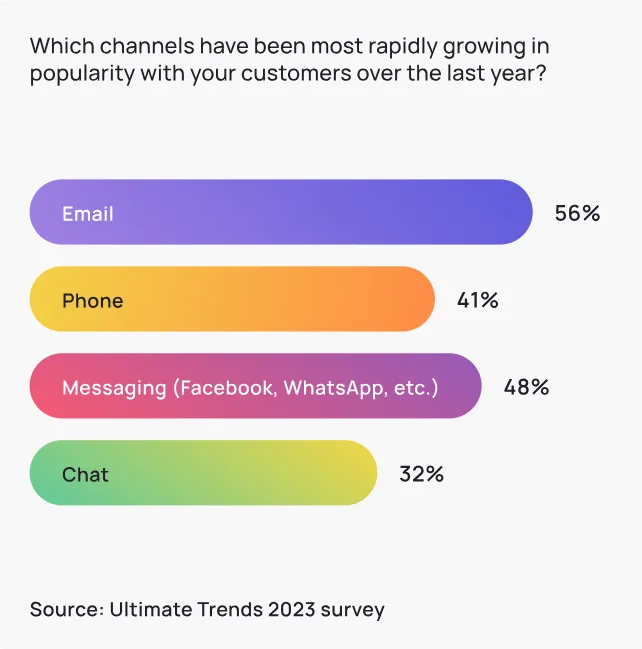
Email is king.
But if your company uses all these channels and then some, make sure you're being productive and bring them all together in one place, with a good CRM platform, for example.
#4 – Talent in Customer Experience management
86% of customers are willing to pay more for a product or service to get a good experience. This is a fact that's been studied and is felt by anyone who works on a shop floor. Staff usually pick up on it through comments like “I prefer to buy here because you always help me“.
Large-scale production and sales gave the vast majority of the population access to every kind of product. IKEA never forgot why it was created: the need for low-priced furniture that made it possible to furnish a whole home.

Combined with the do it yourself concept, IKEA adopted a commercial strategy that, in the long run, would reduce the need to hire salespeople. The customer walks in, buys, takes it out to the car and assembles the table at home. It's possible to shop with no human interaction at all. That will never happen in a Rolex store.
The strategic, commercial mind of Ingvar Kamprad, IKEA's founder, wasn't as far from Rolex's strategy as you might think at first glance: Ingvar didn't want to give his customers the option of buying online — he justified this on the grounds that you can't try the products out and therefore can't have the in-store experience, where the small, high-margin items are strategically placed. In 2020, IKEA launched its e-commerce platform. Rolex still doesn't sell online. Both decisions have the same justification: the customer experience. “Customer service, when done well, lets your customers know they're heard and valued. A conversational experience conveys empathy, builds relationships and helps the service team have a productive interaction with the customer.” – The State of CX Maturity for SMBs, ESG Research
Whatever channel or channels you use, make the most of the skills of everyone in your company, from sales to logistics. Customer Success isn't just another pretty new name. It's the definition of what we want as customers and as managers: a positive, pleasant experience that turns a profit for both sides.

Get what we write
No fixed calendar: only when there is something worth your time.