Do you already follow a virtual influencer?
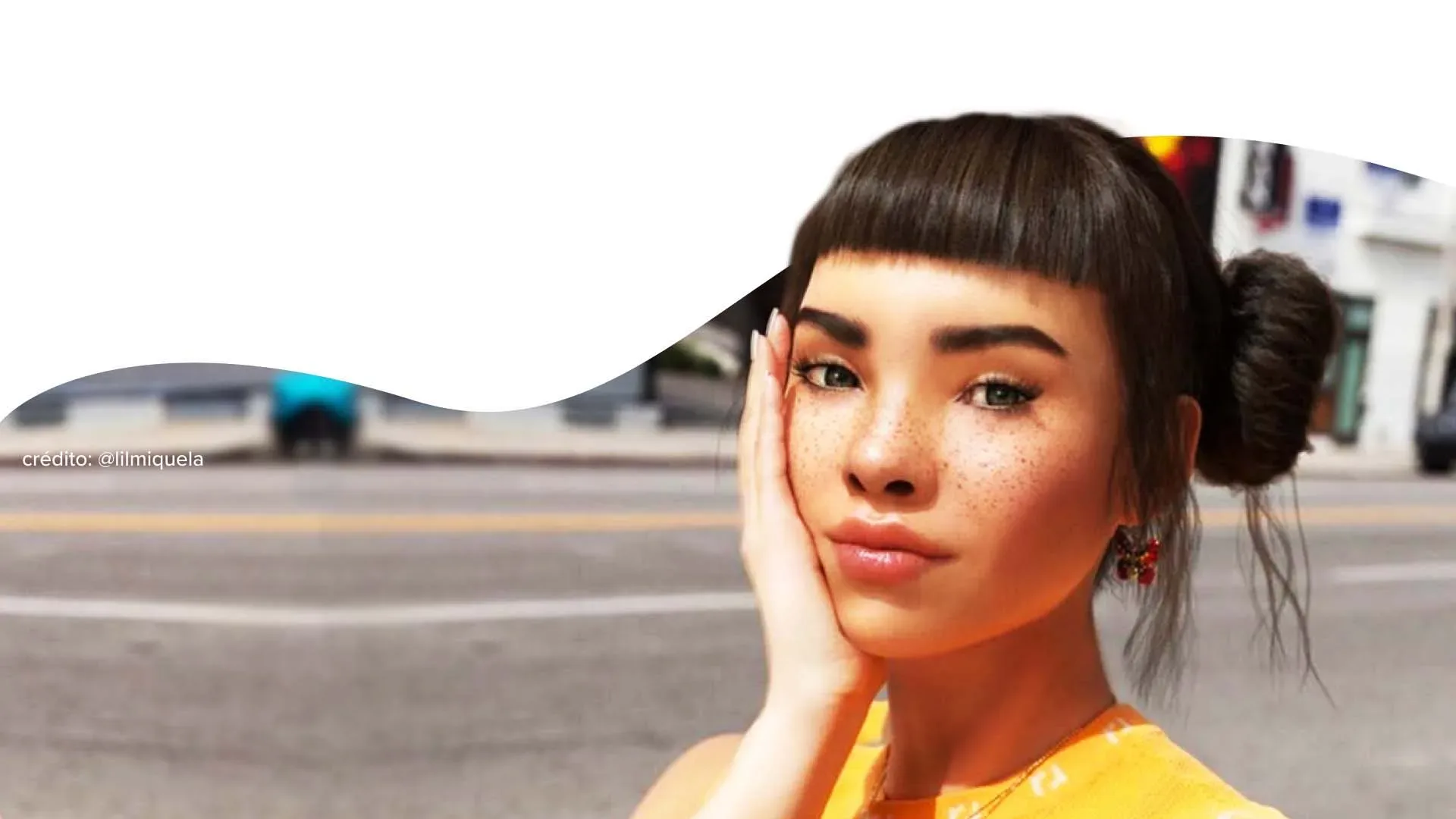
Marta Miranda – Branded Content Specialist & Producer – If you don't yet follow a single virtual influencer, we're pretty sure you'll want to start today. First things first: we're not talking about the familiar term “digital influencer” – someone with a knack for generating engagement with a loyal community and swaying their followers' purchase decisions. We're talking about an entirely fictional digital creation!
For some, this won't be news, not least because at some point we've all dealt with a virtual assistant on some website's customer service. Picturing ourselves walking among robots in the street is still a distant prospect, but H2R interaction – “Human to Robot” – is in fact evolving fast on social media.
Marta Miranda – Branded Content Specialist & Producer – If you don't yet follow a single virtual influencer, we're pretty sure you'll want to start today. First things first: we're not talking about the familiar term “digital influencer” – someone with a knack for generating engagement with a loyal community and swaying their followers' purchase decisions. We're talking about an entirely fictional digital creation!
For some, this won't be news, not least because at some point we've all dealt with a virtual assistant on some website's customer service. Picturing ourselves walking among robots in the street is still a distant prospect, but H2R interaction – “Human to Robot” – is in fact evolving fast on social media.
That said, talking about virtual influencers is still new, mainly because the trend remains unexplored in the Portuguese market. But it's worth paying attention, because internationally these new online personalities have been a recognised innovation and investment in content marketing since 2018. That said, talking about virtual influencers is still new, mainly because the trend remains unexplored in the Portuguese market. But it's worth paying attention, because internationally these new online personalities have been a recognised innovation and investment in content marketing since 2018.
So who exactly are these virtual humans?
A virtual influencer is a fictional personality with a first-person view of the world. Behind each creation are “anonymous” individuals, acting either in a personal capacity or as brand representatives. The digital creation is produced with technology, typically using software such as Photoshop, Illustrator, Lightroom, Blender, Cinema 4D, Maya, Unreal Engine, ZBrush, Modo, 3ds Max and Daz Studio, among others.
Most of the virtual influencers making a name for themselves internationally on social media (Instagram and TikTok) have physical features and a first-person personality much like those of human beings, with real narratives close to the ones we live ourselves, which gives them the credibility and appeal to build a community around them.
The topic is therefore top of mind in influencer marketing, and plenty of globally recognised brands have already staked out a position in this new way of shaping behaviour and, ultimately, consumption.
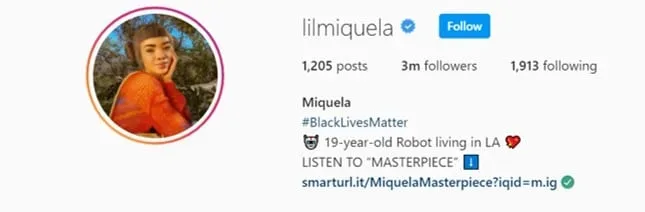
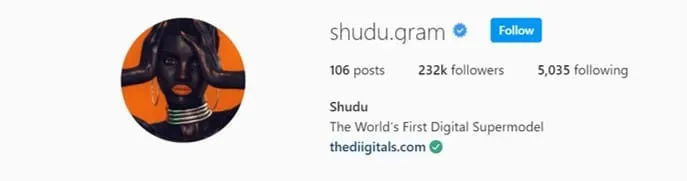
Here are some of the “Top 5” influencers to start following: Lil Miquela (3 million followers) – one of the first virtual influencers created anywhere in the world. She's the creation of a Los Angeles startup specialising in artificial intelligence. She shares fashion looks, partners with luxury brands and releases music available on Spotify. Shudu (232k followers) – with an extremely realistic look, this virtual influencer is the creation of photographer Cameron James Wilson. She has a modelling contract with a digital modelling agency and represents luxury fashion brand Balmain. Bermuda (271k followers) – she has a more controversial image (a former Trump supporter, though she has since changed her political views) and gained followers through her relationship with, and subsequent break-up from, another virtual influencer (Blawko). She's represented by a well-known PR agency and her founders are believed to be the company Cain Intelligence. Blawko (143k followers) – this virtual influencer was created by the same startup behind Lil Miquela. He has a mysterious young look, always with his face half covered and an unapologetic streetwear style. He became known for dating virtual influencer Bermuda and now has his own YouTube channel. Imma (380k followers) – considered a style icon, this virtual influencer was created by Modeling Cafe, a Tokyo-based computer graphics company. Source: Instagram – Instagram preview Lil Miquela Source: Instagram – Instagram preview Shudu Source: Instagram – Instagram preview Bermuda Source: Instagram – Instagram preview Blawko Find an extensive list of virtual influencers you can follow on social media here!
What's changing in influencer marketing?
Brands seem to be taking two approaches to getting involved with virtual reality: either they create their own virtual ambassadors to front the brand, or they partner with virtual influencers in exactly the same way they do with human ones.
Creating a virtual influencer to represent a brand gives it a permanent, loyal “face” (with no reliance on ambassadors or public figures who change from season to season with each ad campaign) and brings it closer to, and even makes it more human with, its community.
It makes it easier to create immersive media experiences that also reach younger generations of consumers. Generation Z – today's teenagers – are the ones who most respect and admire virtual personalities, having “been born” on the internet, where they've always socialised.
A brand represented by a virtual character projects an innovative vision and image, positioning itself at the leading edge of trends and geared towards the culture and technology of the future.
On the other hand, a partnership with a virtual influencer can offer a brand certain advantages over advertising partnerships with human influencers or public figures.
While human influencers can make mistakes and get caught up in controversies that jeopardise the image of a brand they're associated with, the presence and narrative of virtual influencers are usually carefully crafted and thought through, leaving less room for scandals that could damage a brand's image. You could say a virtual influencer's mistakes could be deleted and fixed in a matter of minutes.
Choosing virtual influencers looks more likely to engage a community and opens up space to create a new market, rather than competing over public figures and human influencers whose images may already be oversaturated.
Brands and their virtual representatives
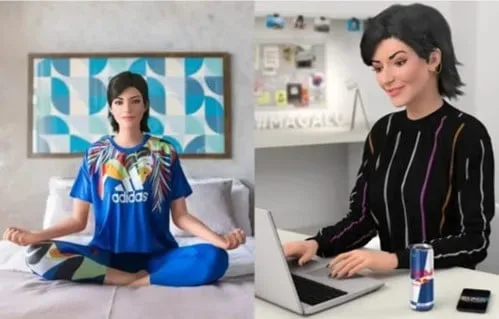
A brand that decides to create its own virtual influencer gains a lifelong “IP” that can reach many generations and build familiarity with the brand, without much risk.
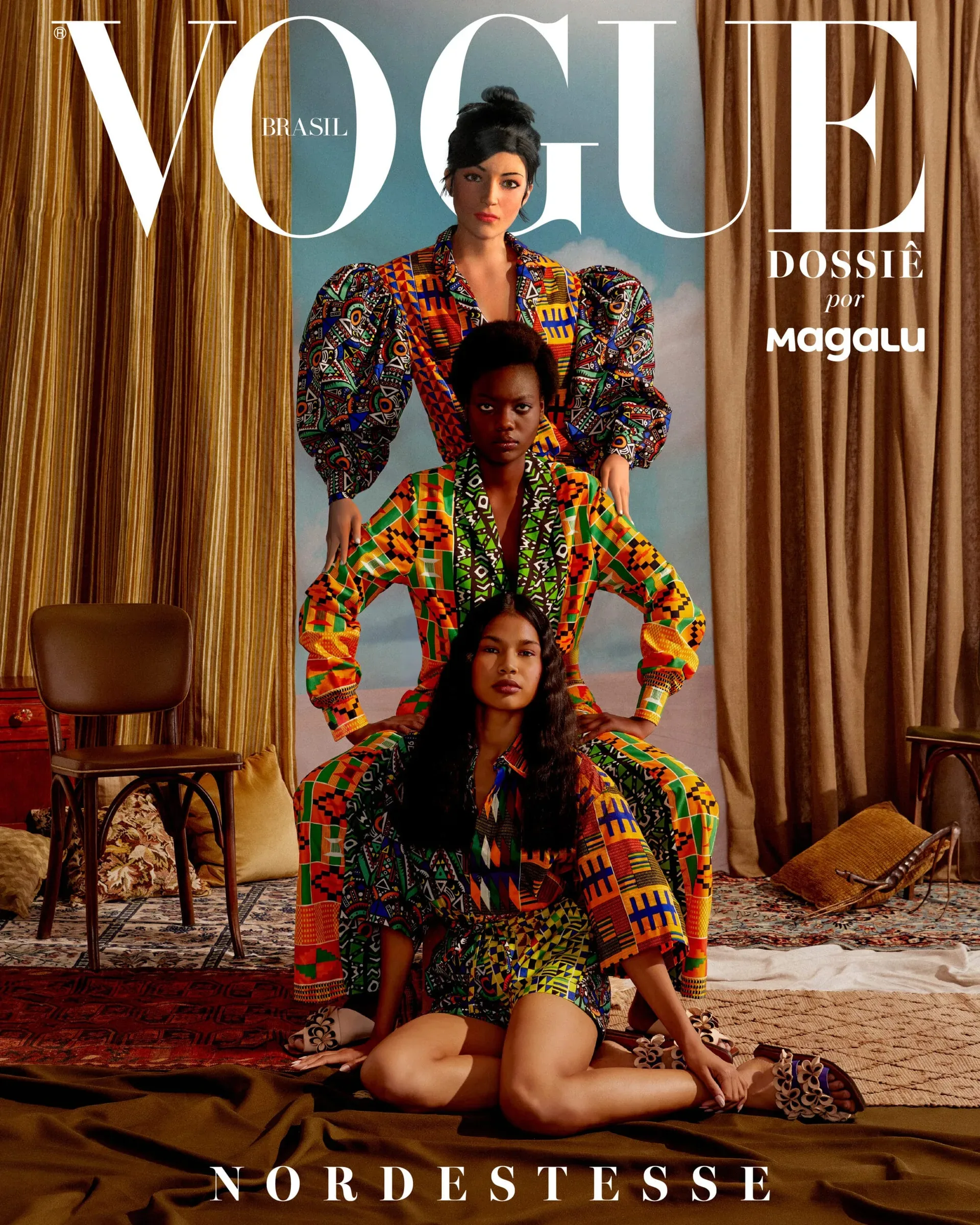
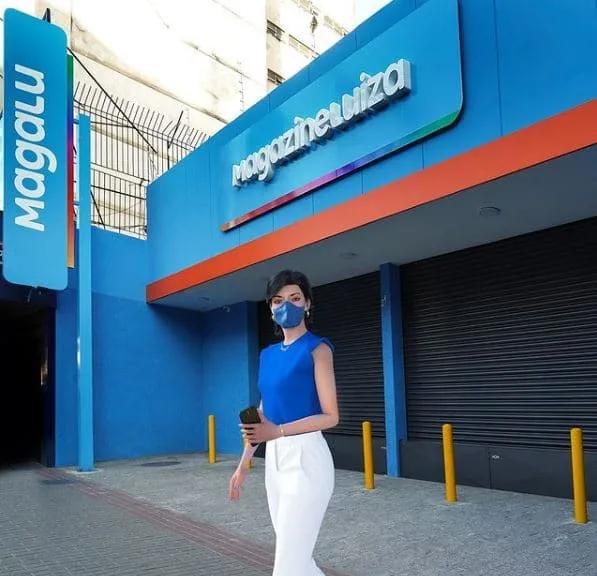
The best-known example right now is Lu, the virtual ambassador for Brazilian retailer Magazine Luiza, who already has more than 55 million followers and a presence across several social networks. As well as being the store's ambassador and virtual assistant, she has also taken on the role of influencer, representing other brands, and has even appeared on the cover of Vogue Brasil. Source: CNN Brasil, IG Magazine Luiza – Lu, the virtual influencer and ambassador for Magazine Luiza (Brazil) In luxury fashion, Prada has also announced its first virtual human model, Candy, as part of the “Rethink Reality” campaign to promote its new fragrance. The marketing strategy replaces the usual celebrity casting for this kind of campaign, aiming primarily at a Generation Z audience by building new narratives in digital. Source: YouTube – “Rethink Reality” campaign for the launch of Prada's Candy fragrance
Partnerships with popular virtual influencers
According to research by Hyper Auditor and Virtual Humans, engagement for virtual influencers was already higher than for human influencers back in 2019. It's only natural, then, that some well-known brands are already partnering with the most popular virtual influencers. After all, virtual influencers, despite living in a virtual space, can promote the same brands as human ones: they show the same lifestyle, have the same tastes and wear the same clothes. There's room for more creative partnership opportunities to emerge.
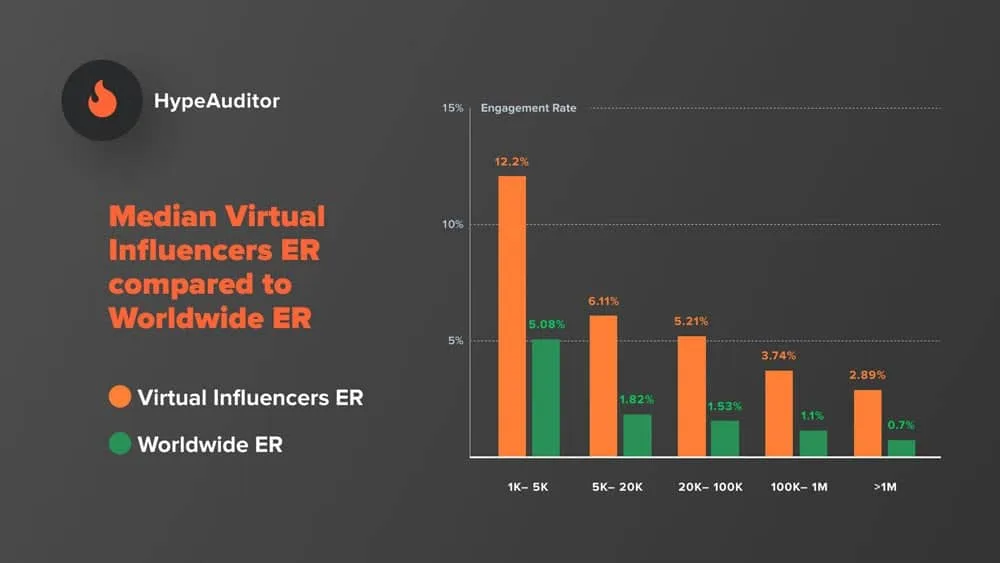
As a point of interest, just as human influencers now have to be transparent about brand partnerships by tagging social media posts with the hashtag #ad, virtual influencers will move towards the same good practice. India is officially the first country to introduce regulatory standards for virtual influencer advertising on digital platforms. Source: HypeAuditor – Human vs virtual influencers Many virtual influencers are already signed to modelling and influencer agencies.
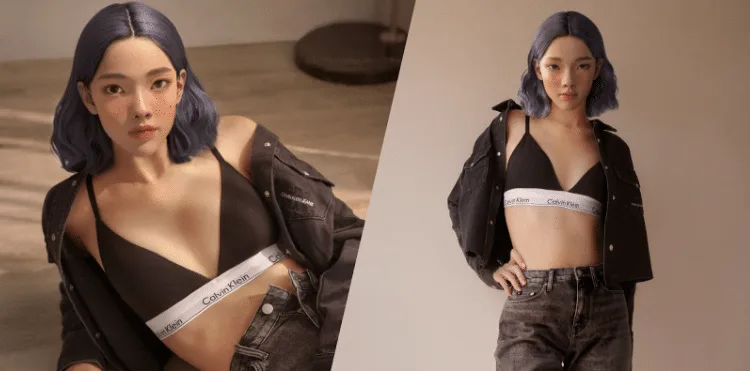
Here are some concrete examples of marketing campaigns with popular virtual influencers: Calvin Klein recently launched a partnership with some of the most popular virtual influencers, such as Lil Miquela (3M) and, more recently, Katii (63.7k): Source: YouTube Calvin Klein – Calvin Klein “Speak my Truth in #mycalvins” campaign with virtual influencer Lil Miquela alongside renowned model Bella Hadid
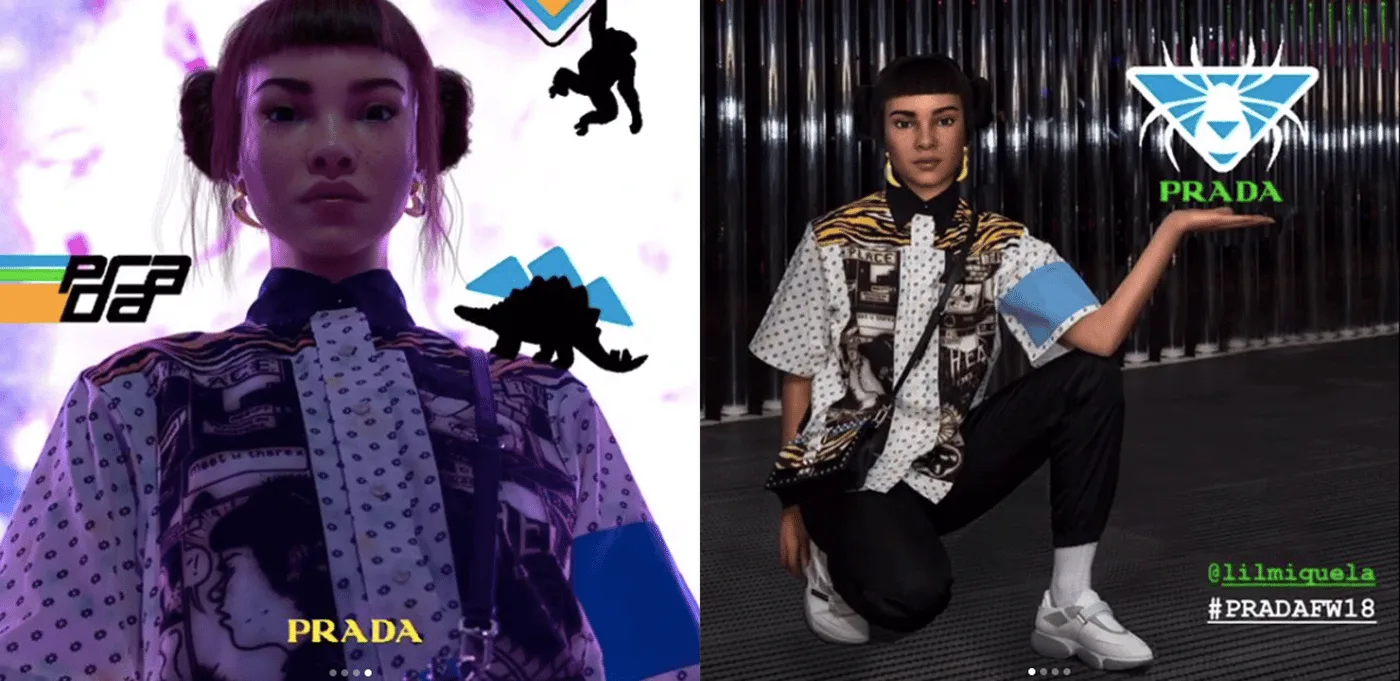
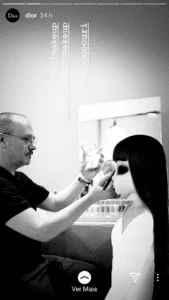
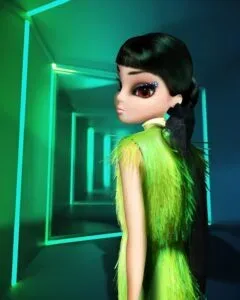
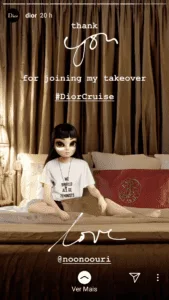
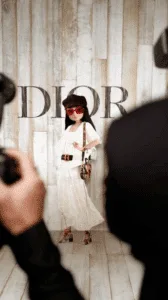
Back in 2018, Prada had already chosen virtual influencer Lil Miquela for a campaign, and it also partners with
Noonoouri
, for example, to wear
looks
by Prada in her posts.
Also in 2018, luxury fashion brand Dior invited the same influencer to take over the brand's Instagram during a runway show. Source: Pinterest – Virtual influencer Lil Miquela in a Prada F/W2018 campaign
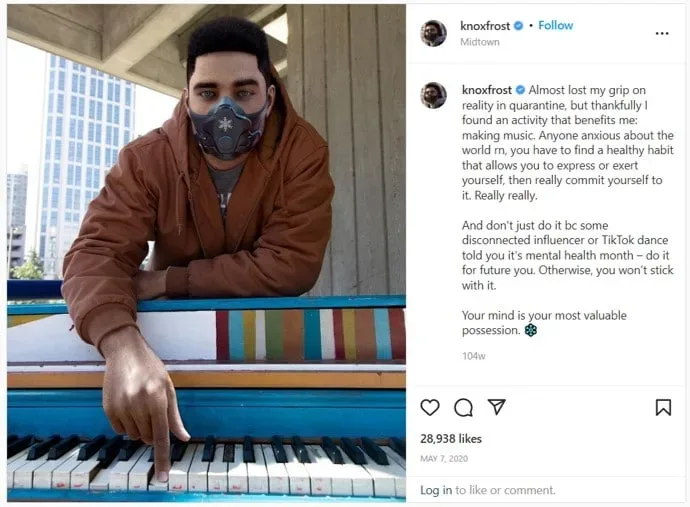
The World Health Organization went a step further too, partnering with a virtual influencer as part of its COVID-19 protection measures. The influencer chosen was Knox Frost, with over 1 million Generation Z followers.
Partnerships with virtual influencers aren't limited to
takeovers
on Instagram, sponsored
posts
and traditional advertising campaigns.
Digital events are embracing this new reality too.
The technology behind live shopping platform “Bambuser” (which helps brands run shopping sessions with a live “seller” in a digital environment) was used for the launch of Samsung's Galaxy S22.
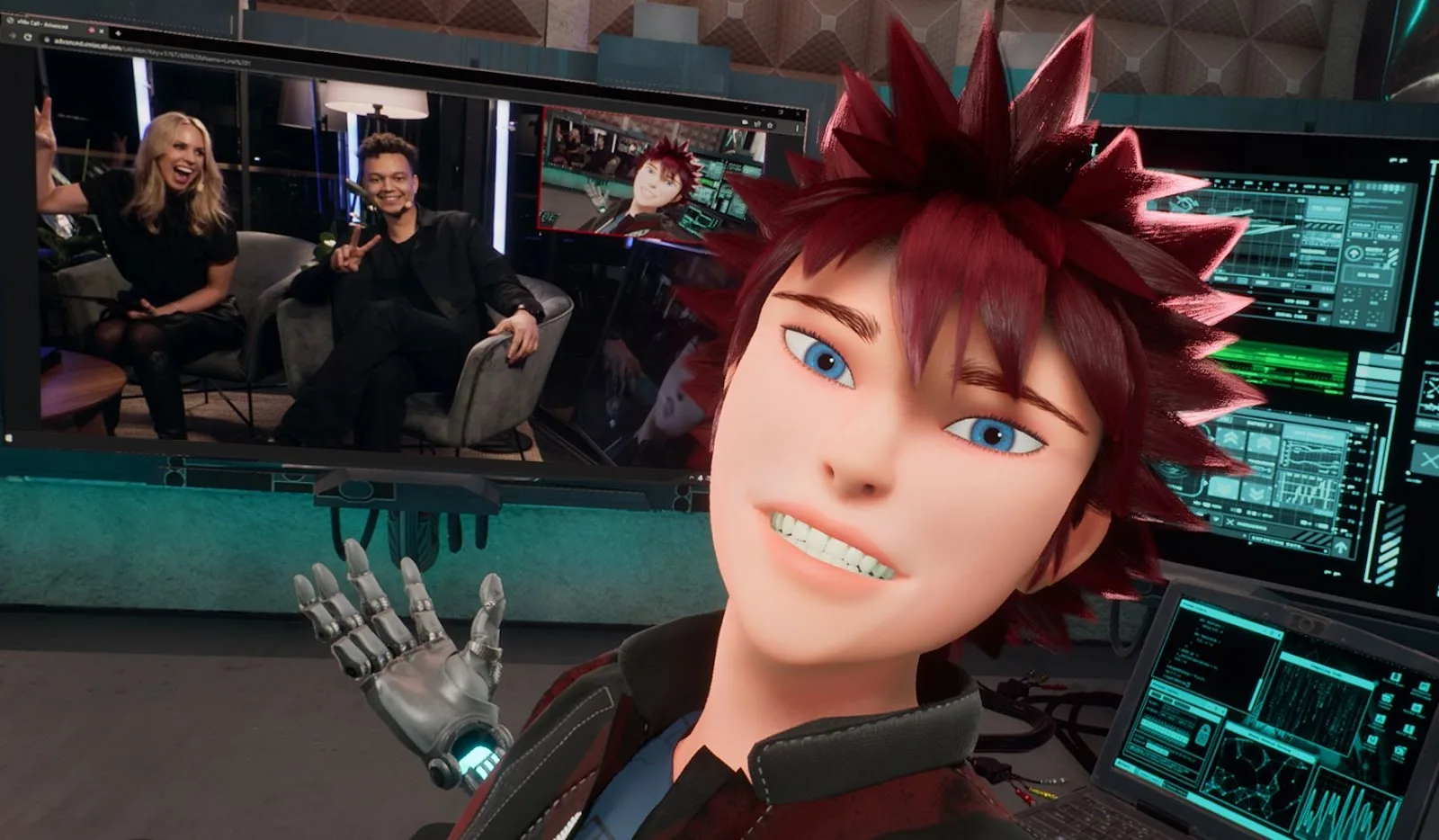
It was a first of its kind launch, in that virtual influencer Zero was the presenter, chatting live with TikTok creator Liam Kalevi as the live shopping event unfolded. During the broadcast, the virtual influencer used a virtual Galaxy SS22 and took a selfie, all in real time. Source: Live shopping event (via Bambuser technology) by Samsung with virtual influencer Zero It's innovative events like these that prove the creative potential and sheer breadth of possibilities for brand partnerships. These virtual personas really do look like the future of advertising and content marketing – we've seen them operating across various markets such as fashion, technology and music – so any brand that wants to position itself as innovative and reach new audiences needs to keep an eye on this trend.
In fact, in an era moving towards the metaverse, virtual influencers could well become the catalyst for that shift to “web 3.0”.
Perhaps the biggest challenge is still whether the creation of virtual influencers can be scaled up at lower cost. Although some argue that, in the medium to long term, creation costs would be more profitable than what brands currently invest in partnerships with human influencers.
If you're sceptical about this virtual influencer thing, here's some food for thought: within the reality of the internet, don't we all end up being a little bit of a virtual influencer?



Get what we write
No fixed calendar: only when there is something worth your time.