Gatekeepers: European Commission designates 6 Digital Markets gatekeepers
Sandra Caravana – Copywriter –
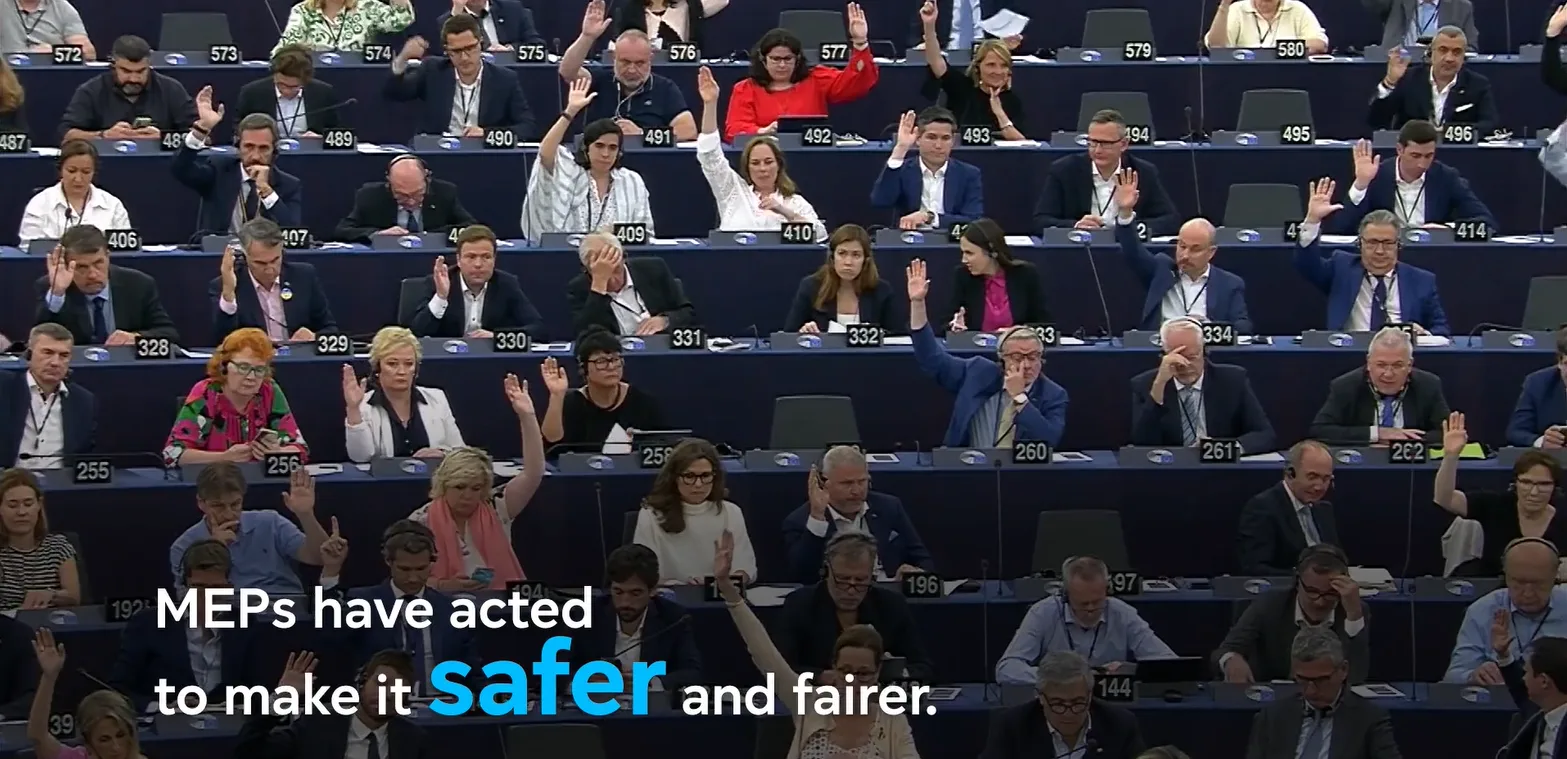
The rapid growth of the digital economy has led the European Parliament to adopt measures to regulate and safeguard a fair, competitive digital environment. One of the most recent developments on this front is the Digital Markets Act (DMA), which sets out to manage the power of the so-called gatekeepers.
Sandra Caravana – Copywriter –
The rapid growth of the digital economy has led the European Parliament to adopt measures to regulate and safeguard a fair, competitive digital environment. One of the most recent developments on this front is the Digital Markets Act (DMA), which sets out to manage the power of the so-called gatekeepers.
Regulating the practices of the tech giants: the Digital Markets Act
The web and digital technologies have radically transformed the way businesses operate and the way consumers interact with products and services. That transformation has brought enormous benefits: more commercial opportunities, access to an endless variety of information and the ability to connect with people all over the world.
It has also brought significant challenges, however, including concerns over data privacy, the spread of misinformation and the concentration of power in the hands of a handful of big tech companies. This is where the Digital Markets Act (DMA) comes in.
The DMA aims to create a safer, fairer and more transparent digital environment. It seeks to guarantee a level playing field for every digital business, whatever its field of activity.
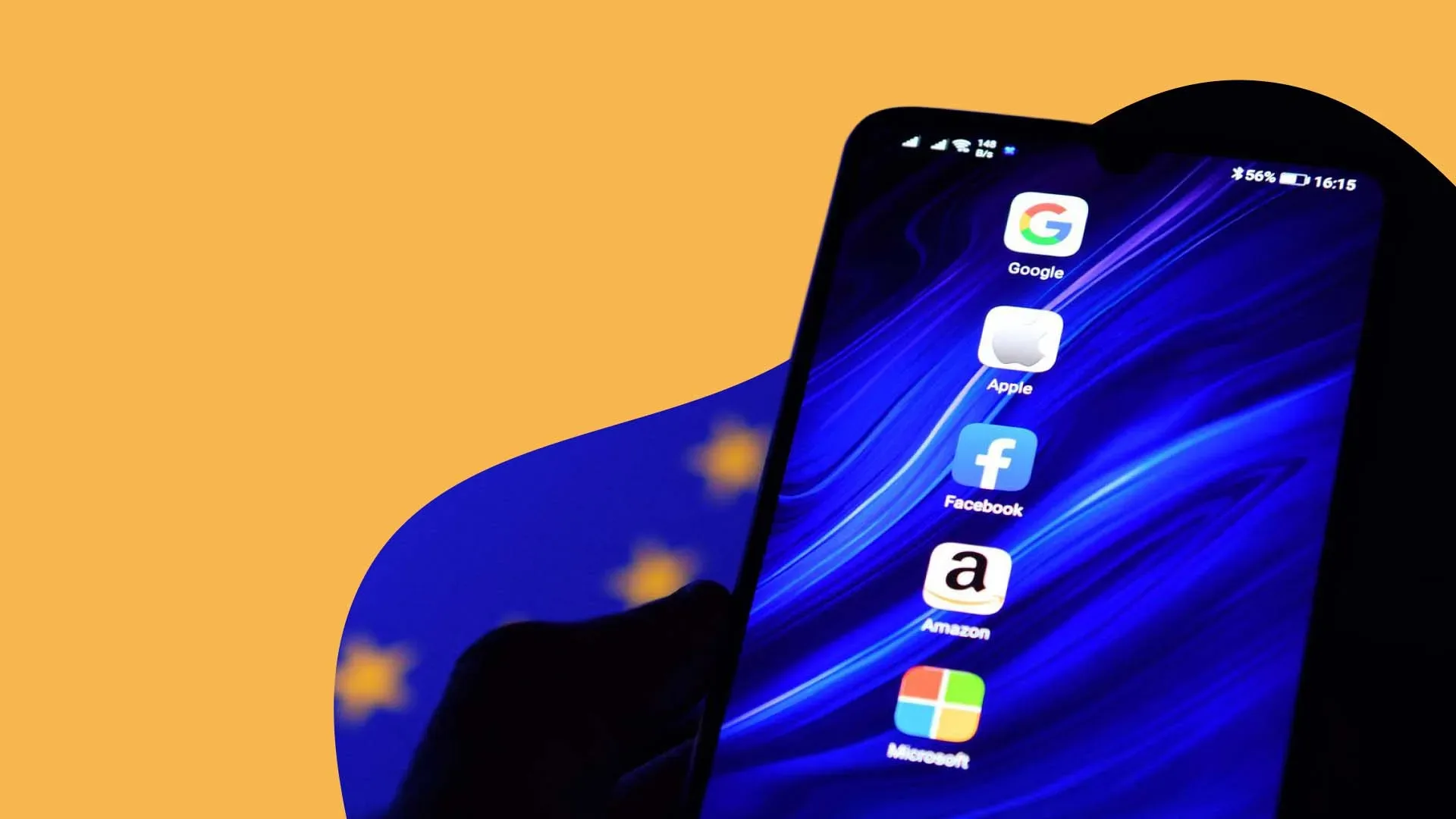
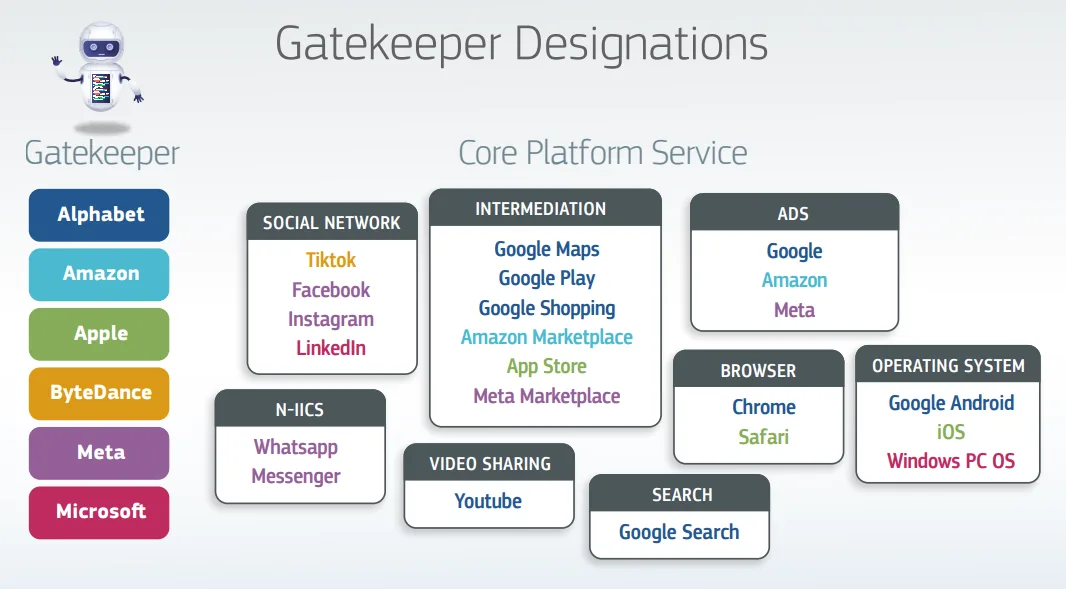
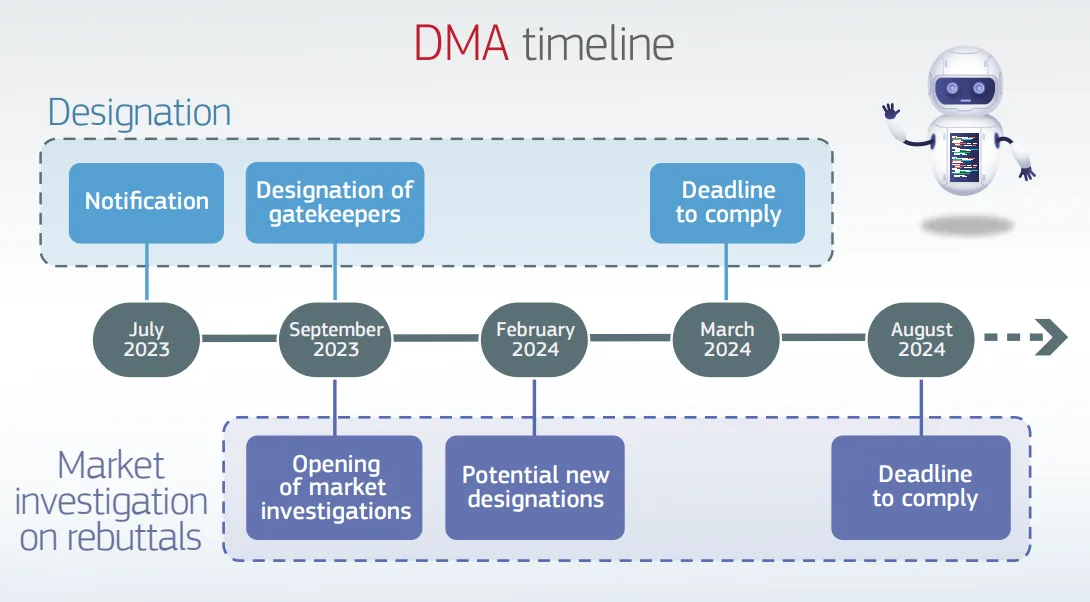
In July this year, 7 tech giants notified the European Commission of their intention to be designated as gatekeepers: Amazon, Apple, Google, Meta, Microsoft, Samsung and ByteDance (owner of TikTok). On 6 September, Brussels gave its verdict: Alphabet, Amazon, Apple, ByteDance, Meta and Microsoft are the first 6 gatekeepers under the Digital Markets Act.
Services under review and Samsung left out
Services from Microsoft and Apple (the Bing search engine, the Edge browser and the Microsoft Advertising platform, as well as iMessage) are still under investigation to determine whether or not they meet the necessary requirements and whether they are popular enough to warrant inclusion in the DMA. Brussels had included Gmail, Outlook and Samsung's mobile browser, but the companies concerned presented data showing that the services in question do not meet the requirements. Samsung has not been designated as a gatekeeper for any core platform service.
Next steps
The 6 gatekeepers now have six months to comply with the full list of obligations and prohibitions under the Digital Markets Act. It is up to the designated gatekeepers to ensure and demonstrate effective compliance, submitting a detailed compliance report at the end of that period. The European Commission will monitor the implementation of and compliance with the DMA obligations. Failing that, companies could face fines of up to 10% of their worldwide turnover, rising to as much as 20% for repeat offences.
Platforms cannot impose their ecosystems on users
Nor can they decide which apps come pre-installed on devices or which app store is used. They cannot give preference to their own products and services, and their messaging services must be interoperable — they have to work alongside other systems.
“More choice for consumers, fewer obstacles for smaller competitors: the Digital Markets Act will open the gates to the internet. Today's designations finally allow us to place limits on the economic power of 6 gatekeepers, giving consumers more choice and creating new opportunities for smaller, innovative tech companies through, for example, interoperability, sideloading, real-time data portability and fairness. Europe should set the rules of the game to ensure that digital markets are fair and open.” – Thierry Breton, Commissioner for the Internal Market – 05/09/2023
In practice, gatekeeper platforms will have to:
- allow third parties to interoperate with the gatekeeper's own services in certain specific situations;
- give their business users access to the data they generate when using the gatekeeper's platform;
- provide companies advertising on their platforms with the tools and information needed for advertisers to carry out their own independent verification of their ads hosted by the gatekeeper;
- allow their business users to promote their offers and conclude contracts with their customers outside the gatekeeper's platform.
Gatekeeper platforms will no longer be able to:
- rank their own services and products more favourably than similar services or products offered by third parties on the gatekeeper's platform;
- prevent consumers from accessing services from companies outside the gatekeeper's platforms;
- stop users from uninstalling pre-installed software or apps if they wish to do so;
- track end users outside the gatekeeper's core platform service for targeted advertising purposes without their effective consent.
Digital Services Act: for a safe digital space in the EU
The Digital Services Act (DSA) and the DMA are two separate but related regulatory initiatives aimed at regulating the digital environment in the EU.
The Digital Services Act has brought in new rules for the European online space, focused on user safety and privacy.
The European Commission has identified the first 19 services (17 platforms and 2 search engines) required to safeguard online safety: Alibaba AliExpress, Amazon Store, Apple AppStore, Booking.com, Facebook, Google Play, Google Maps, Google Shopping, Instagram, LinkedIn, Pinterest, Snapchat, TikTok, Twitter, Wikipedia, YouTube, Zalando, Google and Bing.
These platforms have agreed to meet a number of obligations, including transparency, cooperation with national authorities, reporting of infringements, out-of-court dispute resolution, a ban on advertising targeted at children and much more. In short, these regulations aim to create a safer, more transparent and fairer digital environment in the EU for all users.
Watch the video
And what about Artificial Intelligence — will that be regulated too?

Yes. The use of AI in the EU will be governed by the AI Act. Parliament's priority is to ensure that AI systems used in the EU are safe, transparent, traceable, non-discriminatory and environmentally friendly. The AI Act sets out obligations for providers and users according to the level of risk:
Unacceptable risk: considered a threat to people and will be banned, such as cognitive behavioural manipulation of people or specific vulnerable groups — voice-activated toys that encourage dangerous behaviour in children
High risk: negatively affect safety or fundamental rights, such as biometric identification and categorisation of natural persons.
Limited risk: minimum transparency requirements that allow users to make informed decisions. After interacting with the applications, users can decide whether they want to carry on using them.
Through their platforms and services, the tech giants have a responsibility to make commerce safer and fairer, with exemplary transparency — starting with something as simple as searching for a fridge, and extending to a concept of competition based on fair play.

Get what we write
No fixed calendar: only when there is something worth your time.