How Artificial Intelligence and Machine Learning use data

Sandra Caravana – Copywriter –
A great deal has already been said and explained about what AI is. It's here to stay, it's the future, and 2023 is already being called the 'Year of Artificial Intelligence'. But it won't survive on its own. We only make the most of AI's full potential when we add two other concepts to it: data and Machine Learning.
Sandra Caravana – Copywriter –
A great deal has already been said and explained about what AI is. It's here to stay, it's the future, and 2023 is already being called the 'Year of Artificial Intelligence'. But it won't survive on its own. We only make the most of AI's full potential when we add two other concepts to it: data and Machine Learning.
Data is everywhere…
… and it's becoming more valuable by the day. Anything can be turned into data: your personal details (name, date of birth, tax number, IBAN, and so on), but also your photographs, the balance in your current account and even the searches you run on Google.
Big Data
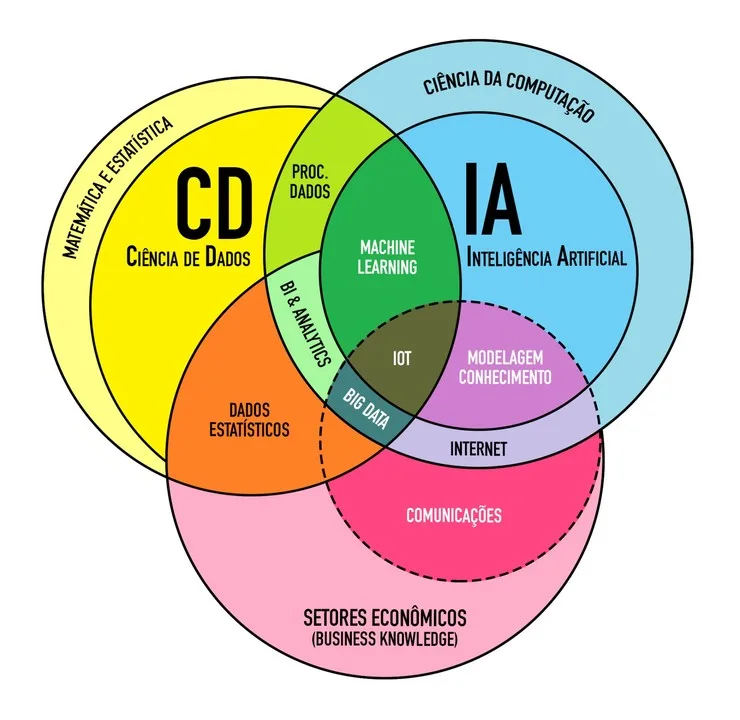
Big Data is a term used to describe the vast volumes of data, both unstructured and structured, that flood organisations of every size on a daily basis. Processing Big Data starts with raw data that, more often than not, is impossible to store in the memory of a single computer.
Data Analytics
Data Analytics is the science of examining raw data in order to find patterns and draw conclusions from that information, applying an algorithmic or mechanical process to extract insight.
142 zettabytes more The volume of data produced worldwide is expected to rise from 33 zettabytes in 2018 to 175 in 2025 (1 zettabyte = 1 trillion gigabytes).
With such an astronomical amount of data to analyse, asking machines for help is unavoidable. It's from these conclusions that we get the text message warning us we're about to miss the deadline for paying the electricity bill. All of this rests on the concepts of Machine Learning and Artificial Intelligence — which is a great deal more than ChatGPT and its counterparts. Put very simply, an AI system is an enormous data processor with extraordinary capacity. And how does it do it? Just like humans: through training.
“The future model of AI won't be the ChatGPT of the day, but the integration into our information systems of a proprietary AI model trained on our own business, brand and culture data. Artificial intelligence won't be a one-size-fits-all model, as it is today, but rather something tailored to each organisation, giving brands capabilities we can't yet imagine.” – João Santos, Eco.Sapo, June 2023
Machine Learning vs Artificial Intelligence
AI is a broad field: it's the whole set of technologies that try to mimic human behaviour in order to create something. It's easily confused with the concept of Machine Learning (ML).
Machine Learning is a subset of artificial intelligence that automatically enables a machine or system to learn and improve from experience. It uses algorithms to analyse large volumes of data, learn from the insights and make informed decisions.
In other words: ML is an application of AI that allows machines to extract knowledge from data and learn from it autonomously. An intelligent computer uses AI to think like a human and carry out tasks by itself. ML is how a computer system develops its intelligence.
Although they are different concepts, they come together in practice. The positive effects on marketing, communications and sales strategies are many, but this union goes well beyond leads and ROI.
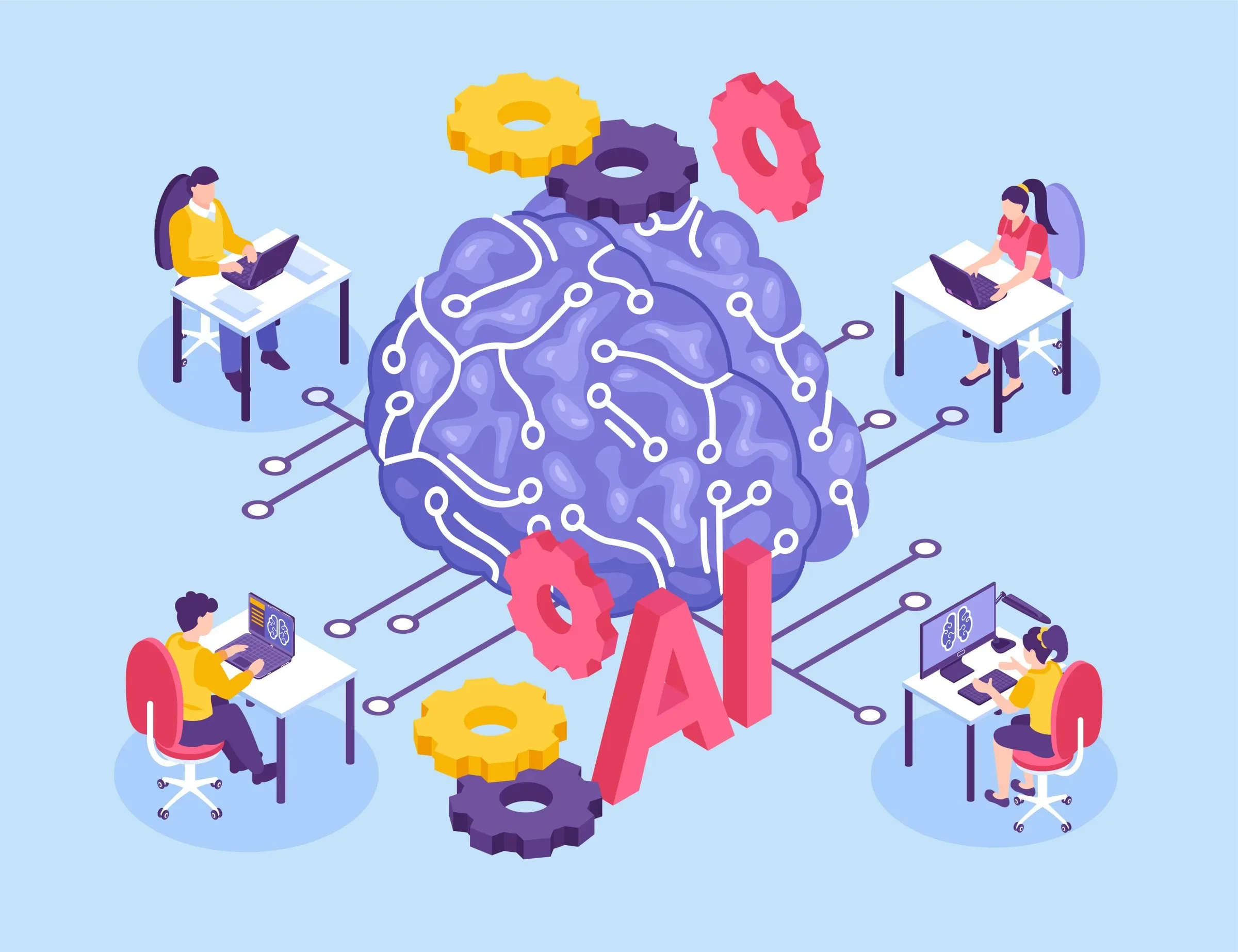
Artificial Intelligence in our everyday lives
To a greater or lesser extent, companies keep introducing automation and ML into their business units. Even taking the pandemic as a somewhat subjective argument for the investment every sector has made in AI, the facts speak for themselves: in 2017, only 20% of companies had implemented AI in a business area, and today the figure is 50% (Jornal Económico).
Statista highlights 5 factors driving the growth of AI: 1 – The growing availability of large volumes of data 2 – Advances in computing power and cloud computing infrastructure 3 – Growing demand for automation and optimisation across various sectors, such as manufacturing, finance and transport 4 – Increasing use of AI in consumer-facing applications, such as virtual assistants and chatbots 5 – Growing investment and partnerships between technology companies, research institutions and governments
AI in Education
AI has brought a new challenge to education. We are witnessing a generative artificial intelligence revolution. Programmes such as ChatGPT are challenging the rules of comprehension, writing and creativity in the classroom. Students can now produce complete assignments in seconds. And it's not the only one. Find out more about Albertina PT.
As a data cross-referencing mechanism, schools were already using AI well before ChatGPT became children's and teenagers' best friend. Systems for logging pupils in and out of school, warning and alert systems, and even bringing schools digitally closer to families in an accessible way that doesn't interrupt the working day, as with the apps used in pre-school settings.
AI in Healthcare
If marketing has the customer journey, healthcare has the patient journey: the mapping of every interaction a patient has with the health system, including appointments, tests, procedures and hospital stays.
AI is used as a technique for building decision models from the analysis of large volumes of data. It's the natural progression of the Framingham Cardiovascular Risk Score, which uses patient data and is available to everyone, even at home, although it is also used in emergency departments.
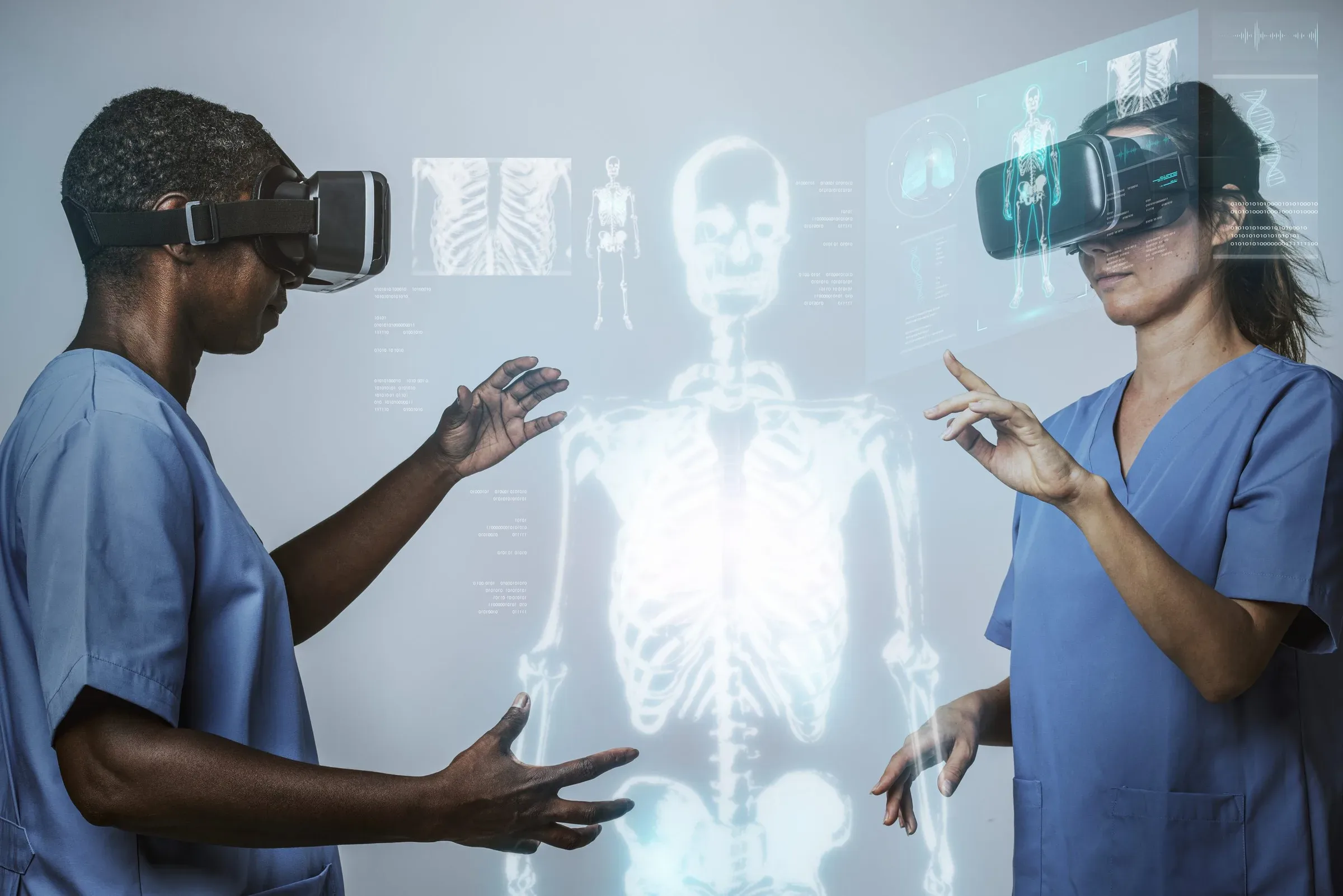
The image of a robot working away in an operating theatre is getting closer to us all the time. If AI tries to imitate human thinking, it will also join forces with human fine motor skills to assist in delicate surgical procedures. The first robotic pancreaticoduodenectomy in Portugal was performed in 2022. You can read more about AI in healthcare here, bearing in mind that the overriding goal of using AI and ML will always be to help in disease diagnosis, drug development and personalised medicine: one person, one treatment.
AI and the Environment
AI can be a strong ally of sustainability — because the environment produces data too.
There are various mobile apps for monitoring and forecasting the climate and natural resources such as temperature, rainfall, wind, solar radiation, sea level, air quality and water availability, among others, so that activities can be managed sustainably, avoiding risks and seizing opportunities — like a good set of waves to surf.
We can also draw on data from Google Earth Engine, a platform that uses satellite imagery and AI algorithms to monitor changes on the Earth's surface over time.
And it's not only about a greener world, but a world without waste. The giant Google realised that its Big Data systems were consuming a lot of energy. DeepMind developed a system that uses neural networks to control the cooling of Google's data centres:
“The system learns from historical and real-time data to predict the temperature and energy consumption of the data centres and adjust the cooling systems' parameters. It managed to cut the energy used to cool the data centres by 40%, which is equivalent to a 15% reduction in the carbon footprint.” – Jonas França, Environmental Manager, June 2023
AI in Mobility and Transport
Yes, UBER is a service that uses AI. Because it knows where we are, where we want to go, how we pay, whether or not we have luggage — and, if we're regular users, the platform ends up establishing a pattern of journeys: that behavioural pattern again.
But the mobility and transport sector encompasses another sector where AI has a significant impact: insurance. Here it's digitisation and automation processes that make the difference. Simple things such as a digital European Accident Statement can be a way of making the data easier to understand and avoiding human error. The e-SEGURNET mobile app works as an alternative to the traditional paper accident statement. It required an agreement between the insurers operating in Portugal.
AI in Finance
AI is used for risk forecasting, investment optimisation, fraud analysis (as in insurance), detecting patterns and behaviours, and even sentiment analysis: AI can help banks gauge how customers feel about the company by analysing the feedback data collected from them.
AI in Tourism
Do you know Yotel, in Porto? The Yotel hotel stands out for its smart beds, robotic room service and a mobile app that lets you turn off the television and check in.
With the investment power it has, the hotel industry is spoilt for choice: AI can handle check-in and check-out; access control through facial recognition; room cleaning; equipment maintenance and stock management in hotels, and much more.
The same applies to surveillance systems in hotels, although here the question of image use comes into play.

One common use of AI is in customer support: chatbots are a great way to answer internal or external customers' questions quickly, and they can count on the support of Automaise's Quokka.
“There are companies working with very sensitive data that don't want that information to be processed by the main models available, for security reasons. With our Large Language Model, hosted on our own servers, we solve that problem.” – Ernesto Pedrosa, CEO of Automaise
In recent years, Portugal has seen remarkable growth in the field of Artificial Intelligence (AI), and this rapid rise is inextricably linked to Big Data. Investment in AI in Portugal is estimated to reach 500 million euros by 2025.

Get what we write
No fixed calendar: only when there is something worth your time.