IGTV and Reels
Miguel Afonso Gonçalves – Copywriter & Travel Blogger –
Between February and March this year, I wrote two articles for the Jelly blog that are worth revisiting: one on Instagram, with plenty of advice on generating engagement, and another on the role video can play in a brand's content strategy. Six months on, I'm returning to the same subjects for a closer look at two tools that barely came up in those pieces – IGTV and Reels.
Miguel Afonso Gonçalves – Copywriter & Travel Blogger –
Between February and March this year, I wrote two articles for the Jelly blog that are worth revisiting: one on Instagram, with plenty of advice on generating engagement, and another on the role video can play in a brand's content strategy. Six months on, I'm returning to the same subjects for a closer look at two tools that barely came up in those pieces – IGTV and Reels.
It's true that we now have plenty of platforms that drive direct contact with customers, fans, followers or simply the curious. For that very reason, it's natural to spread your content strategy across different platforms, allocating content to whichever suits it best – for demographic reasons, interface features, and so on.
Instagram has got its users used to a steady stream of innovations, fending off any outside threat to its relevance. IGTV and Reels are two of the most recent examples – perhaps not quite so recent, but certainly still not widely used. IGTV: to inspire
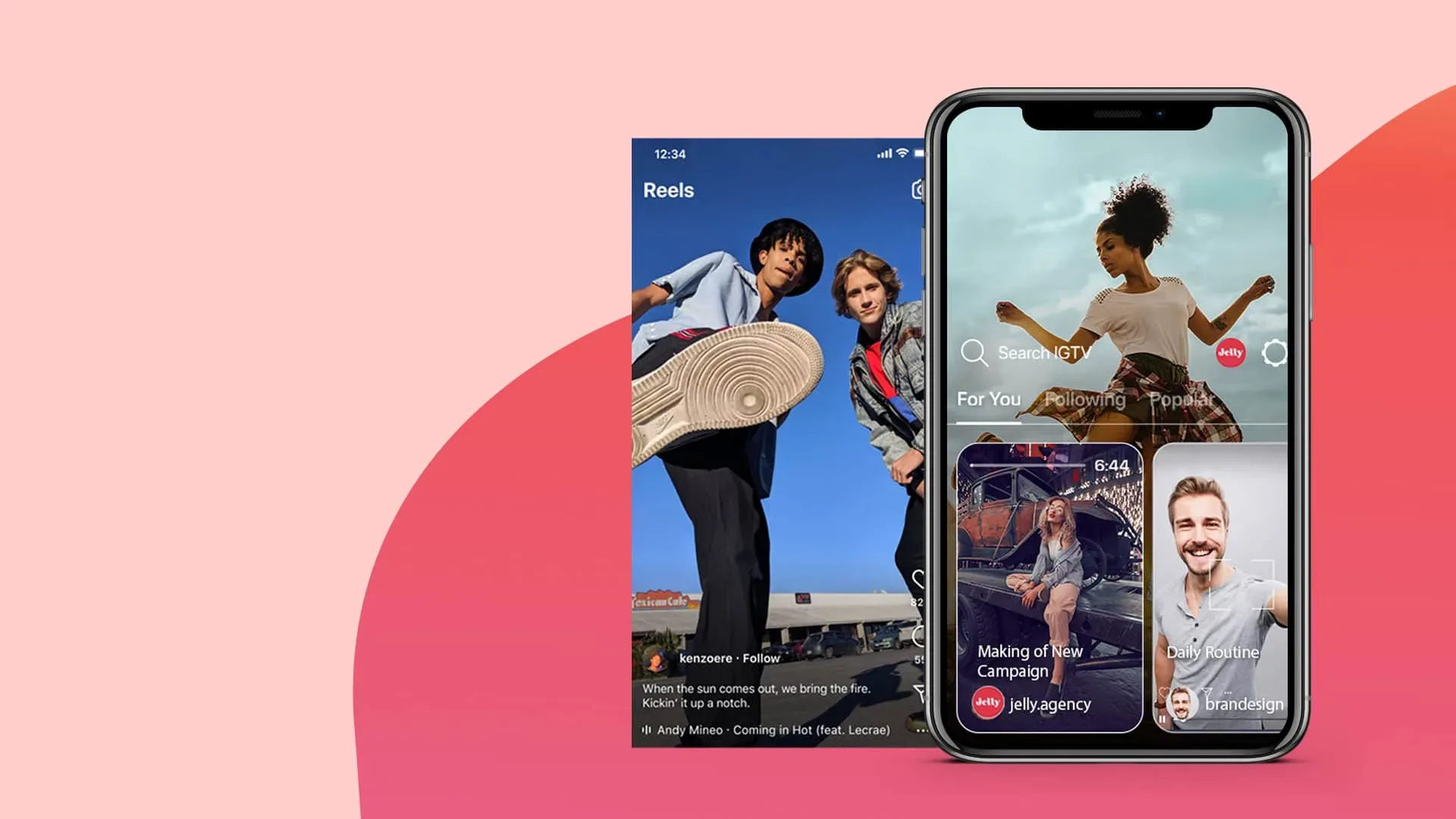
Let's start with the older of the two, IGTV – Instagram TV. As the name suggests, think of this tool as your brand's television channel. Or, if you prefer, it's your YouTube channel moved across to a platform capable of serving different purposes.
Why use IGTV?
- Unlike Stories or Reels, you can share long-form videos of up to ten or sixty minutes, depending on your follower count or whether the account is “verified”, i.e. the official account.
- Being able to share long-form content diversifies your content strategy on these platforms. Humanising the brand becomes more tangible; forget cramming in information in this format – create content that inspires your followers, good storytelling is what counts here!
- Share the brand's story, its day-to-day life, interview the people who bring your brand to life every day, share customer testimonials, or record a Q&A session with your followers.
But watch out, there are downsides too!
- I'm not making any value judgements about the quality of the content you should or shouldn't share, but don't share videos of poor technical quality. Good editing makes all the difference, it comes across as professional, and on Instagram, as on any communications platform, making an excellent first impression is a must. So if you don't have the technical know-how to edit video, and no one on hand who can do it for you, forget IGTV.
- There's no avoiding it… YouTube, of course. Although Instagram lets you concentrate more of your communications effort in one place – spreading the message across different channels and tools – YouTube remains the “king” of this format (and shows no sign of losing the crown). Here's a challenge for you, reader. Think about it: how many IGTV videos have you watched from start to finish to date?
- IGTV videos have little visibility as you move around the app. You have to go into the profile of the account that posted a given video to reach the content, except when it shows up in the main feed – and usually only if it's been posted since the user last opened the app.
So what's my verdict on IGTV?
Weighing up the pros and cons, I'd say the verdict is inconclusive. On the one hand, it doesn't look like a safe bet or a sure winner. On the other, it clearly opens up a new set of opportunities for brands to achieve better
engagement
with their target audience. The cost-benefit ratio in each brand's specific case will determine whether this is a priority tool worth allocating more people and budget to.
Reels: to energise
One of Instagram's most recent innovations, the “Reels” feature is IGTV's “little brother”. For a start, Reels also require the content to be in video format.
There are several reasons to compare the two features – they're similar in many respects, but in practice they serve very different purposes. Let's look at the advantages and disadvantages of this option. Reels are a good bet because: They let you share video content that's quick to consume. Unlike IGTV, the time available is far more limited – up to one minute – which immediately highlights the need to get your message across in a shorter space of time. That said, they tend to generate more engagement and, on average, have higher playthrough rates – Influencer Marketing Hub (an influencer management platform) presents some statistics that show what this tool can do (https://influencermarketinghub.com/instagram-reels-stats/). They follow the TikTok concept and format – tapping into how audiences currently like to consume content. Short-form video tends to go viral more easily than a static image or long-form video – precisely because it's quick to consume and share. Unlike Stories, they stay available permanently – or at least for as long as the creator wants them to. They reach a wider audience than any other type of Instagram post. They have their own “search” mechanism, powered by the platform's algorithms. In other words, they reach people who don't need to follow the page that posted the content! And what's less favourable about Reels?
In truth, the biggest threat to this tool's success isn't its heavyweight rival TikTok, but the technical and creative quality of the videos. Why? Studies show that the audience on Instagram is substantially different from the one actively using TikTok. So let's look at how you can use Reels in your brand's content strategy and online presence.
- Create educational content. Imagine a car brand posting a video titled “5 Ways to Use Less Fuel”. Hands up if you'd definitely watch it! Did you put your hand up? So did I! Not only would I watch it, I'd probably share it with family and friends. Better still, I'd remember that brand X regularly shares useful, important tips. That's if I didn't end up following the brand on the platform outright!
- Use short-form video as promotional teasers for products on offer or about to launch. Create buzz around your products in a creative, original way. Get your audience curious.
- Set your audience challenges – start a trend, or take something that's already trending and build a challenge around it! Careful though: if you're picturing a handstand, a half pirouette and a moonwalk finish, no one's asking you to come up with choreography half the world will want to copy. Take a brand X whose product is biscuits. Topic of the moment: the series Squid Game! Why not challenge your audience to play with your product, recreating a famous scene from the hit show?
Short-form video: the winner
The fight for consumers' attention is fierce, and brands wrestle with this daily. As I said back in February, video is the communication format that, so far, seems to win the most seconds, minutes and hours of that attention. And it's platforms like Instagram, TikTok and YouTube that set the trends.
Right now, that trend is unmistakable: short-form video (YouTube also recently launched YouTube Shorts to compete with rival brands in this space). According to data shared in an article by Vimeo, one of the leading online video content platforms, even the ideal length for an IGTV video is 2 to 5 minutes, which falls into this short-form video category (https://vimeo.com/blog/post/social-media-video-lengths/).
On Instagram, Reels have already proven capable of generating very high interaction rates and of attracting and winning over new audiences. If you haven't tried them, start looking into it. Learn. Get to know your audience. Adapt your message. The future is already here (and it's here to stay)!

Get what we write
No fixed calendar: only when there is something worth your time.