Inclusive Marketing: why inclusion and diversity are essential for brands

Catarina Alves de Sousa – Social Media Manager – The phrase “as times change, so do our wishes” made just as much sense in the 16th century, when Camões wrote it, as it does now. Times really are changing and, in this article, we embrace that change by looking at the importance of Inclusive Marketing in brands' communication strategies. Let's see how we can adapt our communication in a genuine way.
This is yet another article listing more changes that brands will have to embrace if they want to stay relevant, especially with the new generation of consumers.
The same audience that is no longer won over by obvious sales tactics and prefers storytelling is the same one now demanding to see diversity and inclusion in the content it consumes and the advertising it is exposed to.
Catarina Alves de Sousa – Social Media Manager – The phrase “as times change, so do our wishes” made just as much sense in the 16th century, when Camões wrote it, as it does now. Times really are changing and, in this article, we embrace that change by looking at the importance of Inclusive Marketing in brands' communication strategies. Let's see how we can adapt our communication in a genuine way.
This is yet another article listing more changes that brands will have to embrace if they want to stay relevant, especially with the new generation of consumers.
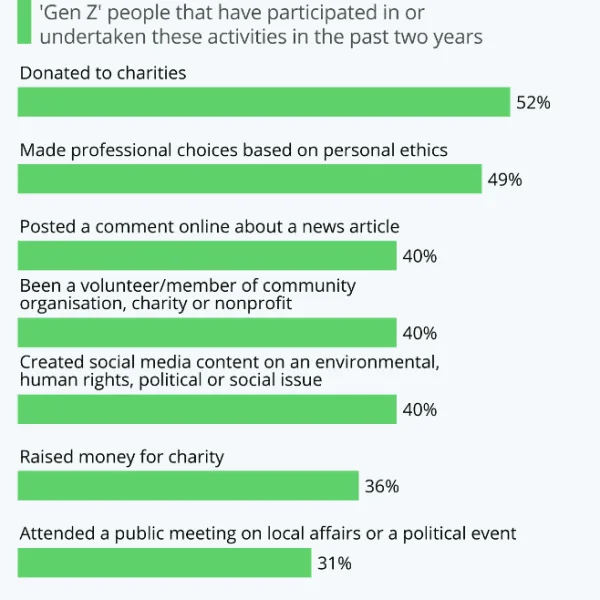
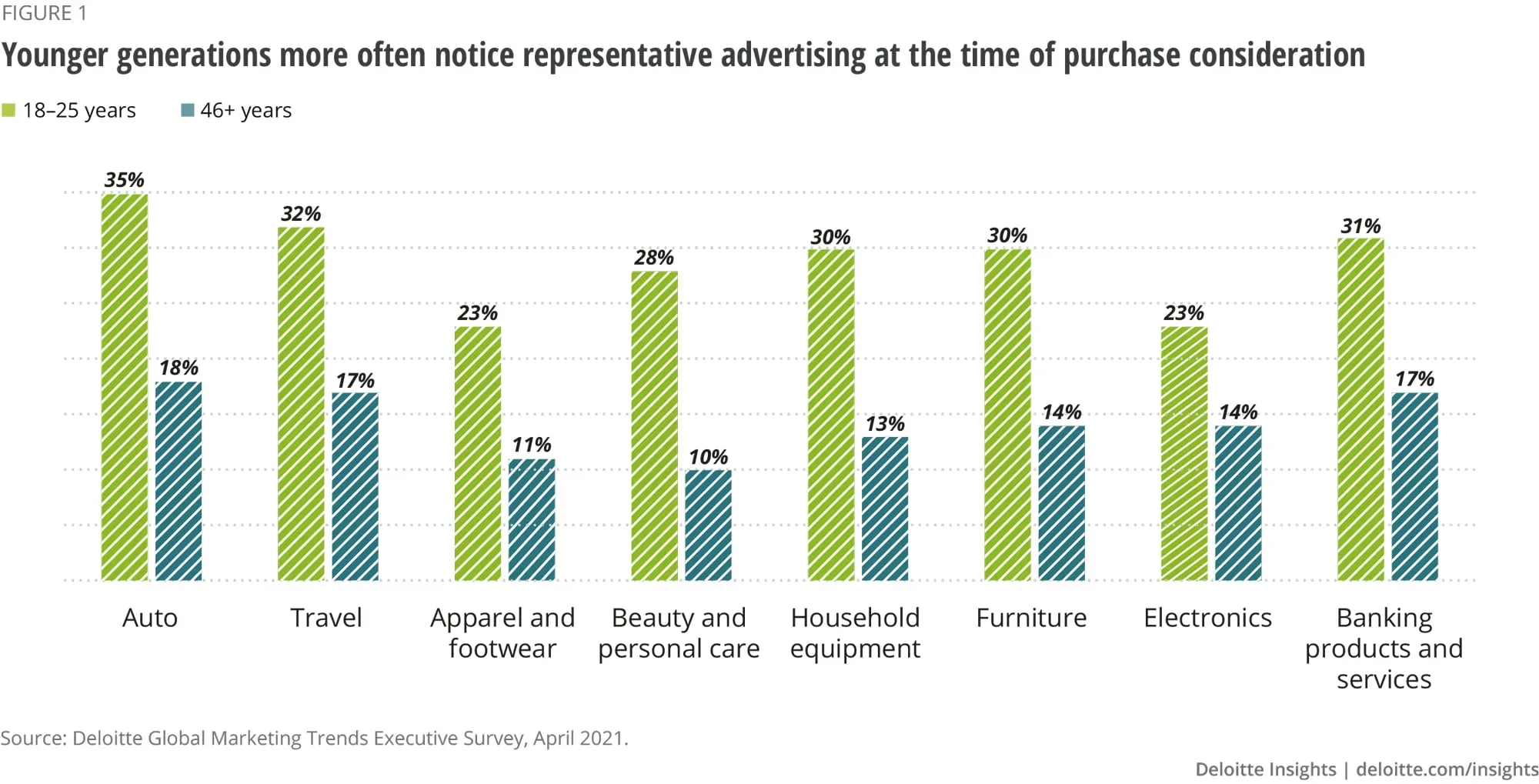
The same audience that is no longer won over by obvious sales tactics and prefers storytelling is the same one now demanding to see diversity and inclusion in the content it consumes and the advertising it is exposed to. Consumers – especially younger generations – expect more from these messages than just details about the latest seasonal sale. But even that isn't enough, because their concern goes further: they ask whether brands that support diversity and inclusion do so both publicly and behind the scenes. In other words, younger consumers expect brands' promises on diversity and inclusion to actually be kept. Source: Deloitte Insights This chart shows us not only that the younger generation of consumers cares about representation in advertising, but also that they notice it more or less depending on the sector. Source: Statista Gen Z's concern (those born between January 1995 and December 2003) with social issues is clear. These are the main activities they have taken part in or undertaken over the past two years. With a consumer population that is increasingly diverse in terms of race, ethnicity and sexual orientation, it is imperative that brands start reflecting the representation of each minority — something that calls for a great deal of care, but which is necessary if they hope to build a genuine connection with their future customers.
According to Deloitte's article Authentically Inclusive Marketing, 57% of consumers are more loyal to companies that commit to challenging social inequalities through their actions.
Earning the loyalty of future customers may require brands to show they are active across all their spheres of influence: through hiring and retention, by working with diverse suppliers, or by marketing products to users with different needs.
How can brands be more inclusive and diverse through advertising?
But how can marketers and brands do this genuinely? There are multiple ways across an organisation's ecosystem:
- Make sure teams and suppliers reflect the market.
Teams – both internal and external – that closely reflect the markets they serve can narrow the cultural and demographic gap between the brand and the consumers it wants to reach.
- Bring diverse voices into the organisation.
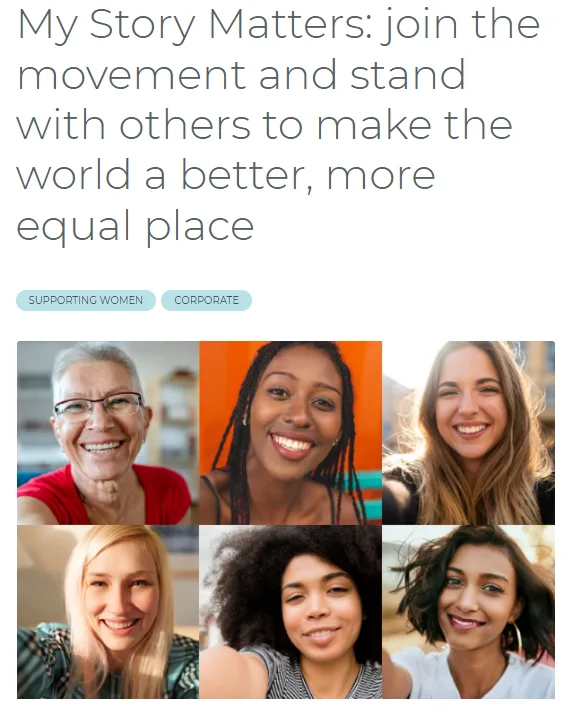
Since marketing directors are often the front line to the customer, they should use that position of influence to continually monitor and bring the needs of under-represented communities into their organisation – and to feature those voices and faces in campaigns. Source: Avon website Avon, for example, interviewed 8,000 women around the world to understand which issues were affecting them most during the pandemic. When Avon found that 41% had lost confidence during this unusual period, it partnered with women of various races, ethnicities and abilities to raise awareness of these issues on its “My Story Matters” platform – a space giving women the chance to share their authentic, unedited stories.
- Validate your inclusive advertising ideas
Brands should make sure ads are tested with people from diverse backgrounds who are representative of their target audience.
- Make your commitments measurable.
As we mentioned earlier, “younger consumers expect brands' promises on diversity and inclusion to actually be kept”.
So it is essential that brands' DEI (Diversity, Equity and Inclusion) goals aren't just a box-ticking exercise, but instead deliver real, measurable results through concrete actions, donations, hiring from minority groups, and more. When reality is reflected in advertising: the Black Lives Matter case
Following the Black Lives Matter protests in 2020, several brands spent billions of dollars developing “non-stereotypical, meaningful and effective communication to drive the cultural change we need”, said Tamara Rogers, CMO at GSK.
The mood of outrage and change after the death of George Floyd and the riots that followed brought about an awakening among marketers, who finally realised the lack of diversity within their own walls. In various ways, the BLM movement “forced” those at the top to take a hard look at their own policies around diversity, inclusion and support for minority talent.
But just as with that movement, many others have emerged to question how marketing and the media represent – or fail to represent – racial and gender minorities.
What will happen to brands that fail to embrace Inclusive Marketing in their strategies?
Brands that avoid creating content featuring representation and diversity are doomed to lose a large share of their current and future customer base. It sounds like a dramatic prediction, but it is no less true for it.
Gen Z's intolerance of racial inequality has led 53% of ethnic minorities to stop buying from a brand because it didn't represent their values.
Through more inclusive communication strategies, brands will increase consumers' purchase intent, their reputation and brand loyalty — and advertising is an excellent opportunity for brands to speak to the consumer groups they value.
It was precisely through advertising campaigns that several brands positioned themselves as inclusive and diverse. Let's look at some examples.
Best practice in ad campaigns that reflect inclusivity and diversity
Some brands hit the bullseye when it comes to creating content featuring people from diverse ethnic and gender backgrounds, while others… not so much. Let's look at two good examples and one that missed the mark. HÄAGEN-DAZS – #THATSDAZS JTNDaWZyYW1lJTIwd2lkdGglM0QlMjI4NjAlMjIlMjBoZWlnaHQlM0QlMjI0MTUlMjIlMjBzcmMlM0QlMjJodHRwcyUzQSUyRiUyRnd3dy55b3V0dWJlLmNvbSUyRmVtYmVkJTJGV2o0dnZWSF9USnclMjIlMjB0aXRsZSUzRCUyMllvdVR1YmUlMjB2aWRlbyUyMHBsYXllciUyMiUyMGZyYW1lYm9yZGVyJTNEJTIyMCUyMiUyMGFsbG93JTNEJTIyYWNjZWxlcm9tZXRlciUzQiUyMGF1dG9wbGF5JTNCJTIwY2xpcGJvYXJkLXdyaXRlJTNCJTIwZW5jcnlwdGVkLW1lZGlhJTNCJTIwZ3lyb3Njb3BlJTNCJTIwcGljdHVyZS1pbi1waWN0dXJlJTNCJTIwd2ViLXNoYXJlJTIyJTIwYWxsb3dmdWxsc2NyZWVuJTNFJTNDJTJGaWZyYW1lJTNF Source: Youtube Häagen-Dazs US This Häagen-Dazs campaign set out to improve the way the brand presented itself, realigning with cultural trends and reflecting today's consumer sentiment in order to “make this small luxury available to everyone, not just to some”, said Elizabell Marquez, CMO at Häagen-Dazs. AMAZON – MEET TIFFANY JTNDaWZyYW1lJTIwd2lkdGglM0QlMjI4NjAlMjIlMjBoZWlnaHQlM0QlMjI0MTUlMjIlMjBzcmMlM0QlMjJodHRwcyUzQSUyRiUyRnd3dy55b3V0dWJlLmNvbSUyRmVtYmVkJTJGOXBsZmZweS1NVTAlMjIlMjB0aXRsZSUzRCUyMllvdVR1YmUlMjB2aWRlbyUyMHBsYXllciUyMiUyMGZyYW1lYm9yZGVyJTNEJTIyMCUyMiUyMGFsbG93JTNEJTIyYWNjZWxlcm9tZXRlciUzQiUyMGF1dG9wbGF5JTNCJTIwY2xpcGJvYXJkLXdyaXRlJTNCJTIwZW5jcnlwdGVkLW1lZGlhJTNCJTIwZ3lyb3Njb3BlJTNCJTIwcGljdHVyZS1pbi1waWN0dXJlJTNCJTIwd2ViLXNoYXJlJTIyJTIwYWxsb3dmdWxsc2NyZWVuJTNFJTNDJTJGaWZyYW1lJTNF Source: Youtube Amazon Amazon puts the spotlight on a Black employee and communicates its initiatives to give back to the Black community, highlighting the Black Business Accelerator. Through this initiative, Amazon invested 150 million dollars to empower Black entrepreneurs, providing support through mentoring, marketing and business advice with the aim of removing the barriers of systemic racism and thereby creating opportunities for the African-American community.
This is a good example of how brands can communicate their internal inclusion initiatives, and it is also a way of showing that their commitments to diversity and inclusion don't just stay on paper. An example of a campaign that failed spectacularly… Marketing isn't made up of good examples alone, and Pepsi's “Jump In” ad proves it. This 2017 ad, starring model Kendall Jenner, had to be pulled from the internet along with an apology from Pepsi, after an immediate backlash in the media, since the ad suggested that police brutality could be solved with a simple can of Pepsi. JTNDaWZyYW1lJTIwd2lkdGglM0QlMjI4NjAlMjIlMjBoZWlnaHQlM0QlMjI0MTUlMjIlMjBzcmMlM0QlMjJodHRwcyUzQSUyRiUyRnd3dy55b3V0dWJlLmNvbSUyRmVtYmVkJTJGdXd2QWdEQ09kVTQlMjIlMjB0aXRsZSUzRCUyMllvdVR1YmUlMjB2aWRlbyUyMHBsYXllciUyMiUyMGZyYW1lYm9yZGVyJTNEJTIyMCUyMiUyMGFsbG93JTNEJTIyYWNjZWxlcm9tZXRlciUzQiUyMGF1dG9wbGF5JTNCJTIwY2xpcGJvYXJkLXdyaXRlJTNCJTIwZW5jcnlwdGVkLW1lZGlhJTNCJTIwZ3lyb3Njb3BlJTNCJTIwcGljdHVyZS1pbi1waWN0dXJlJTNCJTIwd2ViLXNoYXJlJTIyJTIwYWxsb3dmdWxsc2NyZWVuJTNFJTNDJTJGaWZyYW1lJTNF Source: Youtube Yash Yadav The ad looks innocent enough, but it completely missed what the message should have been — at least in the eyes of consumers, who are the ones who really matter. The failure came down to the brand's inability to understand the struggles of ethnic minorities. It lacked information, empathy and – let's be honest – the right tone.
In the end, what counts is communicating to and about people; it's understanding that “people” means different backgrounds, languages, skin tones and gender expressions. Telling their stories and giving representation a stage matters — and matters a great deal. The consumer is not a template, but an increasingly diverse being, even if only in their ideals. And speaking of ideals and values, the new consumer wants to feel that the brands they buy from share the same causes; in other words, they want to feel represented in that way too.
In short, younger generations, the consumers of the near future, expect more. At the same time, the fastest-growing brands are narrowing the cultural and demographic gap between the make-up of their teams and the markets they aspire to reach. Here, the role of (good) marketers is to help the companies they represent not only to refine their messages to the public, but also to support internal transformation, fostering more equitable, fair and inclusive workplaces.
As always, change is down to all of us, both as employees and as consumers.

Get what we write
No fixed calendar: only when there is something worth your time.