Live video shopping

Marta Peral Ribeiro – Communications Consultant –
An innovative online shopping experience
Live streaming is one of the formats we've found, in our personal lives and beyond, to meet the need to keep our connections with each other as close to real as possible. Many brands are now betting on the potential of technology to turn e-commerce into an immersive experience: live video shopping.
Marta Peral Ribeiro – Communications Consultant –
An innovative online shopping experience
Live streaming is one of the formats we've found, in our personal lives and beyond, to meet the need to keep our connections with each other as close to real as possible. Many brands are now betting on the potential of technology to turn e-commerce into an immersive experience: live video shopping.
The user journey
When you see someone advertising an app you like the look of on Instagram, for example, what do you do next? You probably go and check the reviews, or watch a YouTube tutorial explaining how the app works. Then you go looking for the product on the brand's website, or on the App Store or Google Play Store, to buy it.
How many actions and platforms did that take, from the moment something caught your eye to actually buying it? At least three.
What would the experience be like if there were a platform that brought all those actions together in one place?
What is live video shopping?
Live streaming is the real-time sharing of audio and/or video content over the internet.
Live video shopping is much the same thing, but applied to online shopping: an innovative experience in which we talk live to a member of staff or another brand representative over video (a video call or video conference).
For anyone who likes shopping online and enjoys video presentations, it combines the best of both worlds: the staff member shows the products and offers advice, while the customer watches, asks questions and adds whatever they want to the basket in the online shop.
For brands, it's a chance to launch a new product in a more appealing format, win more followers and build up their online community. The opportunities to draw customers in are greater still when VR (virtual reality) and AR (augmented reality) technologies are added to the mix.

Opportunities for brands
What opportunities does live video content offer brands, whether on social media or other platforms?
1. Interaction and engagement
Real-time interaction between the brand and users comes close to the in-person experience. Personalised live advice, via chat or video call, brings people closer together.
2. A smartphone away
Accessibility and usability from a smartphone is one of streaming's main advantages: the customer is online and wants to buy, whether at home or out and about, whenever they feel like it — and they want to do it quickly.
3. Real-time experience and belonging
By offering content that is happening live, brands give consumers a sense of immediacy and of belonging to a group, because they get new information first-hand and share the experience with other people.
4. Authenticity
Live broadcasting shows a more spontaneous side of the brand, along with the faces behind it, which lends greater authenticity to the presentation of a new product or service.
5. Visibility and reach
As a rule, digital platforms let you broadcast live to many people at once, which delivers considerable reach. The platforms' own algorithms also favour posts with live broadcasts.
6. Simple, effective mechanics
Live broadcasting is a relatively accessible and inexpensive process. Even if a company opts for dedicated live shopping software, the results make it worthwhile: interaction rates, conversion rates and ROI all tend to rise significantly.
7. E-commerce innovation
At a time when new video technologies are on the rise and few brands are using them, video shopping helps a brand stand out and shows off its innovative streak. Especially when the experience includes conveniences such as letting the customer add products to the basket while watching the live stream.
8. A sense of exclusivity
The idea that this is a one-off opportunity for the user — whether through first-hand access to new releases, a special discount for everyone taking part in the live stream, or simply because they aren't sure they'll be able to watch the content later — gives streaming an element of exclusivity.
The future is live, and the past proves it:
- The last 10 years have shown exponential growth in digital video, with the various social networks adding more and more tools and features to make the format appealing.
- According to LinkedIn, live videos get seven times more reactions and 24 times more comments than native videos.
- In 2020, Facebook live streams rose by 40% in the first weeks of lockdown.
- When a live stream involves influencers, the audience grows by more than 20%.
- In two years, China's Alibaba saw year-on-year growth of around 400% thanks to integrating live video into its e-commerce platform.
- In 2020, live video shopping accounted for 20% of e-commerce in China.
- According to HSBC and Qianhai Securities, live streaming accounts for 10% of e-commerce in China, with growth of 20% forecast by 2022.
The immersive experience: a question of positioning
Social media offers interesting, accessible ways to bring brands and consumers closer together — YouTube, Facebook Live, IGTV and Twitch, among others.
That said, being able to create content within their own ecosystem lets brands explore a more immersive, more engaging connection with the user.
In other words, integrating a video shopping solution into your own app or website creates a more sophisticated positioning.
On top of that, brands keep their users' data on a secure platform, so they can then analyse the actions those users took and fine-tune their brand strategy.
The customer, for their part, gets attention of a different order, welcomed in a more human, more empathetic way.
One-to-one or one-to-many
There are two live video shopping options:
- One-to-one – the interaction takes place between the customer and the staff member. The staff member provides a personalised service, showing the product, explaining it and offering advice.
- One-to-many – the brand's narrative becomes more dynamic, designed for several viewers at once, who can interact via chat, add emojis and may be entitled to specific promotions during the live stream. In this case the reach is far greater, as you'd expect.
How can you get the most out of a live stream?
Build your social following
To achieve meaningful reach — in other words, to have an audience for your live streams — you need followers. That means investing in content that adds value, posting consistently and interacting with people to build your community.
On the other hand, giving users the power to take an active part in live streams allows brands to do some social listening and understand their audience's needs and wants.
Equipment
Although many platforms let you film from a smartphone, it's worth investing in the right equipment to match the quality of the service.
Sharp picture and clear audio are essential to keeping the audience engaged, so it's worth investing in a good microphone, good lighting and a high-definition camera (ideally a multi-camera setup, as it makes the visuals far more interesting).
Keep the stream running smoothly
According to an article in TechRadar, users have little tolerance for technical glitches in a stream, with 90 seconds the acceptable window for fixing them. So it's vital to ensure a smooth broadcast — otherwise users will lose interest in what they're watching if there are technical hitches.
Promote digital inclusion
Wherever the streaming platform allows it, you should enable comments and conversation between participants, and turn on subtitles, translation, colour contrast or any other accessibility features available.
Post-stream opportunities
Even though the idea is to broadcast in real time, the fact is that part of the audience won't always be able to watch at that moment. It can be worth saving the video so consumers can access it later.
What's more, when platforms let you save the video, you can:
- Post-edit – you can touch up parts of the video to enrich it, whether by improving the image quality or adding elements that help clarify the message, such as infographics;
- Repurpose content for other platforms – you can embed the video across the brand's other communication channels;
- More sales – some platforms let you attach landing pages so consumers can buy later on.
Examples
NewsMuseum – school visits to the museum via live streaming
At a time when visiting in person isn't possible, the Media and Communication museum in Sintra is running school visits over Zoom. Via video conference, the Education Services coordinator welcomes visitors virtually and guides them around the museum interactively:
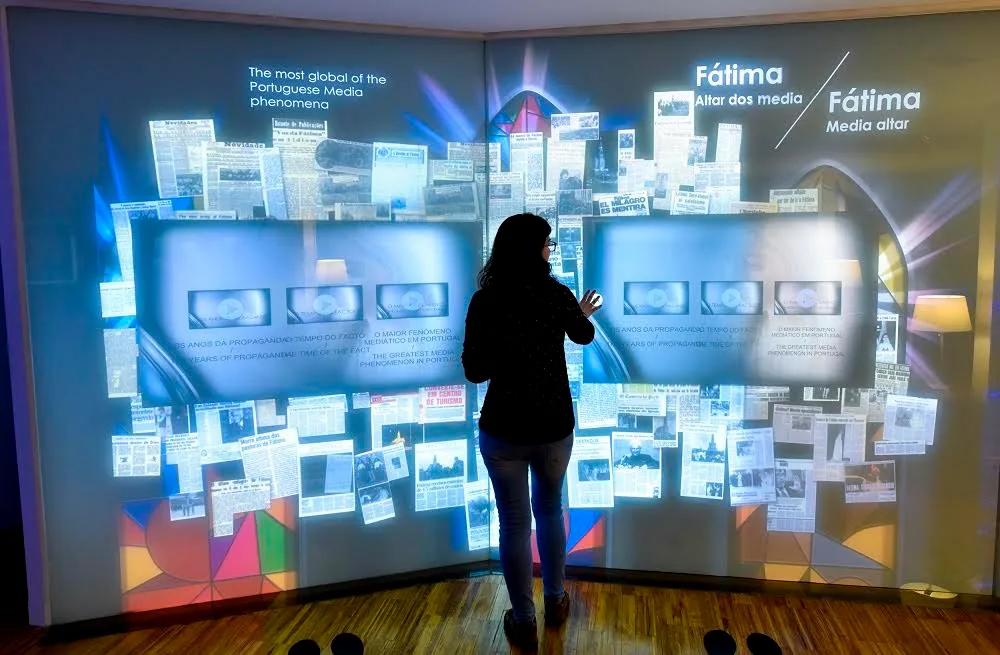
This way the museum maintains its educational role and reinforces its innovative side.
SalsaJeans – live streaming to promote a new collection
To promote the new collection created in partnership with Miguel Oliveira, Portuguese jeanswear brand Salsa produced a live stream. Through an informal interview, the brand and the MotoGP rider presented the products, developed the story around the collection and involved the audience by giving a voice to viewers' questions, which the rider answered live:

Samsung – working with digital influencers
When a brand combines live video shopping with a digital influencer, the impact is, predictably, far greater.
In 2020, for example, Samsung created an event to promote its new smartphone in partnership with two digital influencers. Users had the chance to interact with them and buy the smartphone in real time:

Because the shopping software was integrated into its own e-commerce page, Samsung could see user activity as it happened — which products people were buying, for instance.
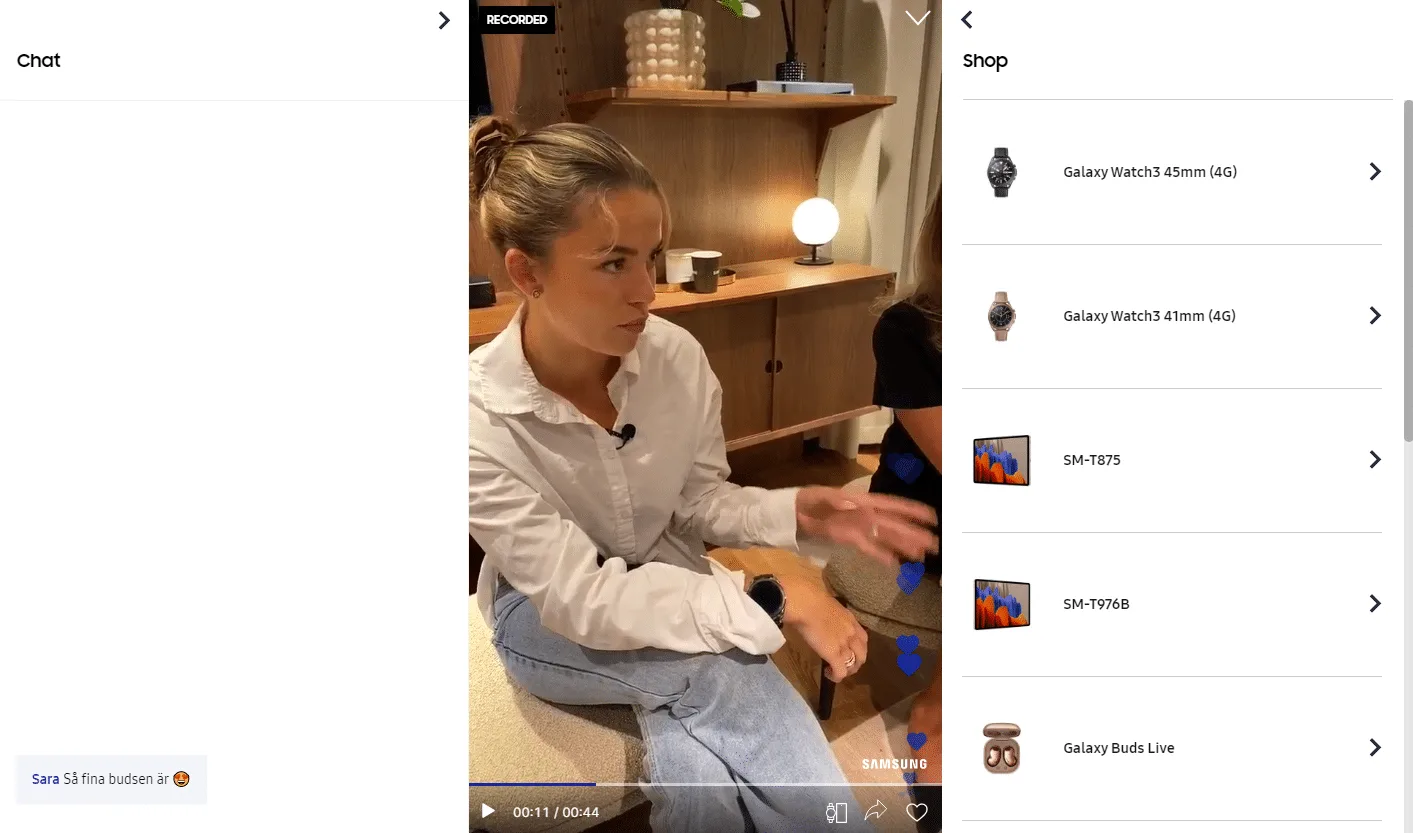
The campaign's conversion rate was double the average, and the number of viewers watching the video afterwards was four times higher.
Bambuser – streaming software for brands
Bambuser is a Swedish video platform whose main offering is Live Video Shopping. It boosts e-commerce through innovative technology that enables an interactive experience between businesses and consumers, both online and offline.
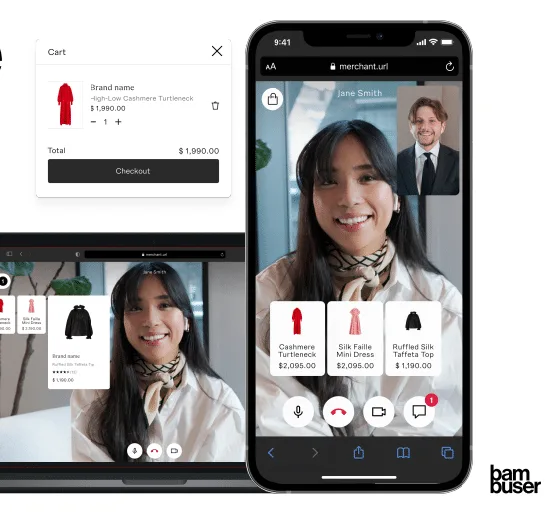
Bambuser's figures point to higher engagement rates (15% of users interact in the live chat), as well as an increase in products added to the basket (24% of users show intent to buy).
Powerfront and Gucci Live
Powerfront works as an omnichannel customer service solution with several touchpoints: in-store assistants offering advice, customer service agents (call centres) and chatbots.
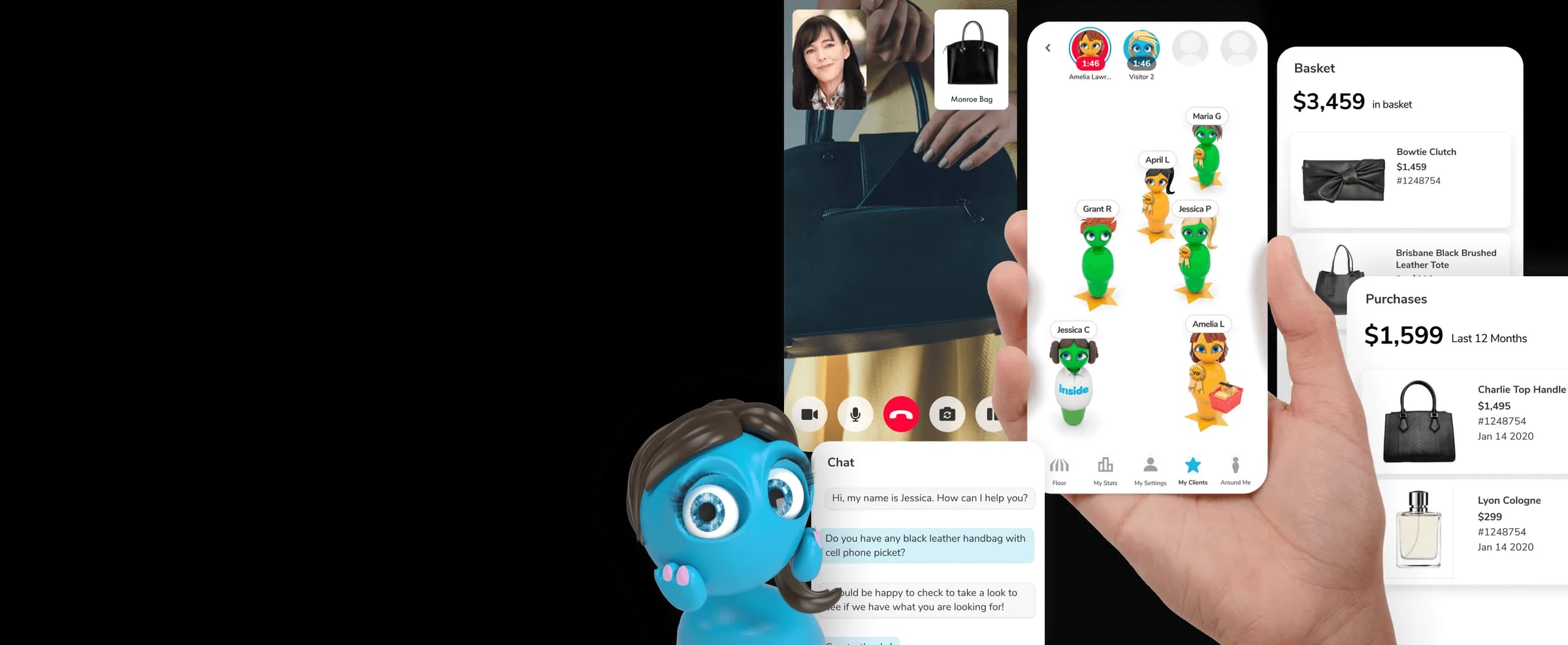
According to Powerfront, its luxury clients see a 40% conversion rate on video calls, as well as an increase in return on investment (ROI).
Gucci was the first brand to use the programme, launching Gucci Live: dressed in black dinner jackets and red gloves, in-store staff welcome customers over video:
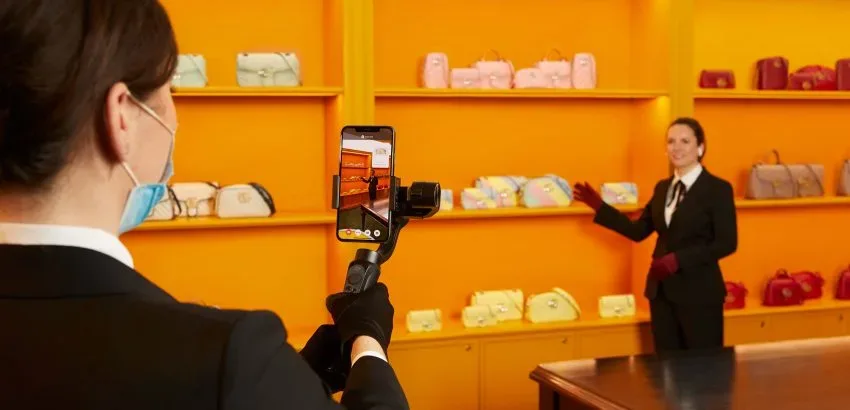
The brand's aim was to give online customers a personalised service as close as possible to the in-store experience. In doing so, it combines the human touch with cutting-edge technology while building customer loyalty.
Conclusion
As well as letting customers view products on their smartphone or tablet, live video shopping allows for a more spontaneous presentation of the brand, with the option of questions and answers, more or less personalised advice (one-to-one or one-to-many), interaction with other viewers and access to exclusive promotions.
For brands, live online interaction makes a distinctive positioning possible, and it's an excellent option for launching new products or services to an engaged audience.
The impact shows in the reach campaigns achieve, in conversion rates and, of course, in sales.
On top of that, being able to track customer actions and measure how effective the live streams are gives you the chance to fine-tune your marketing and communication strategy.
In short, this experience creates a connection between brands and their audience, who are still spending more time at home, online. And isn't that one of the main things we've learned to value lately?

Get what we write
No fixed calendar: only when there is something worth your time.