Neuromarketing – marketing's 3.0 experience

Marta Peral Ribeiro – Communications Consultant – Neuromarketing: do brands know what really drives consumers? Behavioural science has proved particularly useful to marketing, which has come to understand that the deeper it knows its target audience, the more effective its communication can be. And 2020 was an excellent opportunity to see the value of human behaviour: essentially, many consumption issues are behavioural issues.
Marta Peral Ribeiro – Communications Consultant –
Neuromarketing: do brands know what really drives consumers?
Behavioural science has proved particularly useful to marketing, which has come to understand that the deeper it knows its target audience, the more effective its communication can be.
And 2020 was an excellent opportunity to see the value of human behaviour: essentially, many consumption issues are behavioural issues.
A cocktail of emotions
Every year billions of euros are invested in marketing. And those figures are set to rise in the coming years:
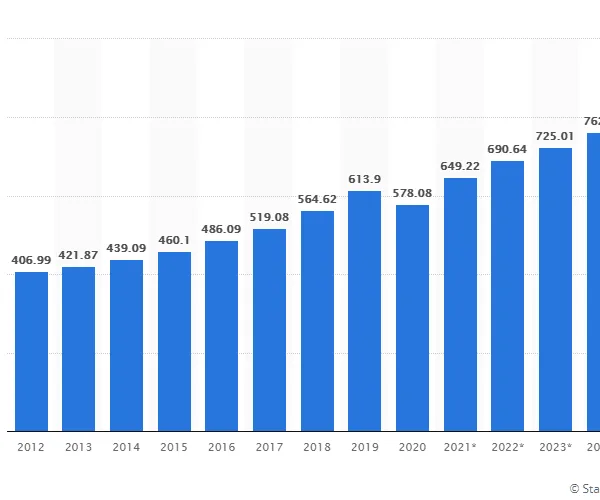
Statista – Global advertising revenue 2012-2024
Companies have always looked for triggers to persuade us to buy their products and services, tapping into emotions such as love, empathy, belonging, pride, lust, guilt, fear, shame and nostalgia.
And this is where Neuromarketing comes in, a far more sophisticated marketing strategy than the traditional ones, because it combines marketing with neuroscience, going to the heart of the matter: what really motivates people. The heart has its reasons, of which Reason knows nothing
When we're faced with a product, something curious happens: a conflict between reason and the heart. One part of our brain puts forward a logical justification for buying it or not, while another part, linked to the emotions, puts forward subconscious motivations for doing so.

If what consumers say doesn't always match what they think, predicting their behaviour isn't exactly measurable. But neuroscientists have already discovered something important: which side (logical or emotional) wins the battle. Neuromarketing doesn't sell to the customer: it sells to their mind Milad B Fakurian – Unsplash
Through neuroscience, which studies the nervous system, it's possible to analyse the reactions that occur in different regions of the consumer's brain when faced with a product, revealing the effect produced on an emotional level.
Having identified that our purchase decisions have an emotional basis – far more than a rational one – neuromarketers can optimise their strategy so as to stimulate certain regions of the brain and achieve a particular effect. Not least because nobody likes sending a message that isn't received.

In practical terms, they can tailor the communication to the target audience and also set guidelines for developing their products. In other words: target the message at the people who will actually see and hear it. What's going on in the consumer's mind?
Through functional magnetic resonance imaging (fMRI), a scan that produces high-definition, colour-differentiated images of the brain, it's possible to:
- Analyse the activity taking place in different regions of the brain – notably the insula, an area linked to the emotions.
- Carry out eye tracking – pupil dilation, which responds to external stimuli and which we can't control, indicates how interested we are in what we're looking at.
- Observe a person's muscular response and skin temperature when stimulated and relate it to brain activity.
If Neuroscience is combined with Artificial Intelligence, the results are even more powerful: brands can not only predict customers' preferences and behaviour but also shape and influence them.
How do brands seduce us?
Childhood brands
We all grow up in a particular culture, steeped in habits, beliefs and values. And we assume they're the norm – including the brands that were around in our childhood.
Yes, our brains started recording those preferences unconsciously at around 7 years old – some of them even earlier.
It's no accident that many of the products we buy now, from the most everyday ones (toothpaste, creams, drinks, mayonnaise, olive oil or detergents) to the more sophisticated ones (games consoles, footwear, watches, appliances or cars), tend to be the same brands that were in the house where we grew up.
This explains why children are such a powerful market for marketers: the younger we are when we start using a particular brand or product, the more likely we are to keep using it in years to come.
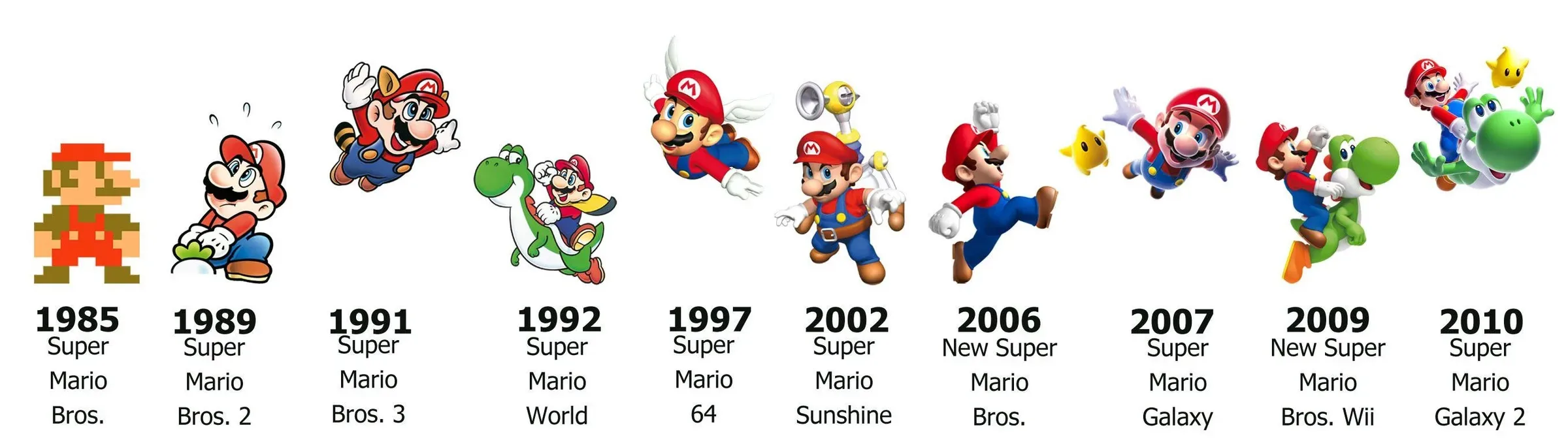
For example, how many of us grew up with Super Mario, keeping Nintendo in our homes ever since?
Fireproof associative memory
Our childhood memories are so deeply rooted in our minds that they can survive brain damage.
It has been observed in people with Alzheimer's and other kinds of neurological change (following accidents, for example) that, after smelling a particular scent or hearing a certain piece of music, they showed heightened activity in specific brain regions linked to the emotions.

Knowing the value of childhood memories, many brands develop strategies that unconsciously carry us back to the past. David Matos – Unsplash Mode: on/off
There are the products we buy out of necessity: they're part of daily life and we need to replace them when they run out. They're the ones we buy routinely during the week, when we're in “work” mode (on mode, let's call it).
Then the weekend comes along, or the holidays, when we relax (off mode). We become more emotionally available and we want to buy a different kind of product, something that rewards us, that spoils us.
When we try a new product, and one that turns out to be interesting at that, our brain records a pleasant sensation. Later on, in a subconscious attempt to feel that same sense of well-being again, we end up buying that product again.
In other words: it becomes part of the routine, although brands will generally add a special ingredient to create dependency (physical or psychological). Neuromarketing techniques within any brand's reach 5 seconds of attention
Perception Research Services found that when a consumer sees a product, their pupils dilate and scan it for 5 seconds, trying to make sense of it quickly and decide whether to buy it. That's exactly why packaging should have a simple design and carry only the essential information, with clear instructions for use, thought through from the customer's perspective.
Simplify the communication and the image
- Colours and typeface: Some of the easiest elements to work on are the colours (contrast), the typeface, the icons and the slogan.
- Affirmative language: Using positive words releases dopamine, the neurotransmitter of pleasant sensations. In other words, they give the consumer a sense of power and motivate them, because they feel good.
Website
From the layout to the way information is signposted, and the message itself, all the content should be carefully thought through, so that users find the information they want intuitively.
Social media
Post captions can be far more effective if they speak directly to the audience, especially if they touch the emotions. With the right words you can motivate people to buy.
Email marketing
When an email or newsletter is addressed to someone, the recipient's name should come at the start. This spontaneously creates a sense of closeness, capturing the reader's attention and encouraging them to keep reading. Images of faces
Advertising in which we see other human beings makes us identify immediately. Especially in products for children, images with faces quickly capture our attention and generate empathy – particularly if the child in the image is looking “directly” at the consumer.
Campaign timing
The “off mode” described earlier kicks in when we unwind (typically when we're not working), making it the ideal time for a brand to launch products or campaigns.
Celebrities and influencers
A product promoted by a celebrity or an influencer has a powerful impact because they are themselves seen as brands. In the case of influencers in particular, consumers perceive their message as more authentic than an ad from the brand itself. They also recognise and remember the products more easily.
Price perception
To judge whether a product is expensive or not, or to infer its quality, consumers need to compare prices between equivalent products. They then usually go for whichever offers the best value.
The price of a bundle of products looks high, even when it's cheaper than buying each product separately. But a label comparing the price of each product with the price of the bundle changes that perception.
Analysing the results

It's essential to analyse the results regularly, to assess not only how many new consumers you've managed to engage but also how the strategy is performing and what it's returning. There's no such thing as a free lunch – or a free App @franki – Unsplash
In exchange for discounts, entertainment or “exclusive” content, every day we hand our data over to all sorts of companies and organisations — the new currency, valid worldwide: our data.
Practically everything we do involves our data, for example:
- cookies we accept on our computers
- images we share on social media, including mentioning who we're with and where
- photos we upload to certain Apps to get a special effect
- the email address we have to give if we want to access “exclusive” content
- card payments (they record where we are, what we buy and how much we spend)
- loyalty cards (they record the products we buy)
By tracking our data and our activity and combining it with the information obtained through functional MRI scans, marketing specialists can target the message and use mechanisms that lead us towards a particular action.
They can also plant desires through subconscious emotional or psychological triggers, linked to searches we make or pages we interact with. Is the consumer doomed to be a hostage of the neuromarketers? The chicken or the egg
Despite the undeniable power of neuromarketing, the one who really sets the rules of the game is the consumer. After all, if the product or content doesn't add value, the consumer won't buy it unless they want to. What's more, consumers are demanding transparency and follow-through from brands more than ever.
The wheel of fortune
Given how skilfully they move around the digital world, consumers can easily shake a brand's good image. Just as they influence each other in a brand's favour, consumers can also expose brands negatively – and on a national scale. It all depends on how aligned consumers are with brands.
Finally, given the pandemic that has transformed the world, it's no longer possible to predict with the same accuracy whether demand will follow the trend, or to assume it will stay stable in the near future. The consumer as an active player The power of word of mouth
Martin Lindstrom, one of today's leading marketers, explains in his book Brandwashed the incredible power we have to influence one another, far more than the advertising we see all day long. And the same happens among children and young people.
When we admire and respect someone, whether a family member, a friend or a colleague, we tend to follow their choices and recommendations (whether they voice them or not). Especially when we see them as an authority on the subject.
What happens is that activity increases in the brain region linked to social emotions, unlike in other areas linked to the rational side, where activity decreases.
And when we like a product that's been recommended to us, we end up recommending it to other people too. Can you imagine the exponential power of this chain of influence?
What do the brands you use say about you? Or about who you want to be?
For consumers, neuromarketing offers a window onto our inner psychology, identified by our buying patterns: the brands we choose convey, in part, our identity and lifestyle.
Being aware of the impact we have on each other, it's also up to us to make use of the active role we play as consumers who influence one another.
On the one hand, by thinking about the brands we choose to support and, on the other, by using that for a greater good. For example, by putting pressure on brands to develop more environmentally friendly products. Examples Charlize's shoes
A Dutch study suggests that the persuasive power of celebrity has a biological origin. The medial orbitofrontal cortex (the brain region linked to decision-making) became more active when women looked at photos of celebrities' shoes.
Apple's minimal design
Apple's packaging is an ode to design: immaculate white, with a simple logo recognised the world over and little information, so that the user takes in the essentials in a few seconds. And it isn't just a question of aesthetics: when the customer opens the box (which is easy to open), they can use the product intuitively.

This is a brand that clearly focuses on the consumer. Conclusion

By keeping their awareness and professional ethics intact, marketing specialists can use the insights provided by neuroscience to understand what drives consumers and deliver the right message to the right audience.
Although brands have plenty of surreptitious ways of persuading us to buy their products, we're not simply being manipulated by companies. After all, even the biggest neuromarketing gurus are consumers themselves, just as open to being persuaded and socially pressured.
On the other hand, consumers also benefit from neuromarketing, since they get better products, increasingly suited to their needs, which goes to show that consumers hold a great deal of power over brands too.
Finally, the greatest irony is this: the main persuaders are, in fact, consumers, because through word of mouth they recommend the products they like and so influence their peers. And no marketing strategy can beat that.

Get what we write
No fixed calendar: only when there is something worth your time.