Remarketing: your second chance
Marta Peral Ribeiro (communications consultant)
Someone visited your page, saw the product or service your company offers, found it interesting, even added it to the shopping basket — but something happened and the purchase never went through.
Does this mean your product isn't interesting enough? No. So why didn't the user complete the purchase? Perhaps it's time to activate a solid remarketing strategy, before your potential customer forgets your brand.
Marta Peral Ribeiro (communications consultant)
Someone visited your page, saw the product or service your company offers, found it interesting, even added it to the shopping basket — but something happened and the purchase never went through. Does this mean your product isn't interesting enough? No. So why didn't the user complete the purchase? Perhaps it's time to activate a solid remarketing strategy, before your potential customer forgets your brand.
It has surely happened to you too: you search for a product or service online, land on the site that sells it, read about the product or service, like the look of it — but when it comes to buying, you hesitate and never actually go through with it. It's very common: statistics show that, the vast majority of the time, consumers don't buy on their very first search.
Why? Because, for some reason, the person who came into contact with the brand isn't ready to buy. At least… not yet.
This is where remarketing comes in.
What is remarketing?
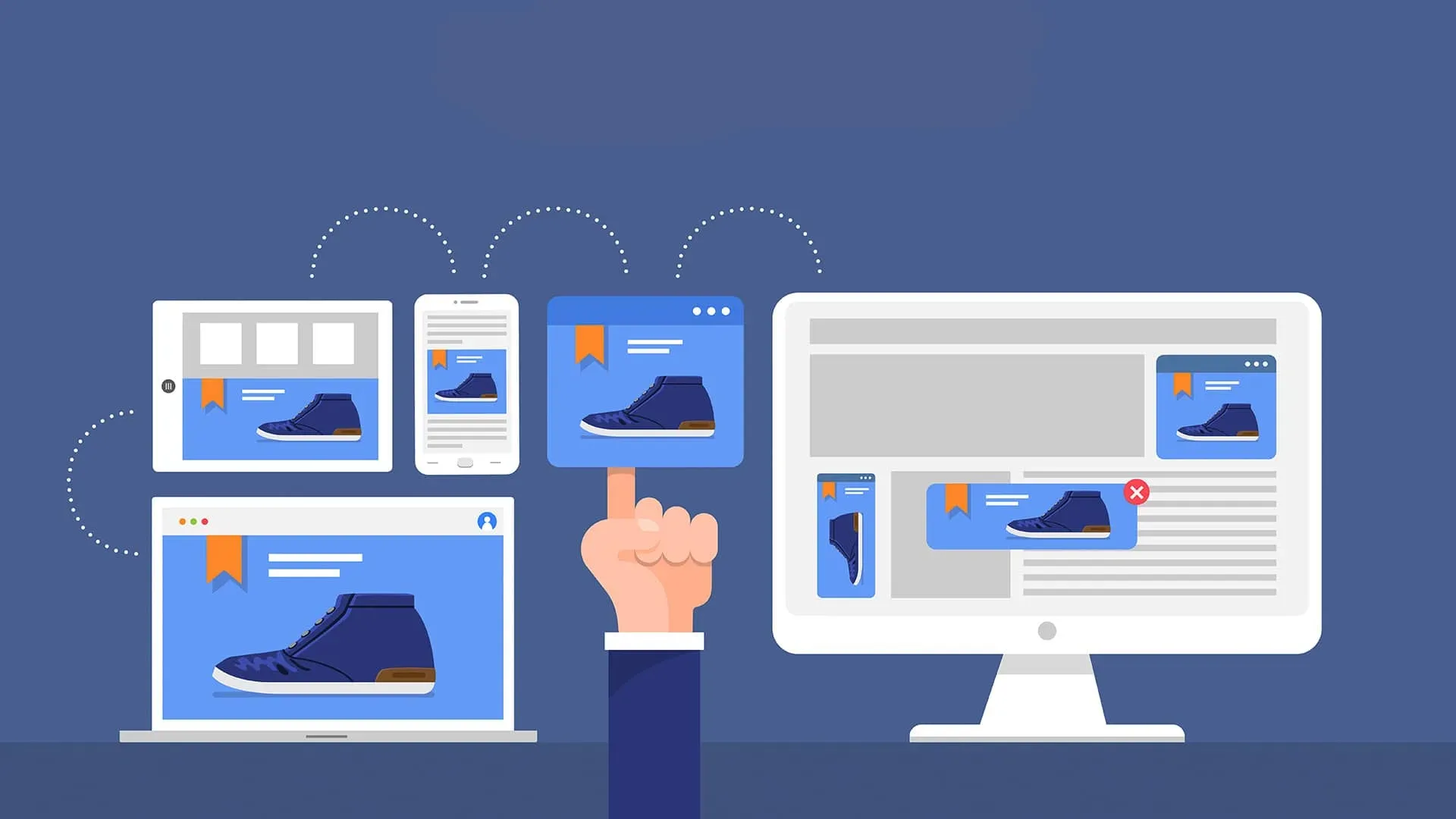
It's exactly what the word says: doing marketing again. In a digital context, that means a campaign of emails (usually personalised) and ads (strategically placed) aimed at someone who has already visited your page, whether on web or mobile, but whose interaction didn't result in a purchase. As a rule, the aim is to get the user back to your site and complete the purchase, but it can also be a simpler action such as subscribing to the newsletter.
These messages appear in the days or weeks following the user's first interaction.
Why should I implement a remarketing strategy?
It's simple: to increase your company's sales. And if a user has already visited your page, don't let them slip away.
This strategy creates the right impact at the right moment, increasing the conversion rate. In other words, a mere site visitor can turn into a customer, or at the very least we can encourage them to take a particular action.
On top of that:
- It's an investment that delivers fast reach, in good time;
- It covers a specific audience segment (which can include a large number of users), which makes it more effective;
- Ads are usually easy to create, as there are generally templates available;
- You have access to campaign statistics, with reports on performance, where the ads are shown and how much they cost;
- The investment is relatively low compared to the return.
So remarketing is a useful strategy for your company — highly effective and, therefore, very important.
How does it work?
Through cookies and audience segmentation.
For example: I have a product or service I want to promote, and I decide to run an ad for it through Google Ads. A visitor sees that ad (which links to my site), clicks and lands on the site. As the site is already set up for remarketing, it records that interaction in the user's browser, via the famous cookies. Then, when the visitor goes to other sites, Google identifies the cookies and shows them the ads I defined when I created the campaign.
On the other hand, monitoring (carried out by algorithms that capture users' activity when they access the site) produces different groups: some people want to get to know the brand (they click the "About us" tab, for instance), others go and browse the products, some even add a product to the basket, and so on. By segmenting the different audiences according to their intent, we can generate personalised ads and messages for each one. That's how we move the visitor closer to our goal.
How do you implement remarketing?
Think about your company or business, ask yourself which are the main landing pages or tabs on your own site where you can showcase your products and services, and what ads you can show to a specific audience. Remarketing boosts awareness of your brand, positioning your ads strategically in front of users browsing passively on the web, whether on Google or on third-party sites.
Remarketing channels
There are several. The best known are, of course, emails and, for ads, Google and Facebook. Then there's YouTube, Twitter, Instagram and LinkedIn (particularly interesting for B2B companies). Not to mention text messages or offline campaigns (street posters, for example).
The more specific the message, the better
Good remarketing planning includes, as we said earlier, building audience lists.
Segmentation examples:
- Ad x or y for people who bought product A or B;
- An ad on social network Z for people who downloaded my e-book;
- An email with a discount voucher for people who didn't complete their purchase;
- An email for people who attended a workshop but haven't yet subscribed to the newsletter.
Are remarketing and retargeting the same thing?
When people talk about remarketing, they often talk about retargeting too. They are, however, different things. Retargeting is one component of remarketing: it repeatedly serves a specific ad to a target audience, generally using "third parties" (partner sites) to reach those same users.
That said, we need to be careful with retargeting, balancing the frequency, the context and the moment the ads are shown. If users are bombarded with ads around the clock, they'll most likely run a mile.
Conclusion
Remarketing is a kind of second chance for a brand to grab the attention of a visitor who has already interacted with it — and who you therefore won't want to lose sight of. It's the "nudge" the visitor needs to clear up any doubts and complete the purchase.
However, for a campaign to succeed and achieve its goal, it's extremely important that your company defines a solid marketing strategy.
If you're doing any kind of online advertising, invest in remarketing. Especially now, with more users browsing the web due to the current circumstances. For our part, we're always here to help. Talk to us to redefine your strategy and grow your business! JTNDZGl2JTIwY2xhc3MlM0QlMjJmYi1jb21tZW50cyUyMiUyMGRhdGEtaHJlZiUzRCUyMmh0dHBzJTNBJTJGJTJGd3d3LmplbGx5Y29kZS5wdCUyRm1hcmtldGluZy1kaWdpdGFsJTJGcmVtYXJrZXRpbmctYS1zdWEtc2VndW5kYS1vcG9ydHVuaWRhZGUlMkYlMjIlMjBkYXRhLXdpZHRoJTNEJTIyMTAwJTI1JTIyJTIwZGF0YS1udW1wb3N0cyUzRCUyMjEwJTIyJTNFJTNDJTJGZGl2JTNF

Get what we write
No fixed calendar: only when there is something worth your time.