Smart chatbots: optimise customer service in Digital Marketing strategies
Pauliny Zito – Planner, copywriter and copy editor –
There is customer service before the chatbot, and there is customer service after the chatbot.
Of all the advantages of this marketing tool, which is indispensable these days, the main one is the time it saves you and your team.
And time, dear reader, is money.
Pauliny Zito – Planner, copywriter and copy editor –
There is customer service before the chatbot, and there is customer service after the chatbot.
Of all the advantages of this marketing tool, which is indispensable these days, the main one is the time it saves you and your team.
And time, dear reader, is money.
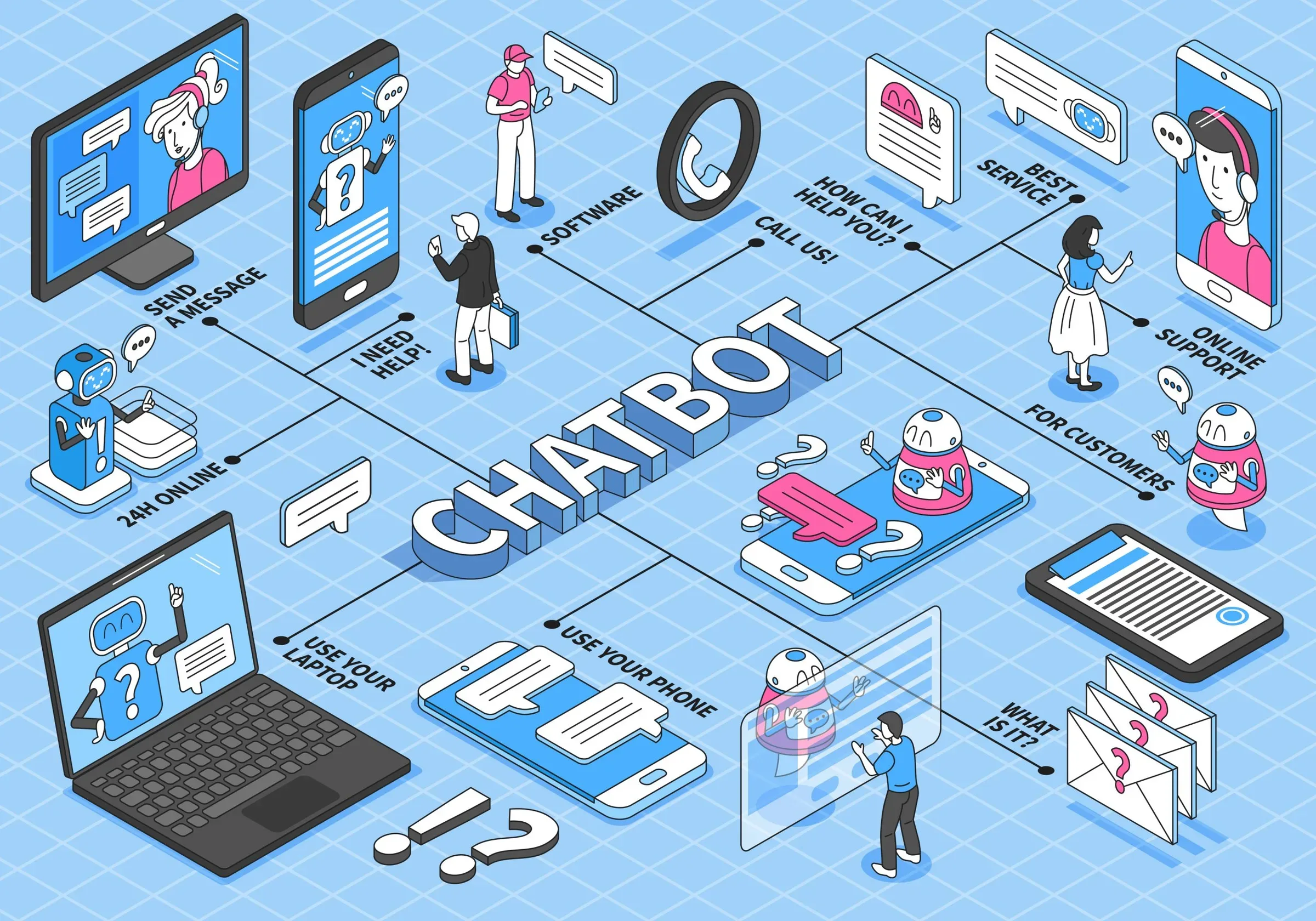
Chatbot

A chatbot is a robot, or tool, that uses algorithms and artificial intelligence to interact with customers through conversations in natural language.
Some chatbots use pre-programmed replies; others, more advanced, offer dynamic and personalised replies.
A chatbot learns and adapts over time, refining its answers based on the feedback it receives.
Five 2023 trends driving the immersive experience
Customers demand immersive experiences, meaning natural, fluid interactions with companies.
“From chatbots that simulate real human beings to conversational experiences where customers can start an interaction on one channel and then easily switch to another, immersive CX comes down to a simple idea: people want to be seen and heard, to be treated not as a transaction or a ticket, but as the highly valuable customers they are.” – Source: Zendesk CX Trends 2023
The Zendesk CX Trends 2023 report revealed five trends that point to a new era of experiences and are driving the immersive experience.
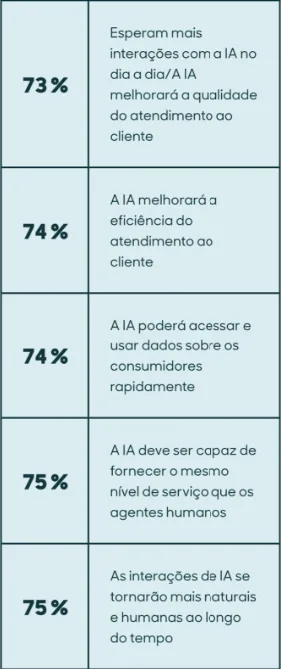
1) AI experiences are becoming more advanced and seamless
Among consumers who interact with support frequently:
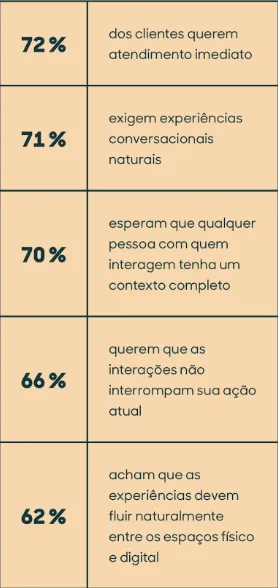
2) Empowering consumers with conversational experiences
On customer expectations for conversational service:
3) Customers want more personalisation
59% want companies to use the data collected about them to create personalised experiences.
62% say personalised recommendations are better than generic ones, and 60% find personalised recommendations valuable.
4) Consumer wellbeing and sentiment are redefining the customer experience
66% of consumers who regularly interact with support said a bad interaction with a company can ruin their day.
60% of consumers base their purchase decisions on the level of service they expect to receive.
5) CX teams are breaking down silos
Only 22% of business leaders say their teams share data well.
That is a problem. There needs to be genuine integration between customer service, sales and marketing, because it promises great returns: greater efficiency, better customer experiences and more revenue.
“Breaking down silos and encouraging the free flow of information between teams plays a key role in immersive CX.”
Why should you use a chatbot?
Using chatbots brings benefits not only to customer service, but to marketing campaigns as well.
It automates customer service
The chatbot answers frequently asked questions, queries and common requests, automates repetitive, routine tasks and handles a large volume of interactions at the same time.
It cuts operating costs
Once you have a chatbot handling your customer service, you no longer need a large team of people to do it. Add to that 24/7 availability, which means customers are served immediately and without interruption.
It personalises and improves the experience
The information the chatbot gathers makes communication far more accurate: personalised recommendations, relevant offers and an approach tailored to each customer's preferences, increasing conversions and sales.
It improves service quality and engagement
By providing immediate, accurate and personalised answers, the chatbot improves service quality, increasing customer satisfaction, engagement and interest.
It generates qualified leads
The chatbot helps capture qualified leads by collecting contact details such as name and email during interactions, so you can later send relevant content and offers from campaigns or marketing activity, providing a good experience along the customer journey.

It collects information, analyses large volumes of data and delivers insights
Needs, wants, frequent questions, complaints and queries, problems and pain points, as well as behavioural trends, are all valuable pieces of information obtained from your customers' interactions with the chatbot.
All of this can be useful for the brand's business and for creating content across the various communication channels, such as the website, blog, social media and so on. Customers' preferences, interests and buying behaviour can be used to target marketing campaigns better, personalise messages and offer more relevant products or services.
It also lets you build a more specific customer profile, so you can improve your products and services and even create and launch complementary products.
And it helps you anticipate problems, based on the data analysis.
Extra tip: sending out surveys to your audience via the chatbot is good practice for gathering important data about the buying journey.
It directs customers according to their needs
The chatbot assesses the customer's needs at first contact and, if necessary, directs them to the most appropriate department in the company, such as technical support or sales.
It speeds up service considerably through voice recognition and AI in interactions
AI can be used to create virtual assistants and chatbots that interact with customers through voice recognition and neural language processing.
It reorganises your priorities
Using the information the chatbot collects, you adjust your strategies around customer needs: managing stock better and reducing stockouts, improving service and the customer experience, and so on.
It drives conversions
The chatbot guides users and helps them make decisions by providing extra information, product recommendations and even exclusive discounts.
It keeps your business relevant
Keeping up with digital trends is a must for anyone who wants to survive and stay relevant in the market.
Using a chatbot speeds up customer service and can even become another sales channel, by allowing customers to complete a purchase through the tool.
The challenges of AI in customer experience
While AI brings countless advantages to the customer experience, there are also important challenges to bear in mind.
Data accuracy
Data has to be accurate in order to deliver personalised, effective solutions.
A human touch
Customers still value human contact in certain situations.
Regulation and ethics
Companies must comply with privacy and data protection laws and also establish ethical practices around the use of AI in customer interactions.
How to implement a chatbot
The first step in implementing a chatbot in your business is to define the end goal, the platform it will live on (website, instant messaging apps, social media, etc.) and the functions it needs to have.
Once that is done, choose the platform (Drift, Chatfuel, Manychat, among others) to build and test your chatbot.
Next, genuinely put yourself in your customer's shoes to build a conversation with questions and answers covering every possible scenario or situation in that interaction.
Then set everything up and test it in real time, correcting any errors.
Done! Your chatbot is ready to launch, and it should be monitored and optimised constantly in line with interactions and feedback.
Examples of chatbots in use
Website
On a website, the chatbot provides instant support through a small box usually placed in the bottom right-hand corner, interacting with the customer in real time, answering questions and queries, making bookings and reservations, helping with navigation and offering product recommendations.
Emails
In email marketing campaigns, the chatbot personalises the user experience as it provides more information about the product or service and answers questions, increasing engagement and the chances of conversion.
Social media
On social media, the chatbot is useful for replying to comments and private messages, or for starting conversations in order to offer promotions or relevant information.
Events
At events, the chatbot can be built into interactive kiosks to give visitors information about products and the programme, and to answer questions.
Online advertising
A chatbot in online ads lets users try the product virtually and receive personalised recommendations, increasing engagement and the chance of conversion.
Examples of chatbots by sector in various countries
Finance
- Fidelity: market updates and share prices.
- NerdWallet: a bot that learns more about the user and their needs from card usage.
Food
- Whole Foods: lets users search for recipes and find store locations.
- Taco Bell: TacoBot helps people order lunch easily.
- Domino's: to get your pizza on time, anywhere, any time.
- Burger King: a bot with offers from the restaurant chain.
- Pizza Hut: shows nearby locations along with menu and payment options.
Travel
- KLM: sends flight information, check-in and tickets.
- Expedia: lets you view hotel options.
- Uber: Uber integration within Facebook Messenger, without opening the app.
- Lyft: lets you request a ride and notify friends.
- Skyscanner: simplifies flight searches on Messenger, Skype and Amazon Echo.
- TripAdvisor: guides for travellers.
- Visabot: provides visa information for immigrants.
Newspapers
- CNN: sends personalised news or specific stories.
- NBC: through the Breaking News button, users follow more than 90,000 topics.
- WSJ: users view markets and financial news.
Health
- HealthTap: a bot that answers health-related questions.
- Boston Children's Hospital: gives parents health information for their children.
- MedWhat: a medical assistant that answers questions from doctors and patients.
Sport
- TheScore: the perfect bot for sports fans.
- NBA: lets basketball fans chat on Messenger.
- Toni: provides information to fans of the European football leagues.
- NFL: Sports Illustrated's NFL bot.
Retail and E-commerce
- 1-800-Flowers: lets users send flowers and gifts.
- eBay: ShopBot, a smart personal shopping assistant.
Fashion and Beauty
- Victoria's Secret PINK: helps teenagers find the perfect bra.
- H&M: offers outfit inspiration for teenagers.
- Sephora: shares make-up videos, tutorials and tips.
- Burberry: the high-end fashion label's bot shares new collections.
- TMY.GRL: Tommy Hilfiger's personal fashion stylist.
- Statsbot: a personal analytics assistant.
Utility services
- Hewlett-Packard: lets users access their photo galleries.
- The Weather Channel: shares daily forecasts.
- Poncho: a weather forecaster.
- Nadia: can read human emotions and facial expressions and pick up on your tone.
- Lara: a dating adviser.
Property
- Apartment Ocean: a property chatbot that builds relationships with clients.
- Homehawkai: a chatbot for property.
A greater focus on personalised, interactive experiences
That was the key point in the digital marketing trends for 2023.
We are living through a new era of customer service in the digital world, where interactions are expected to be ever more immediate, efficient and personalised.
And the chatbot is the most accessible solution for the fast, efficient, automated communication that this demand calls for.
Get what we write
No fixed calendar: only when there is something worth your time.