The 5G controversies
Ana Mendonça Morais – Marketing & Communication Strategist –
COVID-19, the US and security
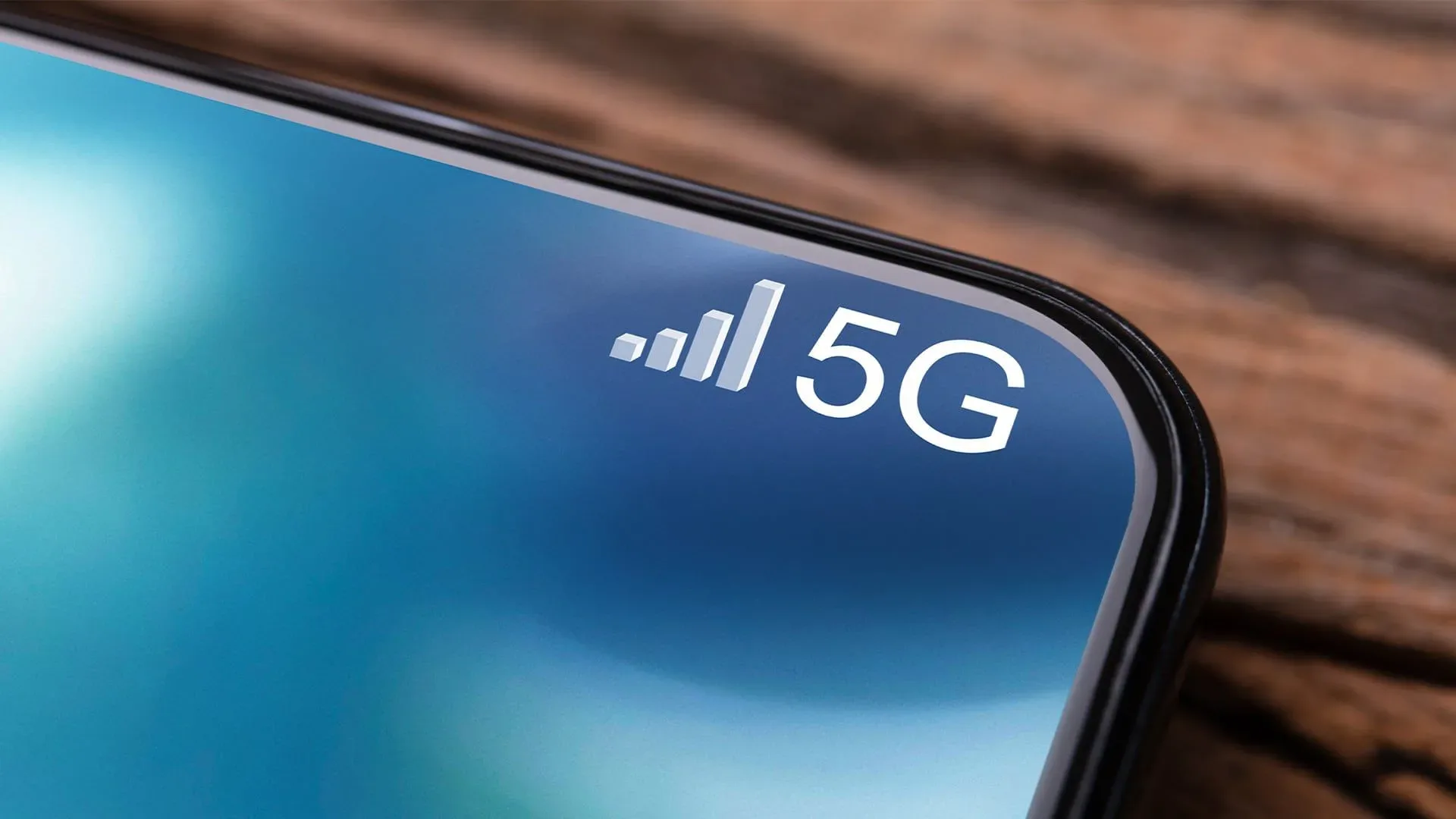
Ah, where to start with the 5G network… the stories surrounding this technology have been long, intense and varied. From the link to COVID-19 to acts of vandalism, taking in the US and questions of security along the way. Perhaps the best place to start is a brief explanation of what 5G technology actually is. Then we can look at the biggest 5G controversies. Or are they truths? Have no fear — I promise this article won't be a conspiracy theory!
So what exactly is the 5G network?
The 5G network is the latest outcome of 40 years of technological evolution. It arrives 4 decades after the launch of the 1G network. This is, then, the fifth generation of mobile network — and, of course, it promises to be far more effective than its predecessors.
The previous generations
Each generation of mobile network has brought different advances. From voice calls on the 1G network, we moved on to text messages with 2G. The 3G network then added internet access via mobile data. The 4G network brought all of this together and also guaranteed access to mobile broadband. And that's without even mentioning connection speeds, which have improved enormously. In fact, 4G could reach 1Gbps per second, far more than earlier networks — 1G speeds were under 10Kbps. For reference, speed units in ascending order are Kbps, Mbps, Gbps, where each one is 1000x faster than the last. So 1Mbps is the same as 1000Kbps, and 1Gbps is the same as 1000Mbps.
The features of 5G
Let's start with speed: 5G has a minimum speed of 10Gbps. That's a 10x increase on 4G's maximum speed! In other words… it really is fast.
But there's more: the response time of devices, once they receive a command, is also lower. Which means latency becomes almost a non-issue. This applies to, say, household appliances or even electric cars. But of course to mobile phones too. Imagine, for example, that you've got 2 free hours in your diary and you really want to watch a film on your phone. Thanks to this technology, the download takes seconds! At a time when we're increasingly impatient, especially online, that's a big advantage.
Beyond speed, the 5G network also allows for greater connectivity. It has a bigger capacity to support several devices connected to the internet at the same time — around 100, to be precise. That opens the door to a better rollout of the “Internet of Things”. The Internet of Things is essentially the connection of everyday objects to the internet. An example? Smart plugs and lights at home, fully controllable through an app on your phone or tablet.
The 5G network promises to make our lives easier and more connected than ever. Think you might have left a light on at home? Check the app and switch it off. It's cold and you want the house warm when you get in? Turn the heating on in good time from your phone. Need to make a short trip across town and a bike would do the job? Find the nearest one through a rental app.
That said, some people fear that all this connectivity actually has serious consequences. Both for our freedom and for our health. Some question how far our privacy is really protected and our security guaranteed. Some believe this is just one more step towards selling off our freedom without noticing — or, worse, without caring. Almost a “Big brother is watching you” sort of idea.
The biggest controversies
The COVID-19 link and the acts of vandalism
Early 2020 saw the arrival in Europe of what would become a global pandemic, as COVID-19 spread. The virus, which originated in China, took the entire world by storm. Around the same time, messages were circulating on Twitter linking the virus to the launch of the 5G mobile network. According to this theory, the symptoms associated with the virus were in fact caused by the 5G network. And quarantine was nothing more than a scheme to let the government roll the network out more easily.
Was this new technology responsible for spreading the virus?
Was it all part of a bigger plan?
Or was it just a coincidence?
The truth is this was one of the social network's trending topics and, although it has no scientific basis whatsoever, it caught the attention of a great many people through the hashtag #5GCoronavirus. In fact, the topic was significant enough to become the subject of a research paper published in the Journal of Medical Internet Research, which you can read here. According to the study, almost 35% of the tweets using that hashtag supported the theory.
Granted, this whole thing looks like nothing more than a conspiracy theory. After all, what are comments on social media? But the question goes well beyond a first reading. It touches on something central to how we take positions and make decisions: information. Without information we have nothing. With information we can have everything. But what happens when we have the wrong information, or when we pick only the bits that suit us?
It also calls into question the responsibility of the social networks themselves. On one hand, we could argue the platforms should ensure false content doesn't gain traction, especially when it can have a significant impact. On the other, we could also weigh up how far that might amount to censorship and affect users' freedom of expression. But that particular topic is one for another day.
Back to Twitter: from there, the conspiracy theory moved onto the streets. In the UK, dozens of 5G telecoms masts were vandalised. Set on fire, in fact. Politicians and telecoms company staff were harassed and even threatened. All in the name of a “revolution” to fight the villains. The theory had turned into an imminent physical danger. Good judgement, meanwhile, got lost somewhere between one social network and the next. Because in reality there is no scientific evidence of these technologies having a negative impact on health — least of all in a pandemic.
The US and the security question
According to the President of the United States, Donald Trump, the Chinese company Huawei is a danger and a threat to US national security, and its components should be banned from the country. But the truth is the company represents the biggest threat to the US when it comes to wireless technology. Huawei is well ahead in technological development, particularly where 5G is concerned. Which means that, essentially, China is well ahead.
Right now, Huawei is the main supplier of the technology used to build and develop the 5G network. So if 5G is the next step and the US can't keep pace with its rollout — because it has been expensive and inefficient, as this article in The New York Times points out — the devices of the future will all carry Chinese components (and integrations). That's where the even greater danger lies in American eyes.
Could 5G become a tool for espionage in the endless struggle between superpowers?
The truth is that, apparently and for now, there's no proof that anything of the sort has happened. Huawei has denied any connection to the Chinese government and insisted it is an independent company. In other words, it supposedly has no political interest in developing and distributing components that could be used to put other countries' national security at risk. But the response to that has largely been “better safe than sorry”.
Today the topic has moved on considerably, Europe included. Sweden, for example, was the most recent country to ban Huawei equipment from its 5G network, citing security reasons. The UK had already done the same a few months earlier. You can see a timeline of the bans on Huawei in this article.
In short, a new technological advance can, and should, raise questions. Especially when its applications are as far-reaching as 5G's. This technology is another step towards a life that is entirely digital and dependent on technology. It's a supposed enabler which, as we can see, isn't quite that simple.
While it may be absurd to link this technology to the global pandemic we're living through, it's also important to try to look further ahead. To understand how technology fits into our daily lives and how it leaves us free, or deprived, of anything at all. To see beyond the obvious. To question, weigh things up and decide whether the advantages outweigh the possible disadvantages. Especially if our security is at stake.
Ultimately, how far do we want to go, and what are we prepared to give up to get there? JTNDZGl2JTIwY2xhc3MlM0QlMjJmYi1jb21tZW50cyUyMiUyMGRhdGEtaHJlZiUzRCUyMmh0dHBzJTNBJTJGJTJGd3d3LmplbGx5Y29kZS5wdCUyRnRlY25vbG9naWElMkZhLXZvei1uby1jb21hbmRvLWRvLWZ1dHVyby1kYS10ZWNub2xvZ2lhJTJGJTIyJTIwZGF0YS13aWR0aCUzRCUyMjEwMCUyNSUyMiUyMGRhdGEtbnVtcG9zdHMlM0QlMjIxMCUyMiUzRSUzQyUyRmRpdiUzRQ==

Get what we write
No fixed calendar: only when there is something worth your time.