The consumer journey: do you know your customer's relationship with your brand?
Inês Tito – Copywriter – The customer is the lifeblood of any business. They set both the starting point and the destination for a company. And they are where every effort should be focused.
Reaching the customer, however, takes more than excellence. You need to know who they are, what they like and prefer, and the path they took to find your brand.
Inês Tito – Copywriter – The customer is the lifeblood of any business. They set both the starting point and the destination for a company. And they are where every effort should be focused.
Reaching the customer, however, takes more than excellence. You need to know who they are, what they like and prefer, and the path they took to find your brand. The customer's path
In a perfect world, the customer knows what they need and completes the purchase without a moment's hesitation. The reality is rather different. The customer journey is full of steps forward and back that may — or may not — end in a successful sale.

Finding the touchpoints
The consumer journey is the path a customer takes across the various moments of contact with a brand. With that in mind, companies commonly map this journey to create a visual representation that helps identify touchpoints. From there, it becomes far easier to work out what could be improved.
There are several models for mapping the consumer journey, so every brand is free to adopt whichever best suits its objectives. Some companies choose to focus on winning new customers, leaving aside notions such as loyalty. Others opt to analyse the entire customer lifecycle.
Stages of the journey
Whichever option is chosen, some touchpoints are common to all.
- Discovery
This is usually the customer's first point of contact with the brand. At this stage, the consumer has a desire or a need and is looking for a solution to their problem. They will tend to search for informative content that helps them identify the answer that best fits what they need. For companies, one strategy worth adopting is listing the benefits of that product or service.
- Consideration
At this stage, the customer sees a particular brand's product or service as a viable option and compares it with those of other brands.
Since the customer still doesn't have all the information needed to reach a decision, this is a decisive moment for companies. Through content marketing, brands can — and should — create content in different formats that delivers essential information to the target audience. The aim is to show the customer that “this” product has everything it takes to meet their needs.
- Decision
At the decision stage, the customer has already chosen and bought the product or service they wanted. While some customers research exhaustively before reaching this point, others begin their journey right here. Take the consumer who knows exactly what they want and needs no further information.
- Retention
According to some customer journey models, the retention stage comes after the sale. Here, brands can choose to approach the consumer about opportunities to upgrade the product or service, or encourage them to join loyalty programmes. At this stage, it's important to keep communicating with the customer to build their commitment to the brand.
- Advocacy
The final stage of the journey is tied to a positive customer experience, which means not every customer gets here. In fact, it's a stage reserved for satisfied customers who promote the brand, along with its products or services, to potential consumers.
So, as well as becoming loyal to the brand, these satisfied customers use good old word-of-mouth to bring new customers to the start of their own consumer journey and to discover the brand.
Why map the customer journey?
As well as helping you optimise your entire marketing and sales strategy, mapping the consumer journey will have an impact on the customer experience and on employee wellbeing.
- Seeing the other side
Brands spend much of their time developing products and services to meet the needs of the market. But do they really know what things look like from the customer's point of view?
When brands step outside the business perspective to genuinely understand the buyer's experience, they get the chance to see the reasons behind consumer behaviour. The information gathered then feeds the business strategy from the customer's perspective.
- Uncovering unidentified needs
Customer needs go beyond the features of a product or service. In many cases, the purchase has nothing to do with the product itself, but with the buying process.
According to the Baymard Institute, more than half of respondents abandon an online purchase because shipping costs and customs duties are too high. Others point to too many steps before reaching checkout.
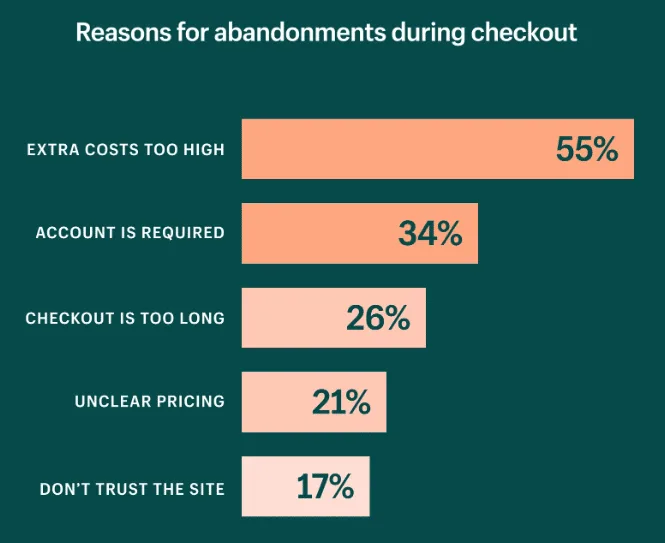
These are just a few examples that show how important it is to understand the customer's perspective. Identifying those gaps makes it possible to create strategies that streamline the buying process, which in turn increases revenue and customer satisfaction.
- Getting the full picture
Presenting the customer journey visually gives both executives and employees a broad view of the various touchpoints between customer and brand. It also becomes possible to anticipate consumer behaviour, remove redundant steps or add more relevant ones.
- Improving employee commitment
When we talk about the customer journey, we rarely connect it to employee engagement. This term, widely used in human resources, covers the three pillars of wellbeing at work: satisfaction, motivation and commitment.
There are several strategies for driving engagement. One is to show employees the impact of their work on the company's success and on customers' lives. So by understanding the customer journey, brands are one step away from optimising their sales strategy while, at the same time, improving how employees perceive their own work.
The result? Employees with high levels of engagement are more productive than their peers and produce more satisfied customers.
- Creating personalised experiences
Recent studies show that personalising the customer experience is the key to high levels of satisfaction, loyalty and return on investment. For that to happen, though, you need to understand what makes each customer unique. With this strategy, brands can personalise every stage of the journey, presenting themselves as more than the image of a company, a product or a service.
The importance of the persona
Society's constant evolution brings shifts in paradigm that marketing tries to keep pace with. Where companies were originally focused on producing and selling products and services, today the priority is customer satisfaction.
In the last century, after two world wars, came a period of economic and political stability that drove major technological advances. After several decades, life finally became easier. Since then, the world's population has grown and society has never stopped evolving.
Today, six generations live side by side, each with its own beliefs, motivations and aspirations. These traits show in their behaviour, especially as consumers. While Baby Boomers opt for physical shops and human contact, Millennials and Generation Z prefer personalised digital commerce.
Personalising the customer experience: trend or fact?
The explosion of e-commerce has dramatically changed consumer behaviour.
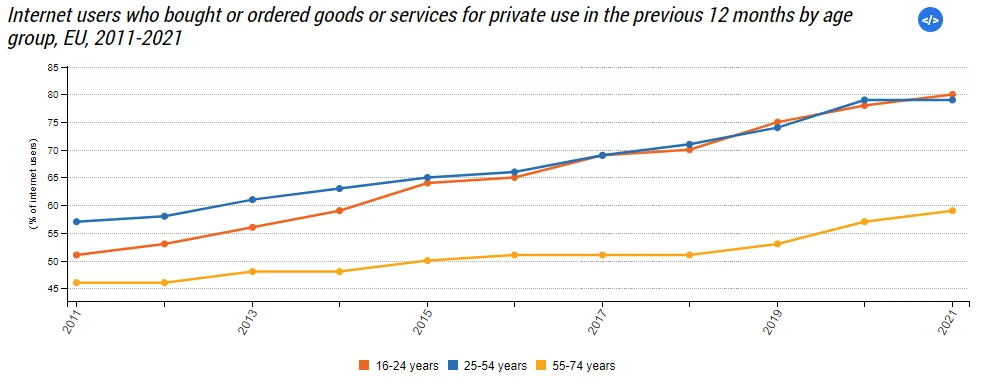
According to Eurostat, almost 80% of internet users aged between 16 and 54 say they shop online. Among the various reasons behind this figure is the desire for a seamless shopping experience, tailored to their preferences and one they can share with others online.
A Google study also reports that consumers surveyed tend to spend more than they had planned when the shopping experience is personalised. That's why more and more brands are investing in personalising the shopping experience, at every stage of the customer journey and across a range of communication channels.
Online, consumers have access to numerous sources of information, sometimes contradictory. This leads them to place their trust in the opinions of other customers rather than in what brands say. So today, buying is more than acquiring a good or a service. It's a social activity in which the customer themselves becomes a salesperson.
Brands that invest in personalising the experience therefore feed their marketing strategy with the customer's own view. As well as meeting consumer needs more easily, they make those consumers feel more valued. After all, the products and services are created based on their opinions.
Buyer persona vs. target audience
Investing in a personalised shopping experience requires brands to adopt new strategies. Identifying and describing the target audience, on its own, becomes an obsolete exercise.

The buyer persona is a semi-fictional character intended to represent the ideal customer. Why semi-fictional? Because it is built on information gathered through market research and customer satisfaction surveys.
A buyer persona profile is therefore highly detailed, setting out personality traits, age, gender, level of education, hobbies, ambitions and future aspirations.
The target audience, on the other hand, is a generic concept in which brands identify characteristics shared by a group of consumers. Among the most common are salary bracket and age range. Even so, identifying the target audience is the starting point for any marketing strategy.
However, when brands rely on the target audience alone to determine consumer needs, they risk ending up with incomplete information that may not reflect reality.
So the concepts of buyer persona and target audience are not mutually exclusive. In fact, they should be used together to build a detailed profile of the ideal customer.
Is it worth creating a buyer persona?
Absolutely! Because of its impact on marketing strategy, the advantages of developing a persona extend across the whole company.
The buyer persona deepens the organisation's understanding of the customer and builds an empathetic customer-brand relationship. It also improves communication with the customer, sharpens audience segmentation and drives growth in return on investment.
In short, with a buyer persona, brands can achieve a more persuasive approach that responds better to consumers' wants and needs.
The future of the customer journey
Brands want to anticipate consumers' needs and offer them what they need before they even know it. While no organisation can predict the future, today's technological progress is bringing that goal ever closer.
Combining customer journey mapping and persona creation with the latest technology allows brands to build a more human customer experience, even in a digital setting.
In recent years, we've seen society come into greater contact with digital channels. Yet, however contradictory it may seem, the desire for human contact has never been stronger. On the one hand we crave distance; on the other, we want to be heard and recognised.
For brands, the great challenge will be striking the perfect balance between making every customer feel unique and, at the same time, protecting their privacy. Which raises the question: are brands using the latest technology to bring back the closeness of the pre-digital world?

Get what we write
No fixed calendar: only when there is something worth your time.