The End of Traditional Funnels: The Shift to Adaptive Funnels in 2026
Alícia Coquim Social Media & Content Manager
For years, marketing funnels were designed as predictable, linear and static structures. A set of clearly defined stages, pre-programmed messages and rigid rules guiding the lead from the first interaction through to conversion. In 2026, that approach no longer matches the reality of digital behaviour. In this article, we look at how marketing funnels are evolving into living, adaptive systems, driven by Artificial Intelligence (AI) and by a new logic of real-time decision-making, drawing on the insights Neil Patel shared in the Marketing Trends 2026 webinar. Throughout the article, we explore how this shift is profoundly changing the way brands build journeys, nurture leads and drive performance.
The reality of traditional funnels
The so-called Old Funnel Reality is defined by four clear structural limitations:
- Static, pre-defined nurturing paths, planned in advance and applied in the same way to every lead;
- Linear stages and rigid rules, which assume every user follows the same path;
- Manual segmentation and fixed branching, dependent on human set-up and hard to scale;
- Hard-coded logic, which ages quickly and demands constant manual adjustments.
Neil Patel points out that this model rests on an assumption that no longer holds: that consumer behaviour is predictable. In 2026, users interact with brands across multiple channels, at irregular times and with highly personalised expectations. A static funnel simply cannot keep up with that complexity.
The new reality: agentic, adaptive funnels
The move towards the New Agentic Funnel Reality is a structural change, not just a technological one. Funnels start to work as intelligent systems, powered by AI, capable of making decisions on their own.
According to Neil Patel, these new funnels rest on four core pillars:
- Continuous observation of behaviour in real time: AI monitors interactions, browsing patterns, response times, preferred channels and intent signals, rather than relying on isolated events alone.
- Journeys that adjust dynamically: Timing, channel, message and offer are no longer set from the outset. Every interaction shapes the funnel's next action, creating a unique path for each lead.
- Autonomous lead nurturing: Nurturing is no longer a sequence of scheduled emails or ads. It becomes a system that decides when to communicate, with what message and through which channel, based on the user's actual behaviour.
- Funnel logic in continuous evolution: The funnel learns from results. What works is reinforced, what doesn't is adjusted or removed, with no need for constant manual intervention.
Neil Patel stresses that this approach isn't just more efficient, it's the only one able to keep pace with digital marketing in 2026.
From funnel as flow to funnel as system
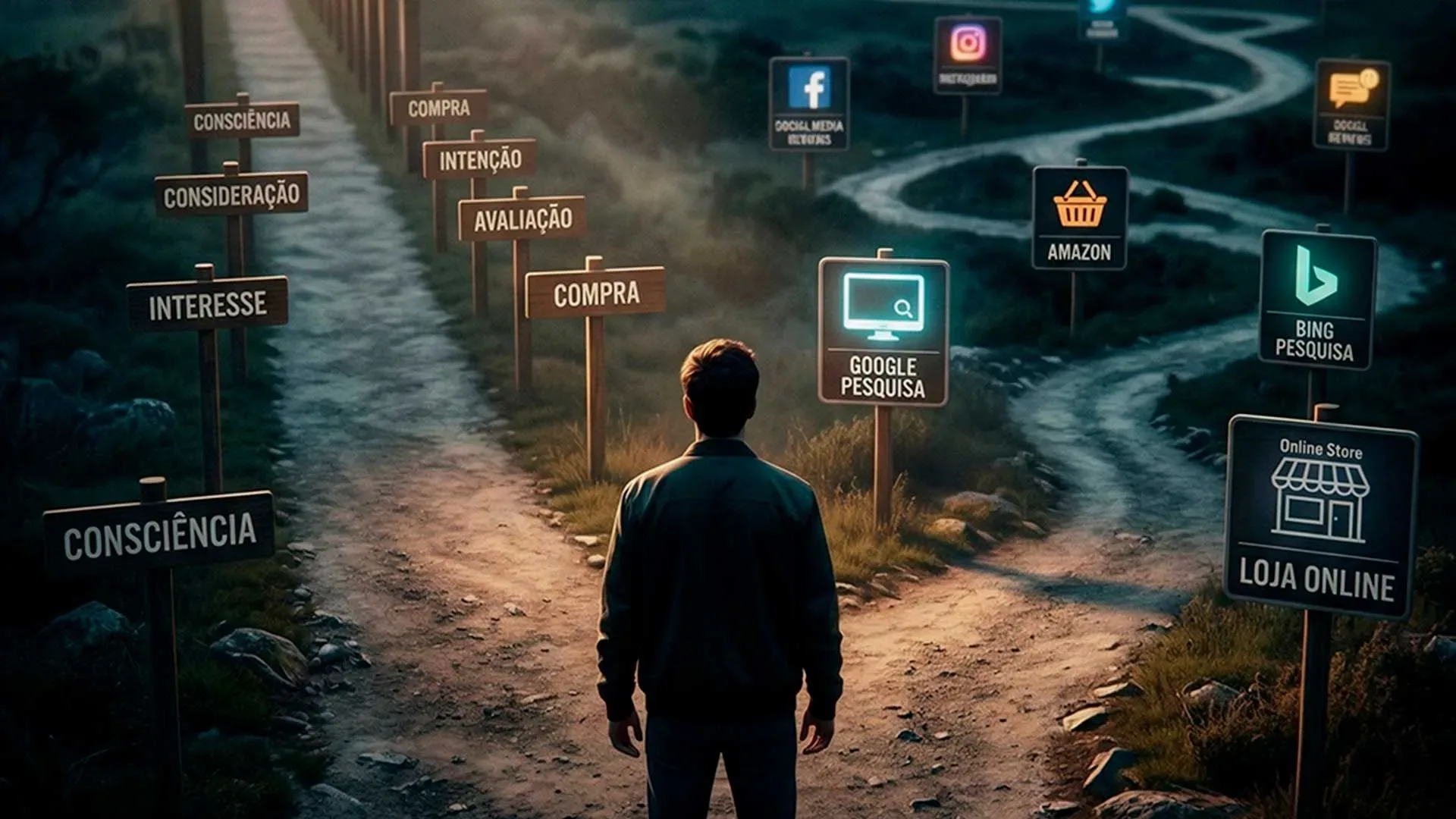
The big conceptual shift is in how funnels are viewed. They stop being sequential flows and become adaptive systems.
In a traditional funnel, the lead moves forward because the system says so. In agentic funnels, the lead moves forward, moves back or changes path because the system reads real signals of intent.
This means two leads with the same entry point can go through completely different journeys, without that meaning any loss of control. Quite the opposite: it means greater precision.
AI's role, according to Neil Patel
In the webinar, Neil Patel is clear that AI doesn't replace strategy, it amplifies it. AI takes on tasks that were previously impossible to carry out manually at the scale required:
- Analysing thousands of micro-interactions in real time;
- Spotting behavioural patterns invisible to the human eye;
- Adjusting messages and offers based on context, not assumptions;
- Continuously testing variations without operational friction.
According to Patel, brands still treating the funnel as a fixed sequence are, in practice, talking to a user who no longer exists.
Personalisation is no longer an extra
In 2026, personalisation stops being an added feature and becomes a structural requirement. That said, Neil Patel draws an important distinction: personalising isn't just dropping the lead's name into a message.
Real personalisation happens when the system understands:
- Where the user is in their journey;
- What kind of information they're looking for;
- Which channel feels most natural for that interaction;
- What level of depth makes sense at that moment.
Adaptive funnels make it possible to respond to these variables without burdening marketing teams with complex rules that are hard to maintain.
Direct impact on performance
Neil Patel shares that organisations already running adaptive models are seeing clear improvements in critical metrics:
- Higher conversion rates, thanks to better alignment between intent and message;
- Shorter average time to conversion;
- Greater efficiency in paid media spend, with a better read on lead quality signals;
- A significant improvement in user experience, with less friction and more relevance.
The funnel stops pushing the lead towards conversion and starts supporting the decision-making process.
What does this mean for brands in 2026?
Adopting living, adaptive funnels calls for a change in mindset. It's not just about implementing new tools, it's about accepting that:
- Absolute control is replaced by intelligent orchestration;
- Predictability gives way to responsiveness;
- Strategy is now designed to learn, not just to execute.
Neil Patel emphasises that the most successful brands in 2026 will be those that build systems able to evolve with human behaviour, not against it.
Marketing funnels are moving away from rigid structures and becoming living, adaptive, intelligent systems. The shift from traditional logic to agentic logic is one of the biggest changes in digital marketing in recent years.
In 2026, the winner isn't whoever has the most complex funnel, but whoever has the most attentive, most flexible funnel, the one most aligned with how people actually behave.
Funnels no longer lead journeys. They follow them.

Get what we write
No fixed calendar: only when there is something worth your time.