The Future of consumption: how technology and sustainability are redefining the market in 2025
Jelly – Digital Agency
Generative Artificial Intelligence (AI) is radically reshaping the retail sector. Consumers have become more demanding and more selective, forcing brands and retailers to adapt at speed. The study
What Matters to Today’s Consumer 2025
, by the
Capgemini Research Institute
, sets out
structural shifts in buying behaviour and in consumer expectations.
This article looks at the study’s main findings and offers a critical view of the future of consumption in the age of generative AI. The age of personalisation: the end of search engines?
In this fourth edition of the Capgemini Research Institute’s annual study, the global survey drew on 12,000 respondents, helping brands and retailers understand their priorities and preferences and align their strategies to meet evolving needs and behaviours (Capgemini, 2025).
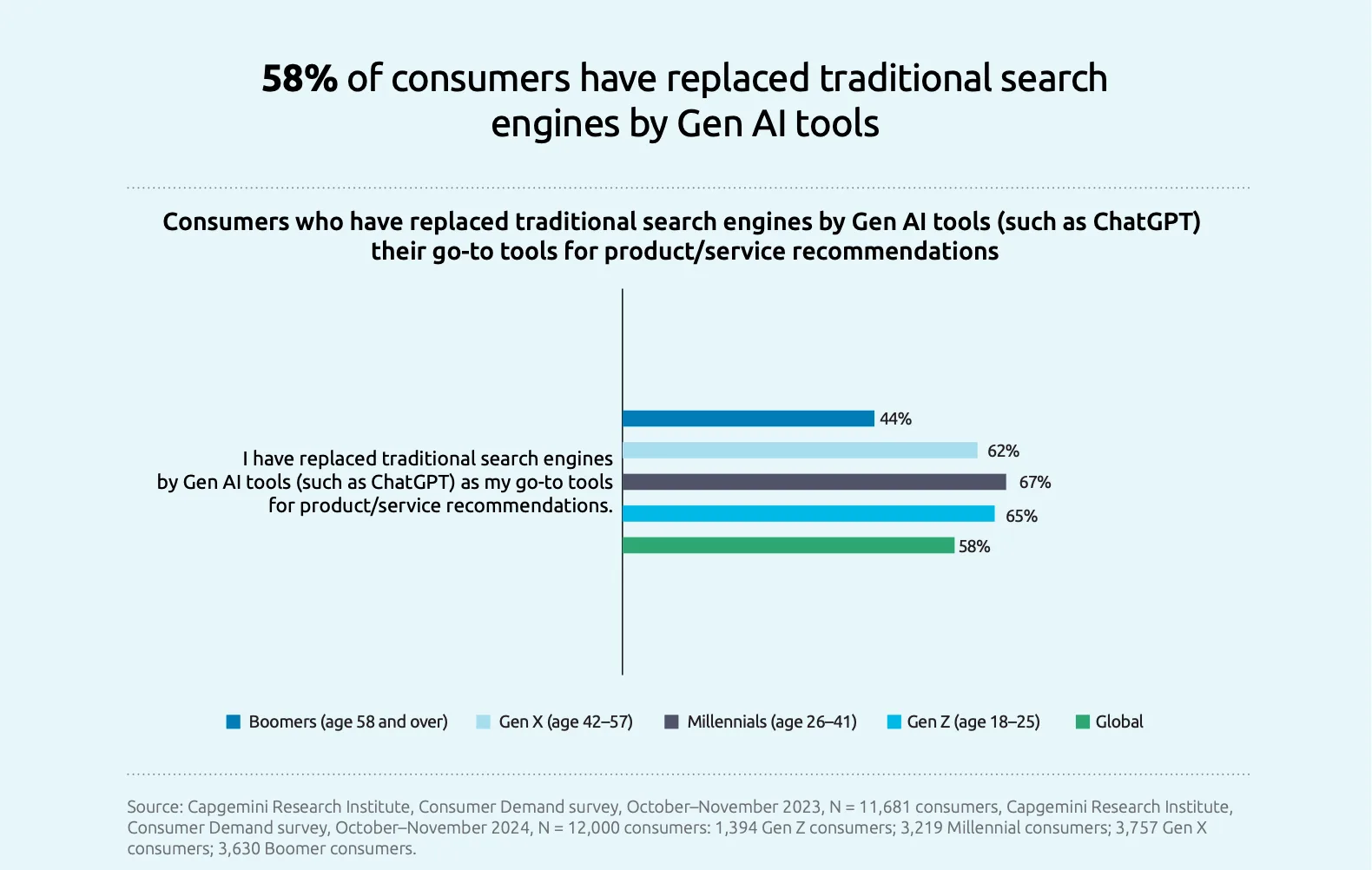
Until recently, search engines were the main tool for finding products and services. Today, however, 58% of consumers have replaced traditional search engines with generative AI tools such as ChatGPT to get product and service recommendations (Capgemini, 2025). This amounts to a structural shift in digital marketing. Brands need to adapt to a new dynamic in which AI filters the options and suggests products based on purchase history, preferences and even social media interactions. Companies that fail to adjust their SEO and advertising strategies to stay relevant within AI models risk losing visibility.
Social media: from a space for interaction to a sales engine
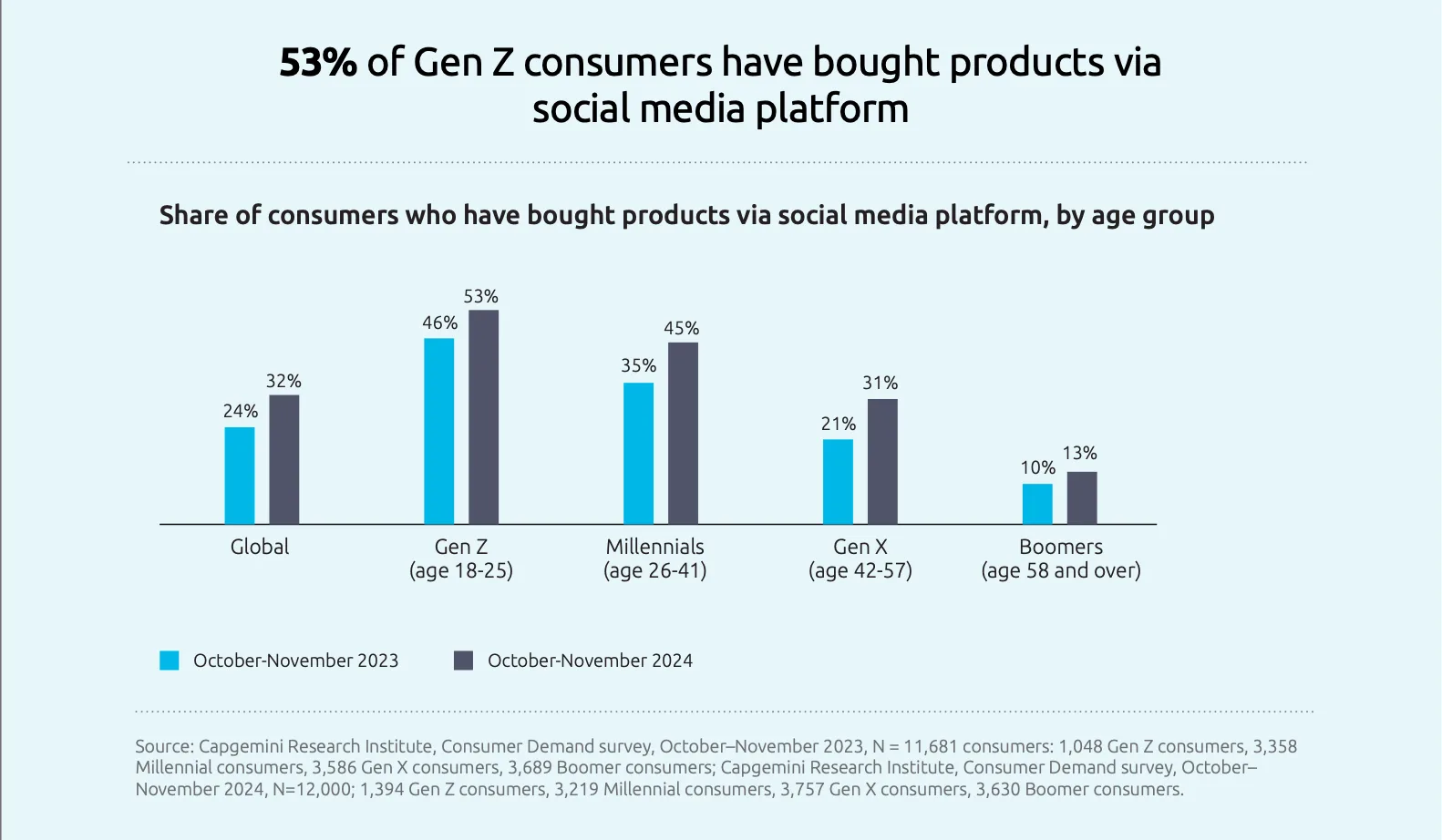
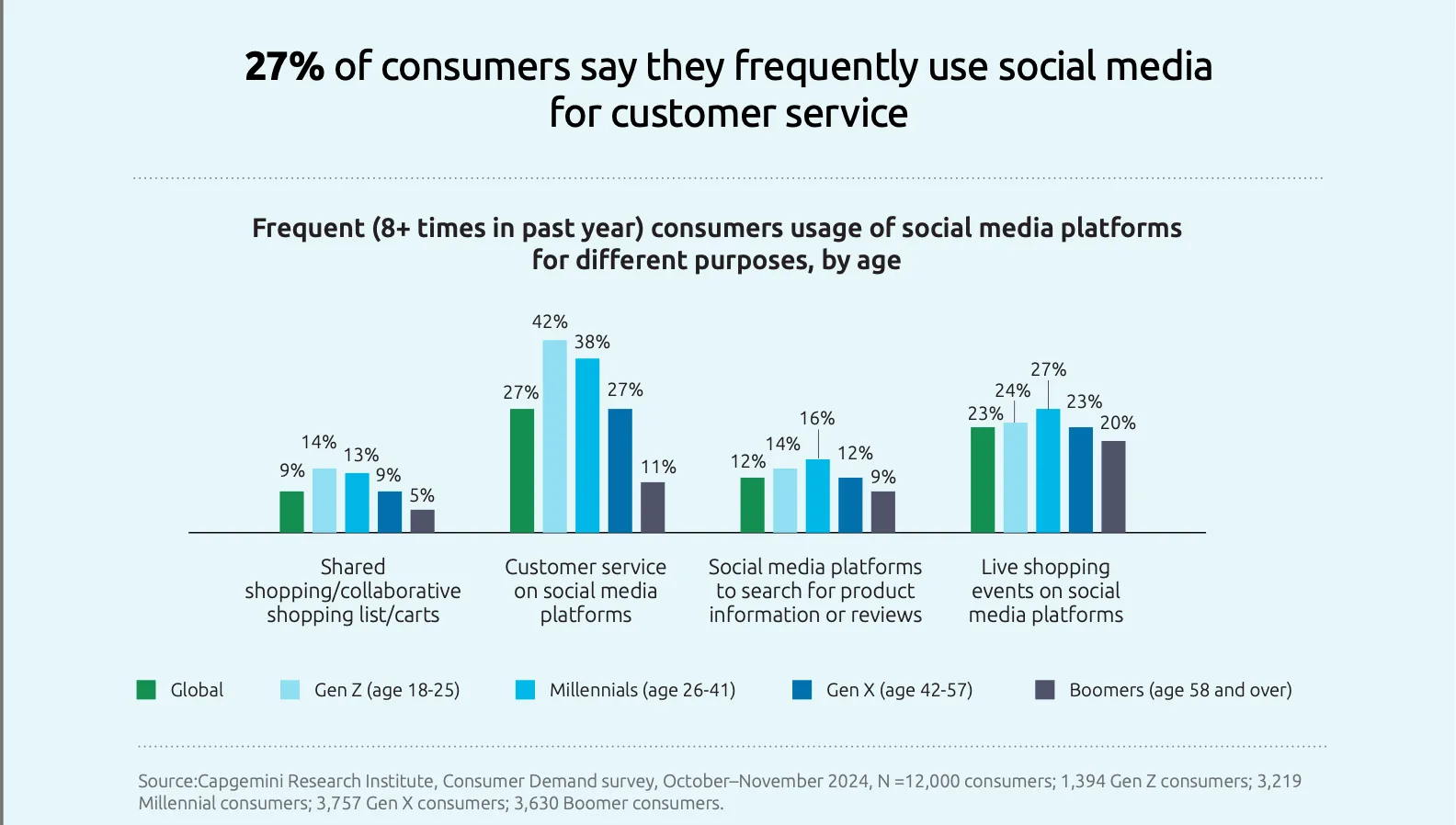
Social commerce is no longer an emerging trend; it is an established reality. 53% of Gen Z consumers have bought through social media (Capgemini, 2025), a significant increase on the previous year. Brands need to rethink their digital presence. An active profile is not enough; it is essential to build influence strategies, live shopping and collaborations with micro-influencers, given that 70% of social media shoppers look for advice from influencers, compared with 50% the year before. Today, 67% of consumers notice adverts on retailers’ websites and apps, compared with 63% on social media. Only 27% of consumers say they regularly use social media for customer service. The logistics revolution: unrealistic expectations?
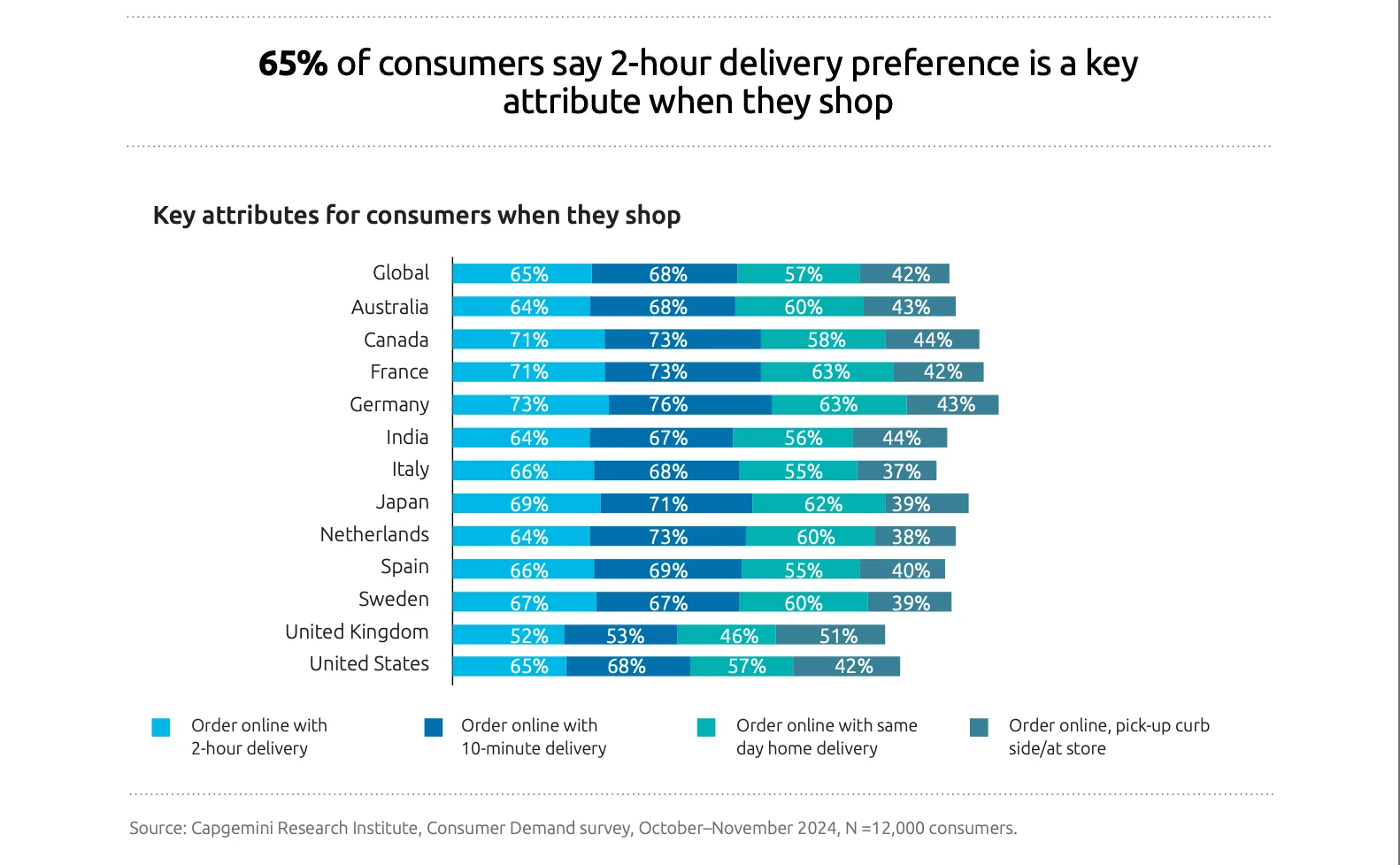
Delivery speed has become a decisive factor in the purchase decision. In 2025, 65% of consumers expect delivery options within two hours, a sharp rise from 34% in 2023. This pressure for speed is a challenge for supply chains. To meet expectations, retailers such as Amazon are investing in AI to optimise delivery routes in real time. There is, however, a worrying contradiction: consumers want speed, but they are not willing to pay enough to cover the cost. The pressure on supply chains is unsustainable, pushing companies to sacrifice profit margins to meet unrealistic expectations. The dilemma for retailers is to strike a balance between speed, operating costs and sustainability without collapsing financially.
Sustainability: the new deciding factor in choosing brands
Consumers are becoming ever more selective and demanding. The study shows that 67% of consumers say they would stop buying from a brand that does not adopt sustainable practices (Capgemini, 2025). And this is not just about eco-friendly packaging: consumers expect concrete measures on waste reduction, renewable energy and social responsibility. Companies such as IKEA, which runs furniture reuse programmes, and Carrefour, which has policies in place to prevent food waste, are leading this transformation. Brands that ignore this trend run a serious risk of losing market share.
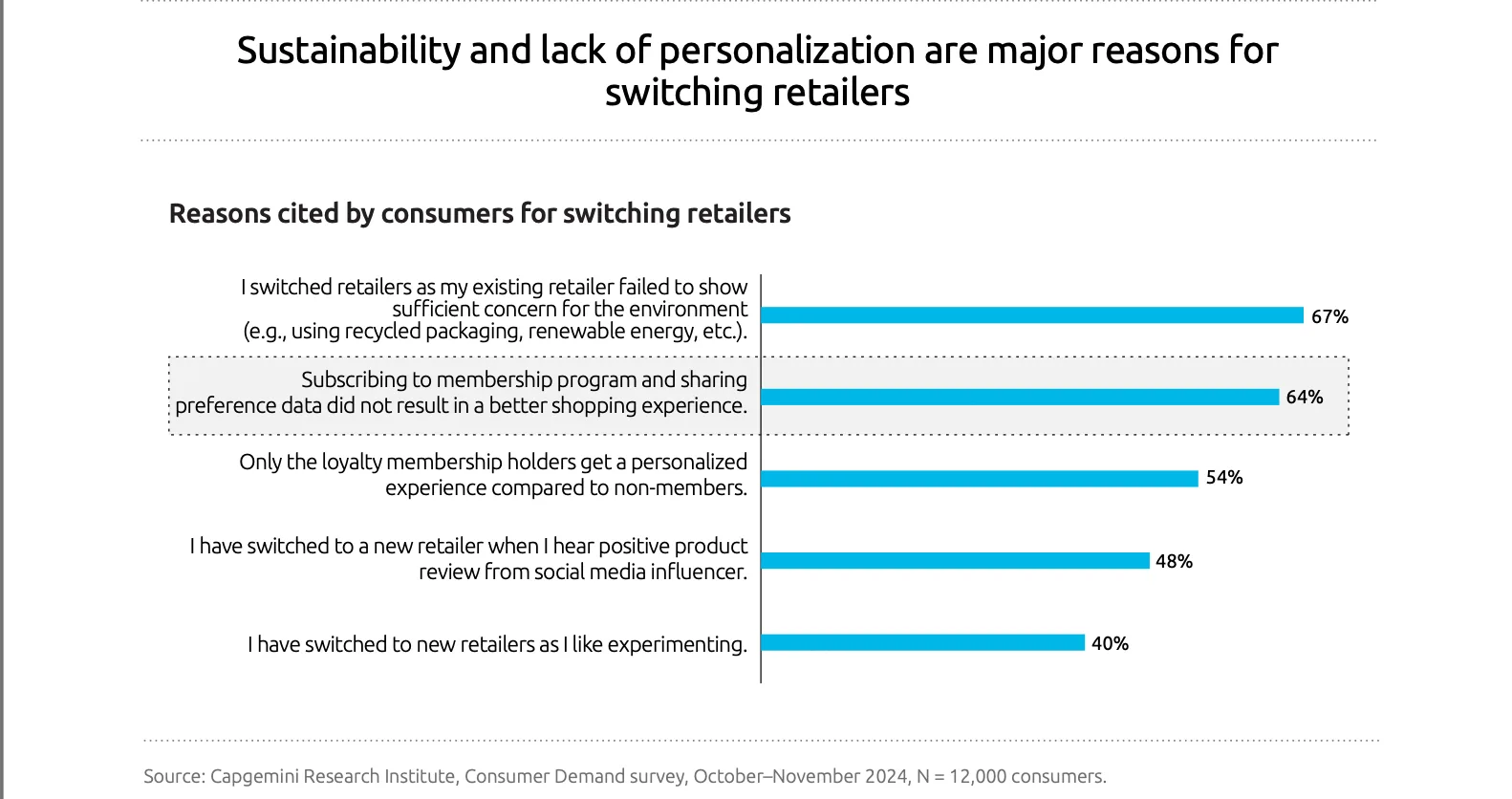
The data shows that the 2025 consumer is more digital, more demanding and more aware of the impact of their purchases. For brands, this means three major changes are needed:
- Large-scale adoption of AI to personalise experiences and recommendations.
- A rethink of social media strategy, focused on interaction and digital influencers.
- A genuine commitment to sustainability, going beyond the talk and putting real practices in place.
On top of this, 46% of consumers are excited about the impact of generative AI, while 58% would rather rely on these tools than on traditional search engines for product recommendations. The trend is clear: 68% want a “one-stop shop” that pulls together search results, social media and retailers’ websites, simplifying the buying journey.
The market is changing at unprecedented speed. Companies that manage to balance technology, sustainability and convenience will be ahead in this new era of consumption. Those that ignore these changes could fall behind faster than they think.
Get what we write
No fixed calendar: only when there is something worth your time.