What brands need to do to stay relevant in search engines

Jelly – Digital Agency
Traditional SEO is no longer enough to secure a brand's presence online. The way people search has changed radically: today, search engines are intelligent assistants that answer in natural language, summarise content and offer instant answers, often without requiring a single click.
In this scenario, a new priority emerges: GEO, which represents not only the local dimension of SEO, but also a global, omnichannel presence strategy adapted to modern user behaviour. This article explains what brands need to do to stay relevant, to be found and to be chosen by consumers in a constantly evolving digital environment.
From SEO to GEO: the leap you need to make
For years, SEO was about optimising pages for traditional search algorithms, focusing on keywords, backlinks and technical authority. Today, the priority has shifted to being cited, referenced and validated by artificial intelligence systems.
These systems favour content that offers context, depth and credibility, drawing on sources seen as trustworthy and up to date. So having the best article on your blog is no longer enough: you need to be present on external platforms, be mentioned by specialists and maintain a clear, coherent narrative.
What's more, each AI model (such as Gemini, ChatGPT or Perplexity) values different types of sources and formats: Gemini favours YouTube videos and mainstream media; ChatGPT prioritises educational sources and Wikipedia; Perplexity highlights forums and specialist blogs. Brands should therefore start adapting content specifically for each model, securing greater visibility across different intelligent assistants.
The impact of instant answers
More and more searches now end in zero-click, meaning the user gets the answer straight from the search engine or virtual assistant, without visiting any website. This forces brands to:
- Optimise content for direct answers;
- Structure information clearly and accessibly (with headings, lists, FAQs);
- Strengthen their presence on external sources such as Wikipedia, YouTube, specialist forums or news portals.
On top of that, it's essential to implement structured data, reviews and optimised FAQs, increasing the chances of appearing in AI-generated summaries.
Content as the central pillar
Content is no longer just an attraction strategy. It is now the main fuel feeding artificial intelligence. To stand out:
- Create long, thorough content with real depth, answering the questions your audience is actually asking;
- Update it regularly, to keep it relevant over time;
- Use natural, human language, closer to the conversational tone of AI.
With information sources becoming increasingly fragmented and AI favouring externally validated content, thinking like a publisher (and not just a marketer) becomes essential. That means investing not only in your own blog, but also in videos, forums, newsletters and collaborations with leading media.
GEO: the new battleground
The local dimension of SEO (GEO) is becoming ever more decisive. Search personalisation, which combines location, behavioural history and real-time context, means users receive hyper-relevant recommendations.
Brands should:
- Keep business listings (e.g. Google Business Profile) up to date at all times;
- Encourage genuine reviews and reply to comments;
- Build geographic terms into content and metadata;
- Optimise geotags on images and videos to strengthen the local presence signal.
Authority: more than backlinks
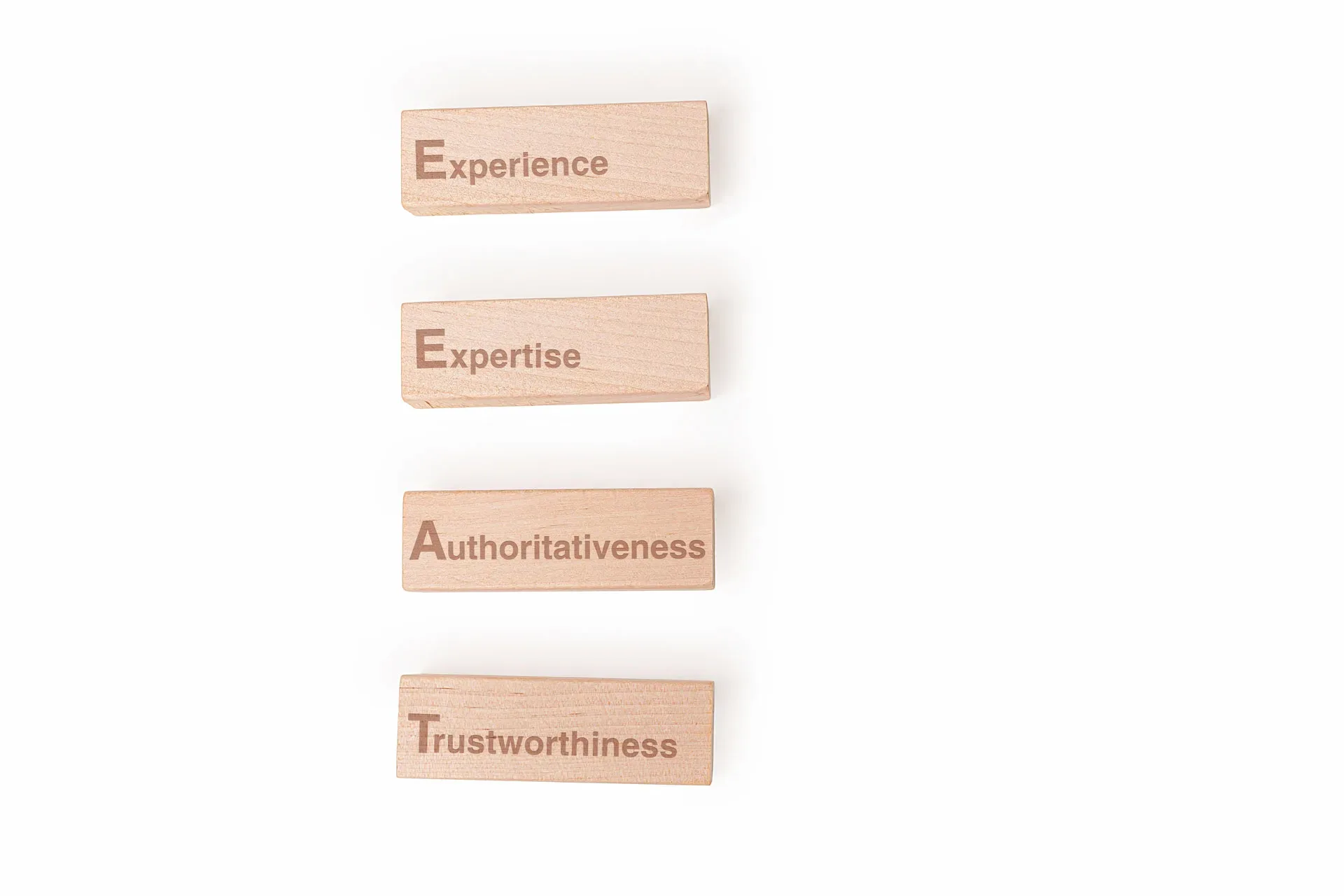
The concept of E-E-A-T (Experience, Expertise, Authoritativeness, Trustworthiness) has become essential to gaining visibility. AI looks for clear signals of hands-on experience, such as real cases, demonstrations or in-depth analysis, and values expertise validated through authors with recognised credentials, participation in events or conferences. Authority has also become a decisive factor, and it is vital that the brand or author is cited by other specialists or leading outlets. Finally, trustworthiness is assessed on the basis of transparency about sources, availability of contact details and clear privacy policies. Increasingly, backlinks alone aren't enough: being mentioned in a relevant way (even without a direct link) is an important authority signal for AI.
UX and conversational AI: experience as the differentiator
Even if direct traffic to your site falls, the experience you offer remains a decisive factor. Sites with a smooth, fast and interactive experience — advanced chatbots, personalised recommendations and real-time support — stand out when it comes to conversion.
Beyond that, being able to interact with users immediately, answer their questions and guide their decisions is essential in an increasingly impatient world that wants everything now.
Data and continuous adaptation
Collecting and analysing data is fundamental to sustaining a long-term digital strategy. Brands should:
- Monitor which content is being referenced by AI.
- Assess local and global performance, adjusting tactics market by market.
- Experiment continuously (A/B tests, new content structures, different multimedia formats).
In this context, first-party data takes on a central role. Gathering information directly from your audience helps reduce dependence on algorithms and build genuine personalisation, creating a competitive advantage that is hard to copy.
The importance of paid advertising
With organic reach in decline, paid advertising acts as a strategic safety net. Investing in search ads and high-quality creative makes up for the visibility lost and secures a constant presence.
That said, ads should be treated as relevant, valuable content — not as simple acquisition tools. Generic or poorly crafted creative is quickly penalised and ignored by both AI and users.
Act before you're forgotten
Today's digital paradigm calls for immediate action. It's not enough to wait for traditional search engines to deliver results: you need to invest in building real authority, create content that answers complex intentions and strengthen your local and global presence in an integrated way.
Those who adapt first gain a competitive advantage. Those who stand still risk disappearing from the memory of search engines and, worse still, from people's memory.

Get what we write
No fixed calendar: only when there is something worth your time.