What changed and every innovation of 2023 — the digital world edition

Sandra Caravana – Copywriter –
2023 was the year of Artificial Intelligence. But let's not celebrate just yet: the year isn't over, and something else could still happen. As for what has already happened, Jelly rounds it up.
Sandra Caravana – Copywriter –
2023 was the year of Artificial Intelligence. But let's not celebrate just yet: the year isn't over, and something else could still happen. As for what has already happened, Jelly rounds it up.
We can sum 2023 up in 3 points:
- the rise in the use of AI and machine learning (ML) in companies;
- the growth of cybersecurity;
- concerns about data privacy.
These trends suggest the digital world will keep transforming at breakneck speed over the coming years. The companies that paid attention to these changes will be ready to face the challenges ahead.
But when it comes to the year now ending, what actually happened?
Social media

Twitter changed. If in 2022 everyone was talking about the metaverse, in 2023 everyone talked about Twitter — even on Twitter itself. It changed its name and its owner. Elon Musk arrived and made himself heard. Now named X, the social network rolled out a series of changes that had knock-on effects on the other networks. Source: Blue tick X (formerly Twitter) The blue tick used to mean a verified account, adding credibility. X made the blue tick available to any account willing to pay a monthly or annual fee. What's more: those who buy the blue tick can view up to 6,000 tweets a day, while everyone else sees only 300 to 600 posts a day — which raises questions about the network's purpose, although the justification, in its owner's words, is to prevent “extreme levels of data scraping and system manipulation”.
But the most important change from Twitter to X is in the name itself: Twitter is no longer a social network with a character limit; on X you can post any kind of format.
X was the digital change that stirred the most movement and debate in 2023 across the digital world. Are we looking at a shift in the social media paradigm? Will the word ‘social’ take on a new meaning? What's the alternative to X?
The answer comes from Meta and it's called Threads. It isn't a standalone app, though: it's integrated into Instagram. In its first five days, Threads picked up more than 100 million users but, according to reports, its user base has dropped since then.
Threads lets you share text updates, creating posts without needing an image. Which is rather like Twitter's original idea.
The reach of video
A picture is worth a thousand words.
Or a video.
TikTok started it and Meta followed suit. Instagram reels are front and centre in the app, and Facebook — like a dad who wants to wear the same clothes as his 16-year-old — has found room to give more reach to shared videos, in the same format as reels.
Chat apps
For individuals and businesses alike, WhatsApp has become the best-known channel for communication and instant messaging. In 2023, WhatsApp Business introduced a new pricing and services structure for companies, with benefits for those also using Meta Business.
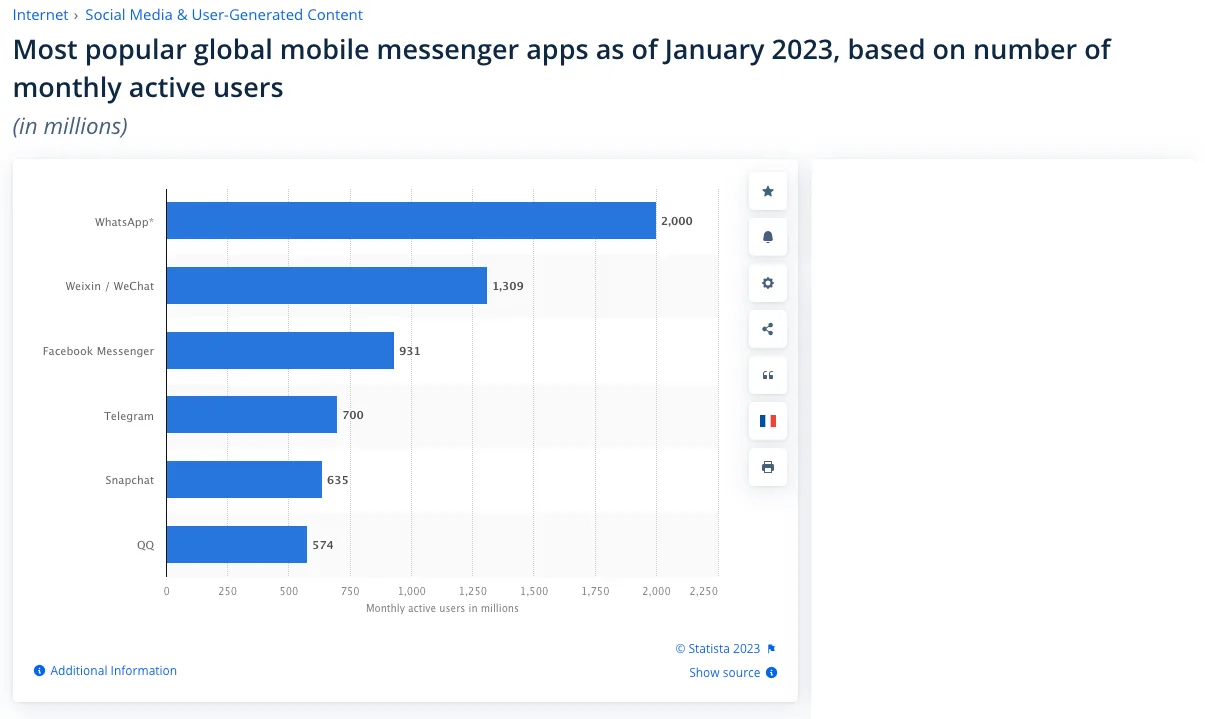
In the quest to keep conversations as cheap and secure as possible, there are plenty of alternatives to WhatsApp, with Telegram being the most widely used in Portugal.
Telegram is an app focused on security and speed of service. Telegram offers a cloud-based service, which allows both message backup and access from multiple devices. One of the advantages Telegram highlights as a differentiator from its competition is the ability to create a group of up to 100 contacts and reach everyone at once.
An advantage WhatsApp quickly answered by creating something similar: communities, a conversation with up to 5,000 contacts.
Communities and Channels
To segment conversations, much like an email marketing system, it's possible to build a flow within instant messaging channels by creating communities and channels.
Communities are conversations with a larger number of contacts that can be split by topic: a marketing school could bring together all its contacts and split into separate conversations those on the Google Ads course and those on the UX design course, for example.
On WhatsApp, there are also channels: a feature that lets a single admin send messages to many subscribers one way — that is, the admin sends the information and limits subscribers' replies, as they can't interact with each other inside the channel.
Whether it's a group, a channel or a community, these are increasingly features that help build a sense of COMMUNITY: something brands are keen to create with their customers. And on that note, 2023 was also the year of our digital friends, the chatbots.
Outages across Meta's products
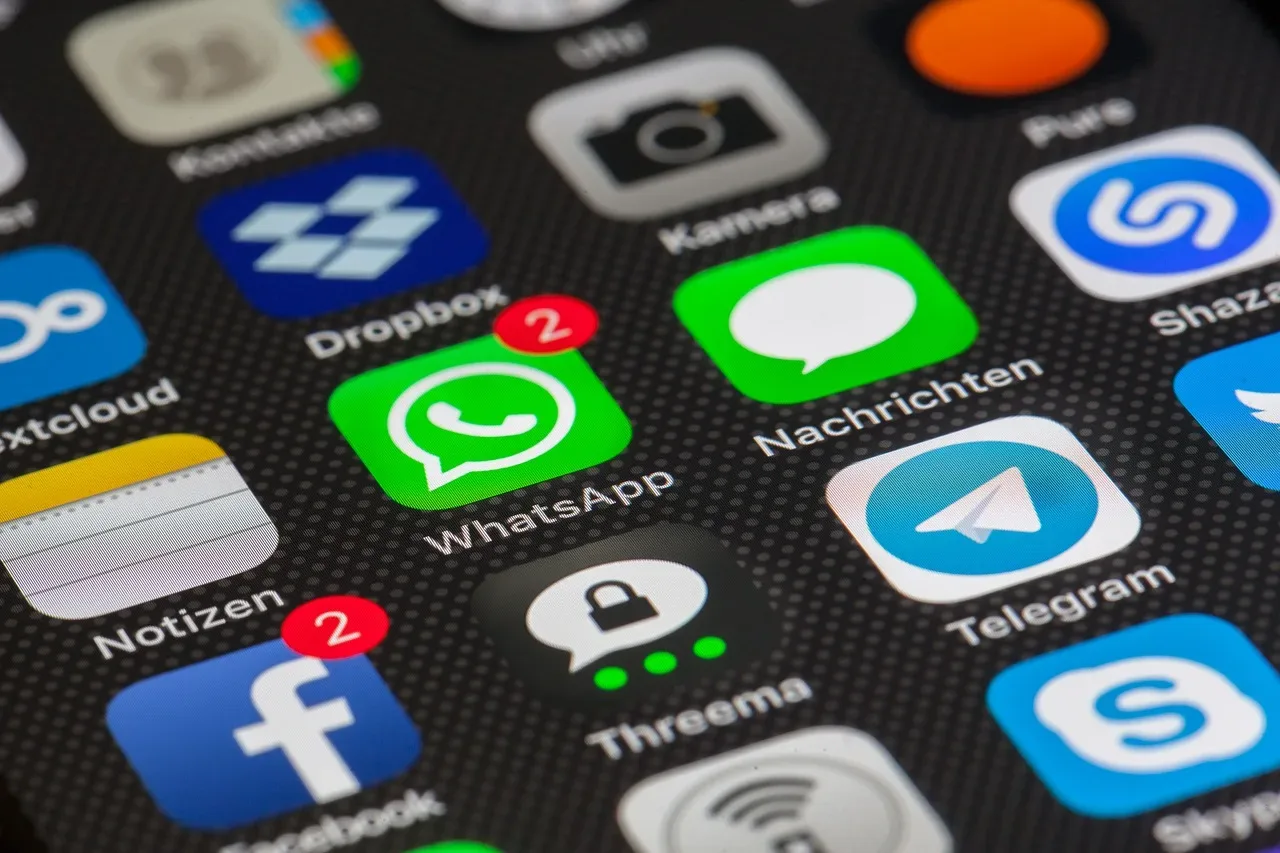
There were several outages across Meta products and apps in 2023, with some even inaccessible for hours at a time. Once the losses were counted, it opened up a debate about how dependent some businesses are on this service: shops that only sell through Instagram and Facebook, and companies that only talk to customers via WhatsApp.
Sell on the web or on social media?
According to the Dinheiro Vivo website, more than 40% of Portuguese people shop online, with clothing, footwear and electronics topping the list. We already know the impact the pandemic had on consumer behaviour; so what changed in 2023?
Instagram drops the Shop option
The analogy that best describes 2023 is this: Instagram is rented accommodation, and it may get more expensive in the medium and long term. Meta ads are still going, but Instagram is no longer giving prominence to the Shop option. The idea, according to Adam Mosseri, is to simplify Instagram and focus the platform on what it sets out to do: connect people with the things they love most. You can still sell through Instagram, but it will always be down to the user rather than being a priority for the app.
And speaking of ads…
Meta now has an ad-free option: you just have to pay.
With one version for web and another for mobile (smartphones), in 2023 Meta launched a ‘Subscription’ option that gives you access to and prioritises all organic content — browsing with no ads. Anyone who doesn't want to pay carries on with exactly the same experience, but with ads.
YouTube was already using this option — which had an impact on how video ads are made, not just in their format but also in the storytelling, forcing brands to grab the user within the first 5 seconds.
Data privacy and security
A topic we've already covered here.
If 2022 was a terrible year when it came to cyberattacks, 2023 was the year of cybersecurity — at least in terms of training professionals and raising public awareness of these issues.
From town councils to hospitals and private companies, even Microsoft platforms fell victim to various forms of cyberattack: phishing, malware, ransomware… Whatever the type of attack, the target isn't just the institution but all the data it holds.

Cybersecurity as a goal for 2024
In 2023, there were a number of significant changes to data privacy laws and regulations around the world. The General Data Protection Regulation (GDPR) came into force in 2018 and requires the person or company collecting data to:
- obtain individuals' explicit consent before collecting their personal data;
- give individuals clear information about how their personal data will be collected and what it will be used for;
- give individuals the right to access, correct or delete their personal data;
- protect personal data against security breaches.
The EU has also joined forces to regulate digital commerce as a whole, calling on the digital giants for help and making them gatekeepers, with the huge responsibility of creating a fairer, more transparent digital trading space. You can also read more about this here.
Every time you search on Google, it learns more about you. Every time you use Waze, it absorbs your routines. Every time you sign up to a newsletter, the brand gets your personal email and (even!) your mobile number. Every time you buy something online, a whole host of people and systems record your card number.
Data is worth its weight in gold. It's how communication works and it's how brands and companies figure out where potential customers are. Unfortunately, not all of them use our personal data in the best way. And when they use our data maliciously, we end up with scams like ‘Hi, mum. Hi, dad’.
So now we know a profession with a future: cybersecurity.
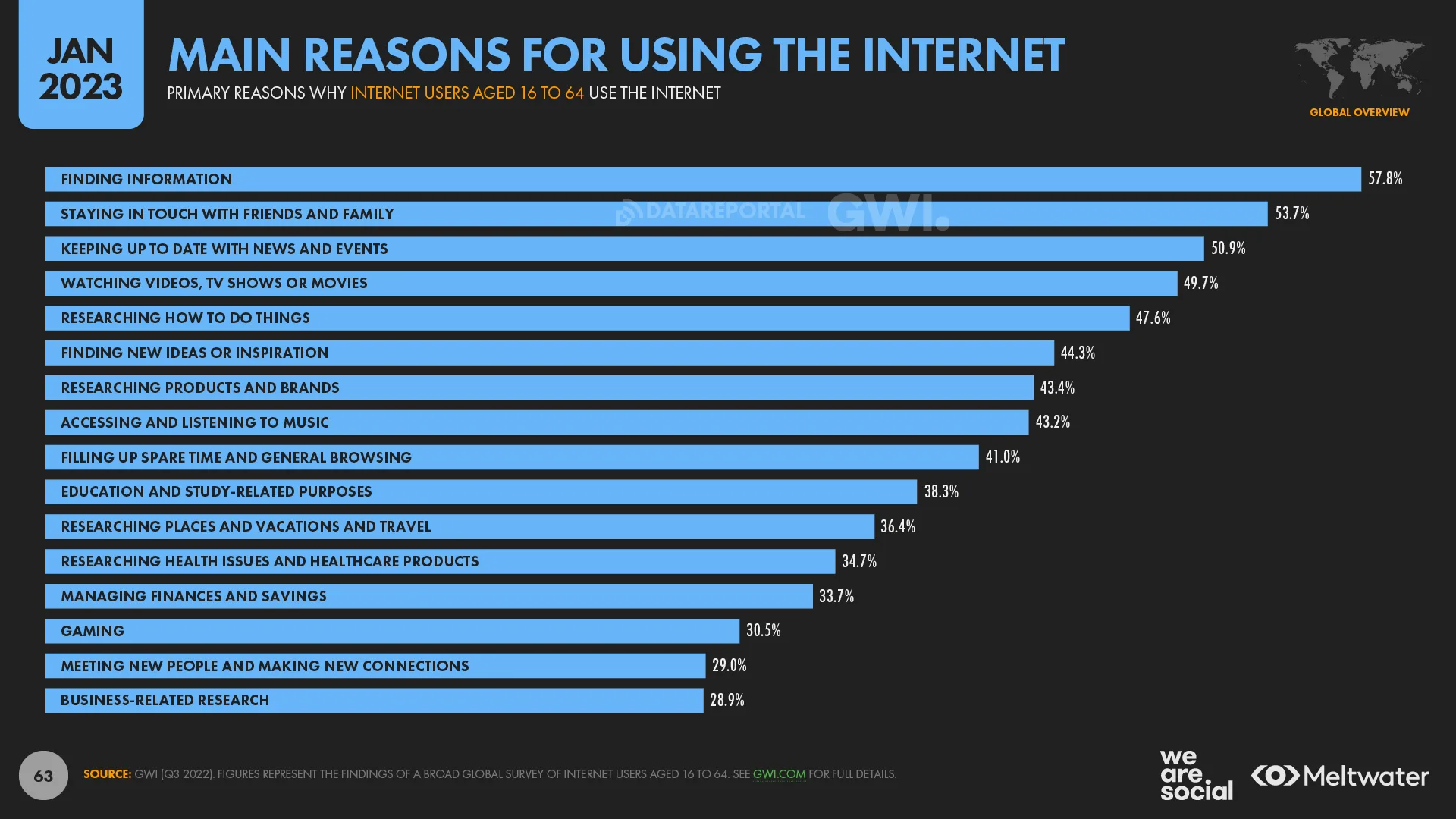
At the start of 2023, the main reason we were online was to look for information, followed by the nobler goal of staying connected with family and friends. In this drive for connection, whether personal or professional, content will remain king. Investing in social media is still a winning bet. That said, the demands of the digital market and data security concerns (your data) point to a more demanding 2024.
We close 2023 with reasons to believe in digital transformation. May 2024 be a year of intelligence, in the digital world and the real one.

Get what we write
No fixed calendar: only when there is something worth your time.