What influencers have that marketers don't
Marta Peral Ribeiro – Communications Consultant –
Influencer marketing
There's a lot of talk about digital influencers, whose opinions on social media can shape behaviour, buying habits and lifestyles. It didn't take long for big companies to notice the phenomenon — social media is, after all, fertile ground for brand communication. But who are these content creators really, and what impact do they have on marketing?
Marta Peral Ribeiro – Communications Consultant –
Influencer marketing
There's a lot of talk about digital influencers, whose opinions on social media can shape behaviour, buying habits and lifestyles. It didn't take long for big companies to notice the phenomenon — social media is, after all, fertile ground for brand communication. But who are these content creators really, and what impact do they have on marketing?
Famous people have always influenced the public, prompting fans to change what they do and even buy certain products. In the digital age, that ability to influence the masses sits with personalities on social media, whose success isn't always down to fame.
Better known as influencers, they are people who know a given subject inside out and share it on social media, communicating authentically and in a relatable tone. Over time they win the recognition of the community they've built, to the point of influencing its purchasing decisions.
One of the biggest success stories in Portugal is Helena Coelho, who consistently shared make-up tutorials on her YouTube channel and became one of the country's leading names in beauty.

The evolution of influencer marketing
If there's one form of advertising that reliably works, it's a recommendation from someone you trust.
And that's where marketing comes in: having spotted the potential, many companies began partnering with digital personalities to raise brand awareness and promote their products. That way, the brand earns consumers' trust off the back of the trust they already place in the influencer.
Even at a time when there were so many restrictions on producing advertising, many digital influencers found a way round it, creating creative content from home that reached the same target audience.
Micro or macro: the influencer spectrum
These are the main traits that define a good influencer:
- Authenticity
- High reach (the message gets to a lot of users)
- A consistent message
- Genuine knowledge of the subject they cover
- The ability to create their own content
- The ability to communicate through storytelling
- Transparency
- Strategic and entrepreneurial thinking
When it comes to follower counts, influencers are graded on a scale:
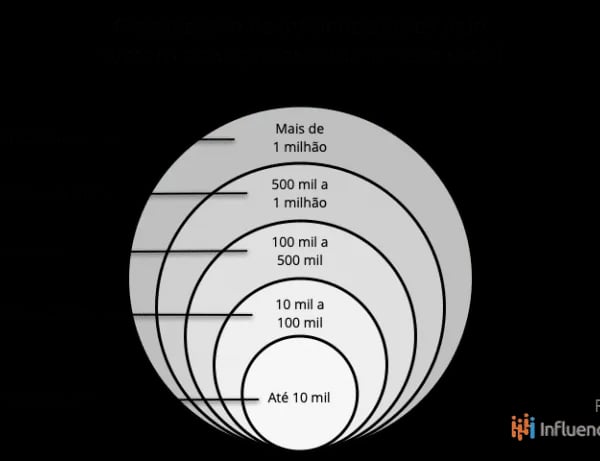
As a rule, a micro-influencer has more impact than a macro-influencer. Why?
- Micro-influencers have a closer relationship with their audience. They know their niche better and give it more attention — which drives a higher engagement rate.
- Macro-influencers — often celebrities — end up reaching a bigger audience, with less scope for interaction and greater distance.
Is it an effective strategy?
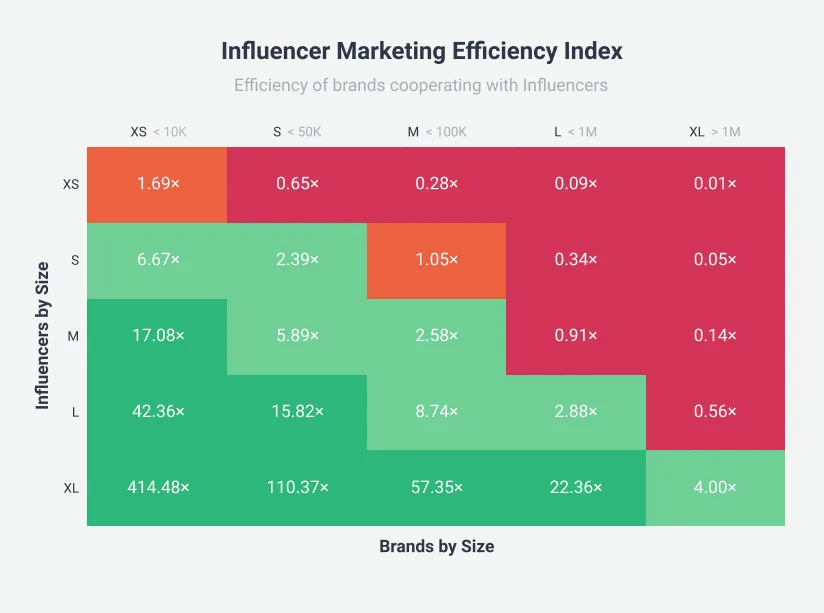
Influencer marketing efficiency is the average engagement rate on the influencer's post mentioning the brand (using the brand hashtag, alongside #pub or #ad) compared with a post from the brand itself. The higher the score, the more efficient the partnership:
A SocialBakers study carried out between January and April 2020 analysed partnerships between digital influencers and brands large and small (more than 8,000 of them), and concluded that:
- Every influencer campaign proved efficient, particularly where the influencer had more than 50,000 followers.
- This type of marketing is more effective for smaller brands (under 10,000 followers).
- The most efficient partnerships for big brands were with macro-influencers (over 1 million followers).
But credit where it's due: while the impact of brand–influencer partnerships is generally positive, some sectors have the edge over others, given the current circumstances we're all familiar with.
While health, entertainment and food have seen a rise in interest on social media, sectors such as tourism, festivals and cultural events face the opposite.
Social media: which one to back?
It's important to match your influencer marketing strategy to the platform you choose, because a campaign can work well on one network and fall flat on another.
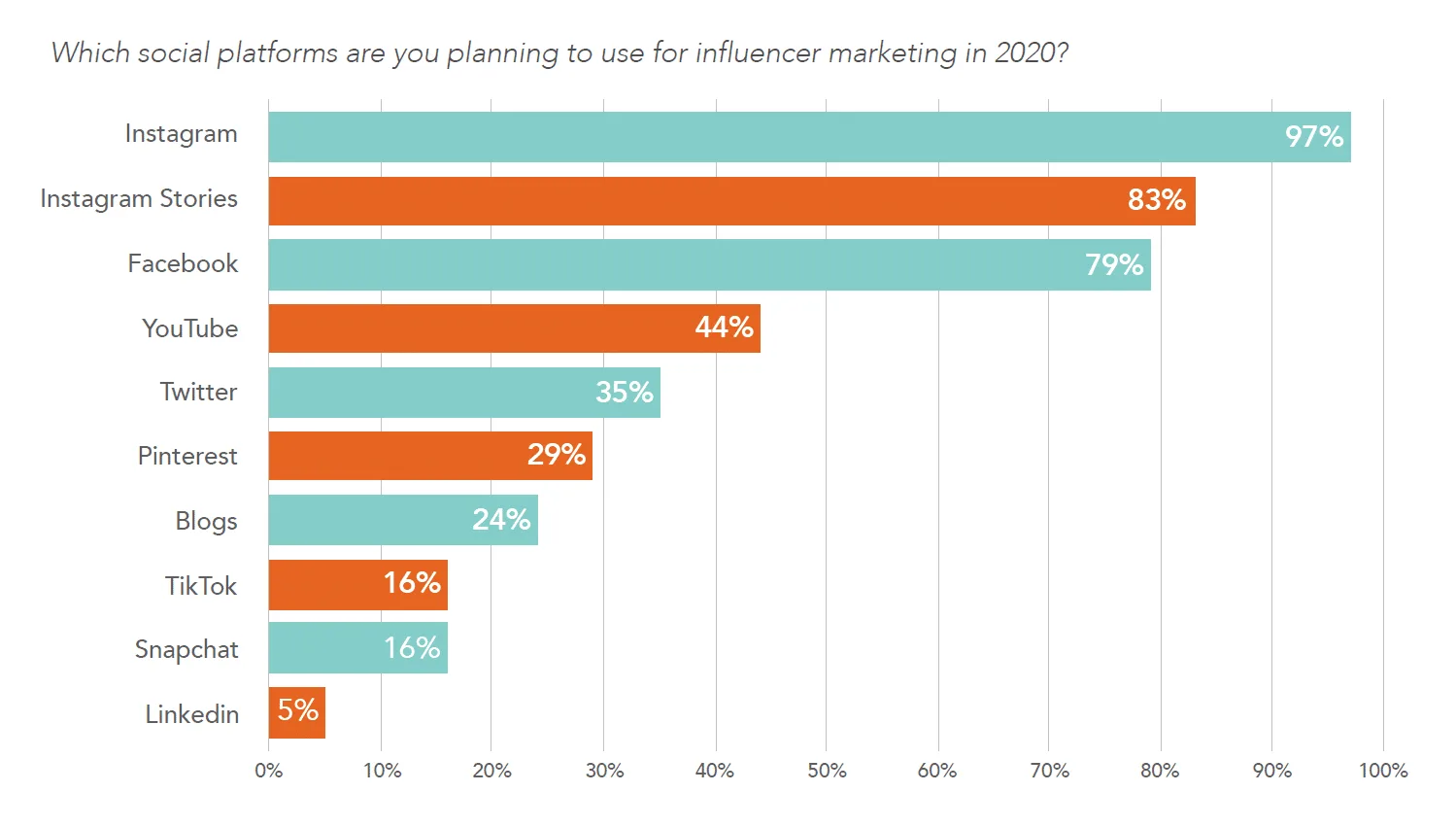
According to The State of Influencer Marketing 2020, Instagram and Facebook remain marketers' networks of choice.
YouTube, Twitter, Pinterest, TikTok, LinkedIn and blogs also have their place:
Repurposing the content
When the strategy is well thought out, the influencer marketing work can and should be repurposed across other channels: website, email, other social networks, and so on.
Over the course of the year, brands can also maximise the cost-benefit of a campaign, both in creating new creative content and in reaching their target audience — tightening the connection or, if needed, redefining the persona.
The flip side of influencers
Transparency and consistency on the influencer's part are key to a successful brand partnership.
Follower fraud
Although the influencer market is more closely monitored these days, until not long ago there were people paying for followers, building a non-organic audience.
That hurt brands, which were paying content creators based on follower counts that, in the end, didn't fully match their target audience.
Influencer isn't a profession
If an influencer's posts start involving sponsorship all the time, the connection originally built with the audience stops feeling natural. Followers who once looked to that creator for inspiration and trusted them end up losing interest.
Poor transparency
Transparency rules: when a post is advertising, the creator must always make it clear that it's a partnership, naming the brand and using the #pub hashtag.
“Influence analytics”
Finally, you need to assess the return on investment (ROI) of influencer partnerships.
It's essential to compare results between the influencer's post about a given product and a post about the same product on the brand's own page or channel.
Here are a few things to look at:
- User engagement (total comments, likes, shares)
- Brand awareness
- Total views (including the reach of specific hashtags)
- Conversion rates (email sign-ups, downloads, giveaway entries)
- Click-through rates
- Sales
Conclusion
Choose the right digital influencers and brands can get a favourable cost-benefit ratio — more profitable than traditional advertising, and better at targeting their audience.
That said, picking a partnership that's constructive for the brand takes real judgement; get it wrong and you can damage its reputation. For that reason, it's essential that the creator's activity and approach line up with the brand's.
Ultimately, a digital influencer's effectiveness is measured less by follower numbers than by their engagement with those followers — specifically the trust they've earned, which shows up in the volume of interactions.

Get what we write
No fixed calendar: only when there is something worth your time.